Plate Nº 46 · recorded October 10, 2026
Health & Medicine ResearchReported finding
Crew-13 Astronauts to Face a Battery of Health Experiments
Crew-13 astronauts will study blood clotting, vision changes, piloting skills and re-entry forces aboard the ISS, gathering health data for future deep-space missions.
By James Calloway3 min read609 words
In brief
- Crew-13 will support a new collaborative study of how spaceflight affects blood flow and clotting.
- NASA will test astronauts' manual piloting skills during the mission aboard the ISS.
- The crew will help evaluate countermeasures for spaceflight-related vision and brain changes.
- Sensors will measure re-entry forces to refine spacecraft hardware and landing procedures.
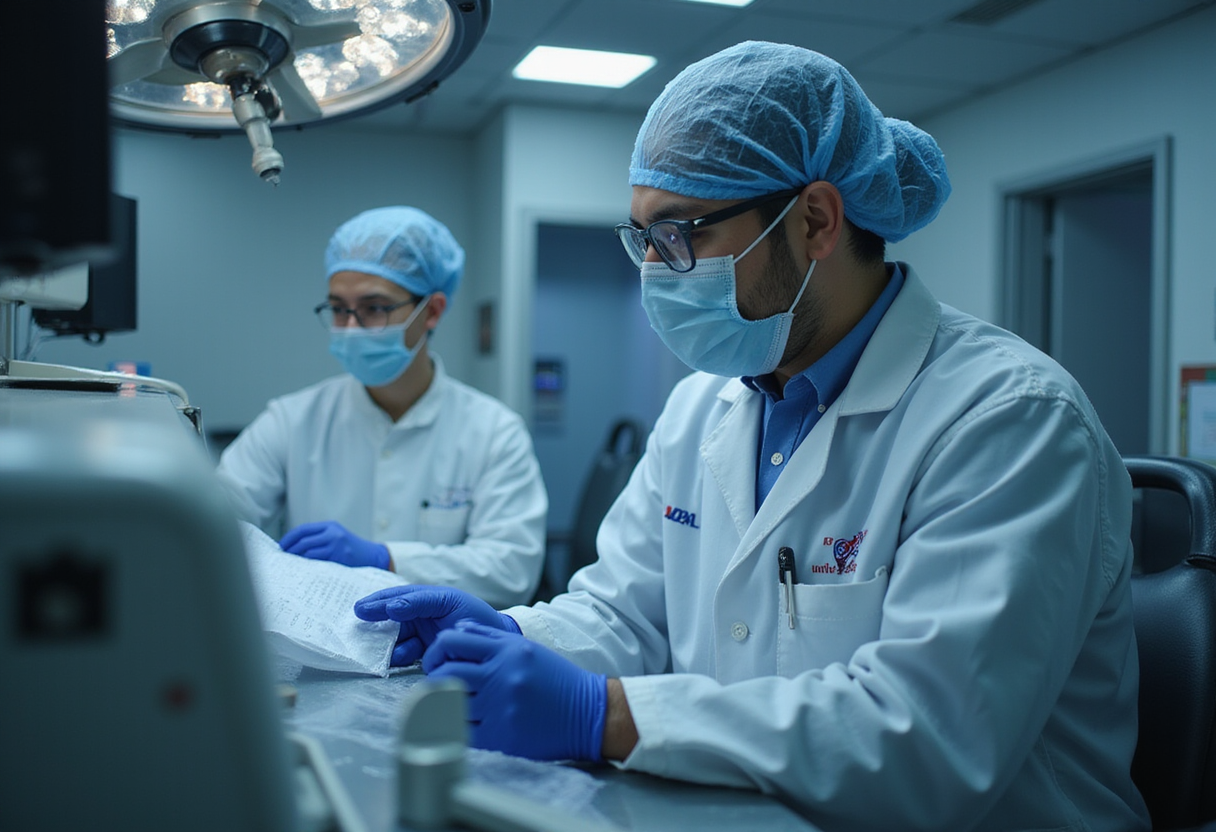
NASA's SpaceX Crew-13 mission to the International Space Station will carry astronauts into orbit with an unusually full biomedical agenda: the crew will support a new collaborative study of how spaceflight affects blood flow and clotting, alongside investigations into vision, brain changes, piloting skills and the physical forces of re-entry.
The mission forms part of NASA's ongoing effort to understand how long-duration spaceflight changes the human body — knowledge the agency says is essential for planning future missions farther from Earth.
What will Crew-13 study in orbit?
According to NASA, the crew will support several distinct lines of investigation during their stay aboard the orbiting laboratory:
- Blood flow and clotting. A new collaborative effort will examine how the spaceflight environment influences circulation and the body's clotting systems.
- Manual piloting skills. NASA will test how well crew members can manually pilot spacecraft, a capability that remains a safety backup even in an era of automated flight systems.
- Vision and brain changes. The agency will evaluate methods to counteract changes to astronauts' eyes and brains — a known concern in space medicine, where fluids shifting headward in weightlessness are suspected of altering eyesight over months in orbit.
- Essential health data. Crew members will gather baseline medical information intended to inform future missions.
- Re-entry forces. Instruments will measure the forces astronauts experience during the plunge back through Earth's atmosphere, to help refine re-entry hardware and procedures.
Why does blood clotting matter in space?
Blood behaves differently without gravity. On Earth, circulation relies partly on gravity pulling blood downward; in weightlessness, fluids redistribute through the body, and previous research has suggested spaceflight may alter how blood flows and clots. Abnormal clotting carries obvious risks for crews who cannot quickly return to hospital care.
NASA describes the blood-flow and clotting study as a new collaborative effort, though the agency has not yet detailed which partner institutions are involved or what specific measurements the crew will take. Those details typically emerge in the weeks before launch, when NASA publishes its full mission research overview.
How do the other experiments help future crews?
Each investigation addresses a specific, documented hazard of spaceflight.
Vision and brain changes have affected a substantial share of astronauts on long missions, prompting years of research into countermeasures. The Crew-13 experiments will evaluate methods to counter those changes, although NASA cautions — as with all preliminary research — that results will need confirmation before any countermeasure becomes standard practice.
Manual piloting tests address a different question: whether astronauts retain the hand-flying skills they may need if automated systems fail. Regular assessment helps NASA decide how much simulator training crews require.
The re-entry measurements have a concrete engineering purpose. By recording the forces astronauts actually experience during descent, engineers can refine both spacecraft hardware and landing procedures, reducing injury risk for future crews returning not just from the station but, eventually, from deep-space destinations.
What happens next?
NASA has not announced the Crew-13 launch date, crew assignments, or full experiment protocols in the announcement. The agency says the mission's health data will feed directly into planning for future missions — an indication that Crew-13's real value may lie less in immediate discoveries than in the steady accumulation of evidence about how humans tolerate spaceflight.
As with all early-stage space medicine research, findings from these investigations will take months or years to analyze and publish. For now, the mission underscores a simple reality: before humans travel farther into the solar system, NASA first needs to understand what space does to the body orbiting just a few hundred kilometers overhead.
via Phys.org Space & Astronomy (Source)
More from James Calloway
Show full bio
Staff writer covering marketplaces and e-commerce at SciBeat.
205 articles
Nearby plates
- Crew-12 Astronauts Return After 237 Days and 100 Million Miles in Orbit
- Four astronauts splash down in Pacific after eight-month ISS mission
- Injectable scaffold helps mouse brains rebuild tissue after stroke
- NASA's SpaceX Crew-13 Set for Oct. 1 Launch to Space Station
- Why Astronauts Get Constipated: Blood Tests Point to Gut Bacteria