Plate Nº 19 · recorded November 14, 2026
Biology & EvolutionReported finding
D. rex: The 2.2 kg Fungus That Rose After the Dinosaurs Fell
A 2.2 kg, half-meter fungus from Yunnan belongs to a new family, Dianjunaceae, whose lineage dates back 65 million years to the post-dinosaur world.
By Elena Vasquez5 min read908 words
In brief
- The fungus Dianjunus rex can reach 50 cm tall and weigh 2.2 kg, the largest spore structure known in Ascomycota.
- Researchers established a new genus and family, Dianjunaceae, diverging roughly 65 million years ago (range 50–80 million).
- Specimens were collected in Yunnan, China, between August 2024 and July 2025.
- Yunnan has over 6,000 documented fungal species; estimates suggest more than 100,000 exist there.
- The study was published in Frontiers in Fungal Biology.
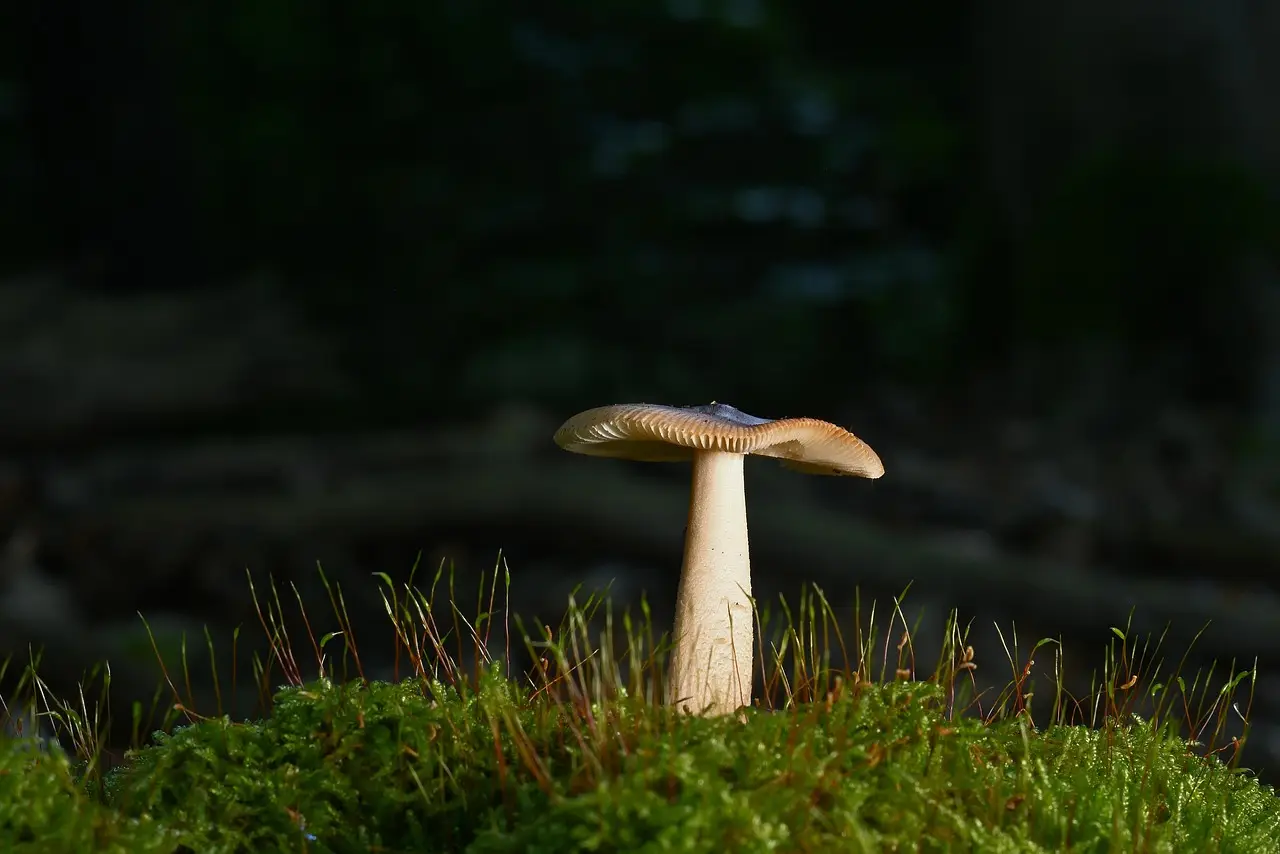
A fungus weighing up to 2.2 kilograms and standing half a meter tall has forced scientists to create an entirely new fungal family, Dianjunaceae, after researchers found it hiding in the forests of southwestern China. Its lineage, DNA analysis suggests, stretches back roughly 65 million years — to the very period when Earth was recovering from the extinction that killed off the dinosaurs.
The species, named Dianjunus rex, produces the largest spore-bearing structures ever documented within Ascomycota, a major fungal group that includes roughly 65,000 known species such as morels, truffles and yeasts. No member of that group comes close on record.
"It helps point to all of the really exotic forms of fungal life on this planet that haven't had a chance to be described by science," Kabir Peay, a Stanford University biologist who was not involved in the research, told CNN.
The study appears in the journal Frontiers in Fungal Biology.
Where was D. rex found?
Researchers discovered the fungus during biodiversity surveys in Yunnan province, a region famous for its rich fungal life. They collected specimens between August 2024 and July 2025 from tropical and subtropical forests in Kunming, Xishuangbanna and Chuxiong.
The fungus grows from underground roots and surrounding soil, usually near recently dead or decaying trees. Its look changes with age. Young specimens have rounded, bulb-like tops. Mature ones sprout fleshy, finger-like branches. Surfaces start whitish, then turn pale yellow.
The numbers tell the story of its scale:
- Typical height: 20 to 50 centimeters
- Typical weight: 250 to 600 grams
- Largest specimen: 2.2 kilograms
Those measurements significantly expand the known range of fungal body sizes within Ascomycota. But size alone doesn't make a new species, so the team dug deeper.
What did the DNA analysis show?
The researchers combined close study of the fungus's physical features — its reproductive structures, spores and microscopic details — with genetic sequencing.
They examined four genetic regions: ITS, LSU, RPB2 and TUB2. These act as genetic markers that help establish evolutionary relationships. Comparing the resulting sequences against 202 fungal strains, the analysis consistently placed the new specimens on a distinct evolutionary branch within the fungal order Xylariales.
To be sure, the team sequenced whole genomes of three specimens and compared more than 300 conserved genes across 66 fungal samples. That confirmed the find warranted its own genus and family.
The genus name Dianjunus references the ancient Dian Kingdom of Yunnan. Rex is Latin for king — a nod to its extraordinary size.
"This remarkable species represents a new fungal family, Dianjunaceae, and provides a rare window into the evolution of extreme fungal body forms," said Indunil C. Senanayake, an associate professor at the Kunming Institute of Botany and one of the researchers.
The timing of its origins proved just as striking. Using genetic comparisons and established evolutionary timelines, the researchers estimate Dianjunaceae diverged about 65 million years ago, with a possible range of 50 to 80 million years. That places its emergence near the start of the Paleocene, just after the Cretaceous-Paleogene extinction event wiped out roughly 75 percent of Earth's plant and animal species.
"After the mass extinction, forests experienced dramatic changes, including the sudden availability of large amounts of dead plant material. For wood-associated decomposing fungi, such environmental disruption may have created new ecological opportunities," Senanayake said. That possibility remains a hypothesis for now.
Why does this fungus grow so large?
The biggest open question is what lets D. rex build enormous reproductive structures when its relatives stay small.
One explanation involves reproduction. The upper portions of its fruiting structures, called stromata, carry numerous tiny openings that release spores. On a forest floor blanketed with leaves and branches, spores released low down could easily get trapped. Growing tall might let spores escape the clutter and disperse wider. Building such massive structures costs substantial resources, but the trade-off appears to have worked.
The genetics offer another clue. D. rex has considerably fewer carbohydrate-active enzymes — proteins that help fungi break down complex plant materials — than many related wood-decaying species. Its genome also carries very few pectin lyases, enzymes involved in breaking down plant cell walls.
That profile supports a working hypothesis about its lifestyle. The researchers suspect the fungus first lives inside healthy trees without causing visible damage, then switches to consuming dead plant material once its host dies.
"Because fruiting bodies of D. rex were observed exclusively post-host mortality, these combined traits support a working hypothesis of an endophyte-to-saprotroph lifestyle transition," the researchers write in their study. In plain terms: quiet tenant first, decomposer later.
Could more giant fungi be waiting?
D. rex also exposes how much fungal life remains unknown. Yunnan has more than 6,000 documented fungal species, but researchers estimate the province could hold over 100,000. Fungi stay unnoticed partly because most of the organism lives underground or inside a host, and visible reproductive structures may appear only under particular conditions.
Fungi matter: they recycle nutrients, break down dead organic matter and maintain useful partnerships with plants.
"It's really important that we understand what they do. The first step in understanding what they do is describing them, acknowledging their existence, and then later trying to understand more details about their ecology," Peay said.
In short: a two-kilogram king of a vanished age was standing in Chinese forests all along, and nobody had named it until now.
via zmescience.com (Source)
More from Elena Vasquez
Show full bio
Correspondent covering money, funding and market shifts around general science news at SciBeat.
428 articles
Nearby plates
- Dianjunus rex: China’s 50-centimeter ascomycete record-holder
- Study finds a parasite of powdery mildew in about 7% of samples
- Museum Frogs Solve a 50-Year Mystery of Brazil's Vanishing Amphibians
- The Fattest Belemnite Ever Found Rewrites a Jurassic Family Tree
- Climate Refuges Could Save Panama's Frogs from Deadly Chytrid Fungus