Plate Nº 89 · recorded October 10, 2026
Neuroscience & MindReported finding
Depression Stalls New Neuron Growth in the Adult Brain
Columbia researchers document stalled neurogenesis and broader molecular disruptions in the hippocampus of adults with major depression, analyzing nearly half a million brain cells.
By Marcus Bennett4 min read838 words
In brief
- Study published August 21, 2026 in Nature Medicine
- Researchers analyzed nearly half a million brain cells from donors with depression and healthy controls
- The adult brain contains roughly 100 billion neurons, most generated before birth
- First direct evidence that neurogenesis stalls in adults with major depressive disorder
- Study led by Maura B. Dupont of Columbia University Vagelos College of Physicians and Surgeons
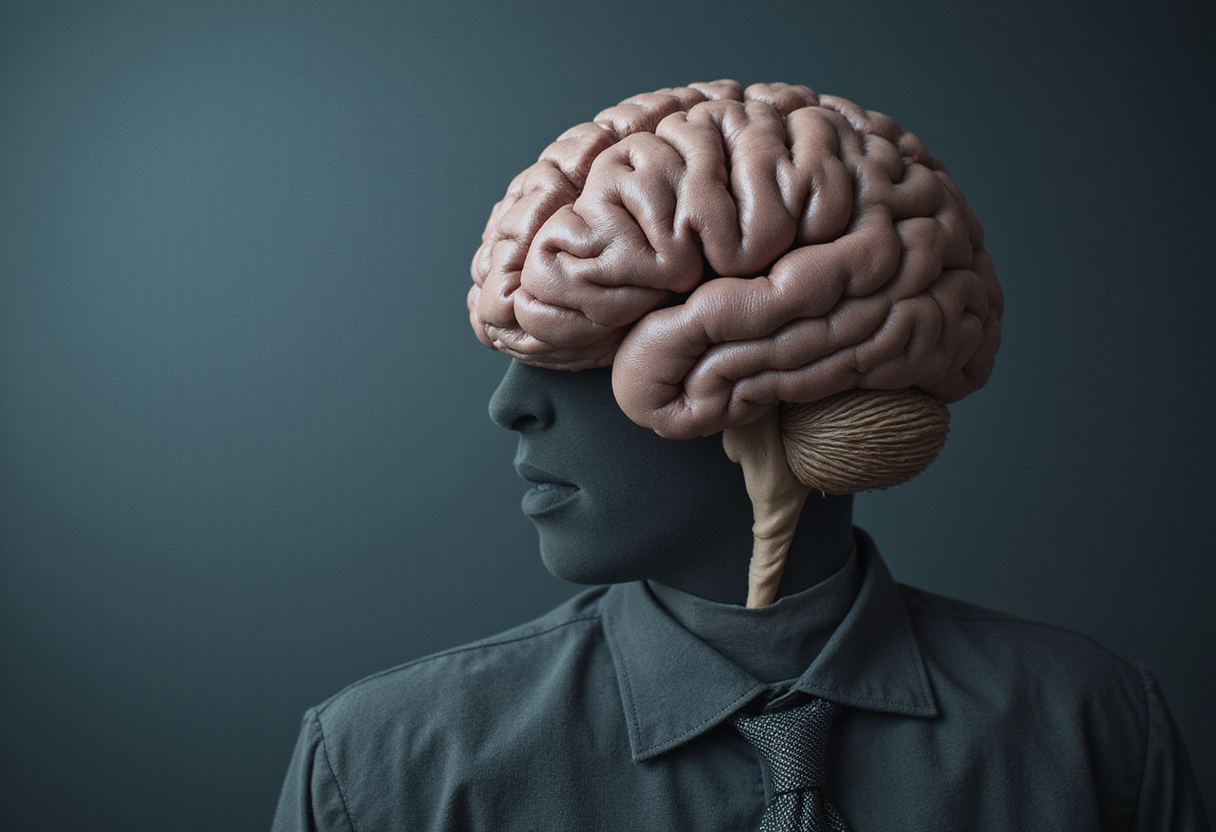
Adults with major depressive disorder show disrupted production of new neurons in the hippocampus — the first direct evidence of this effect in humans. The finding, published August 21, 2026 in Nature Medicine, came from an analysis of nearly half a million brain cells collected from donors with depression and from healthy controls shortly after death.
The research team, led by Maura B. Dupont, professor of psychiatry at Columbia University Vagelos College of Physicians and Surgeons, focused on the hippocampus, one of the few brain regions where new neurons continue to form after birth. The adult brain contains roughly 100 billion neurons, most of them generated before birth.
What does neurogenesis have to do with depression?
Neurogenesis is the process by which new neurons are born and integrated into existing brain circuits. Animal studies have long suggested that disrupted neurogenesis contributes to depression-like behavior, but confirming the link in humans has been difficult.
"Historically, depression was thought to be a disease of neurotransmitter deficiency, especially serotonin, but we now think that depression stems from multiple issues that affect our neurons' ability to adapt to stress and changing environments," Dupont says.
"Without the ability to create new neurons, people with depression may not have the resilience to effectively adapt to the environment," she adds.
How might new neurons affect memory and mood?
The hippocampus plays a major role in episodic memory — the recollection of specific personal events — and in emotional responses. Researchers believe changes in this region help explain why people with depression tend to interpret experiences more negatively.
Dupont and her colleagues examined pattern separation, a function that allows the brain to distinguish between similar but different memories and separate the emotional weight of past events from present ones. When pattern separation breaks down, memories blur.
"With intact pattern separation, you remember a quiet lunch with a tired friend as a unique event," Dupont explains. "With impaired pattern separation, it becomes mixed with previous memories of feeling rejected, leading you to think, 'They're upset with me.' And I see this a lot in my patients, where they can only retrieve negative information from their memories."
Mouse studies show that blocking adult neurogenesis impairs pattern separation. A separate study of brain-tumor patients, in whom radiation therapy directed at the hippocampus eliminated neurogenesis, hints that the same relationship may exist in people.
"It's important to emphasize that we do not yet know the complete mechanism, particularly in humans," Dupont says, "but the newborn neurons seem to enhance pattern separation because they are especially responsive to new experiences and can be incorporated into new memory circuits more easily."
What did the molecular analysis reveal?
The findings extended beyond stalled neurogenesis. The team used recent single-cell techniques to measure the activity of every gene inside individual cells and to examine cellular proteins across roughly 500,000 cells.
Disrupted gene activity appeared across several categories:
- Genes that build new connections between neurons
- Genes that support communication among brain cells
- Genes that supply cellular energy
- Genes that move materials within cells
The trisynaptic circuit — the hippocampus's main pathway for establishing new emotional memories — also showed signs of inflammation and cellular stress in people with depression.
Could environment be shaping these changes?
Some affected genes carried epigenetic modifications — chemical adjustments that change how strongly genes turn on or off without altering the underlying DNA sequence.
"These are like dimmer switches that control how active genes are, and they are affected by life experiences such as stress, learning, aging, chemicals, etc.," Dupont says.
Several of the affected genes also carry variants previously tied to major depression risk in genetic studies, linking the cellular picture to population-level findings.
Could this lead to new treatments?
The researchers suggest that restarting neurogenesis might one day help rewire hippocampal circuits in some patients. "Turning neurogenesis back on may be a way to treat depression in some people by rewiring their hippocampus circuit," Dupont says.
The team also proposes classifying depression by its molecular features, similar to how cancers now get grouped by cellular characteristics rather than anatomical location.
"Overall, the wide range of effects we found could reflect different pathogenetic mechanisms, perhaps indicating that depression is not just one disease," Dupont says. "We want to reclassify depression based on its molecular features, similar to what has been done in cancer. Classifying cancers based on their cellular characteristics, not their locations, has led to new and improved treatments. We hope the same will be true for depression and other psychiatric or brain diseases."
The results remain preliminary. They come from postmortem tissue, represent a single cohort, and require replication in larger and more diverse groups of donors. Researchers still do not know whether stalled neurogenesis causes depression, results from it, or both.
The paper, "Dysregulated adult hippocampal neurogenesis in major depressive disorders," appeared in Nature Medicine on August 21, 2026. Authors were affiliated with Columbia University and the New York State Psychiatric Institute, with Natasha Bitoljanu listed from Ss. Cyril and Methodius University in Macedonia.
via dx.doi.org (Original)
More from Marcus Bennett
Nearby plates
- Childhood Stress May Leave a Molecular 'Scar' That Reshapes the Adult Brain
- Brain Scans Reveal How Depression Treatment Reshapes Neural Connections
- Antidepressants in Pregnancy: Small Extra Risk Found, But Questions Remain
- Human Microglia Take Up to 8 Years to Mature, Study Finds
- Human Brain Grows From Two Separate Cell Lineages, Study Finds