Plate Nº 62 · recorded November 17, 2026
PhysicsReported finding
Diamond Maser Amplifies Quantum Signals 1,000-Fold Near Absolute Zero
A diamond-based microwave laser from OIST boosts weak quantum signals more than 1,000-fold with just 2.55 quanta of added noise, nearing the physical limit of 0.5.
By Priya Raman3 min read613 words
In brief
- OIST's diamond maser amplifier achieves more than 1,000-fold signal amplification.
- It adds 2.55 quanta of noise, close to the absolute quantum limit of 0.5.
- The device operates at millikelvin temperatures and works inside magnetic fields.
- The findings appear in Nature Communications (2026), DOI: 10.1038/s41467-026-79021-7.
- Masers were first demonstrated in 1954, six years before lasers.
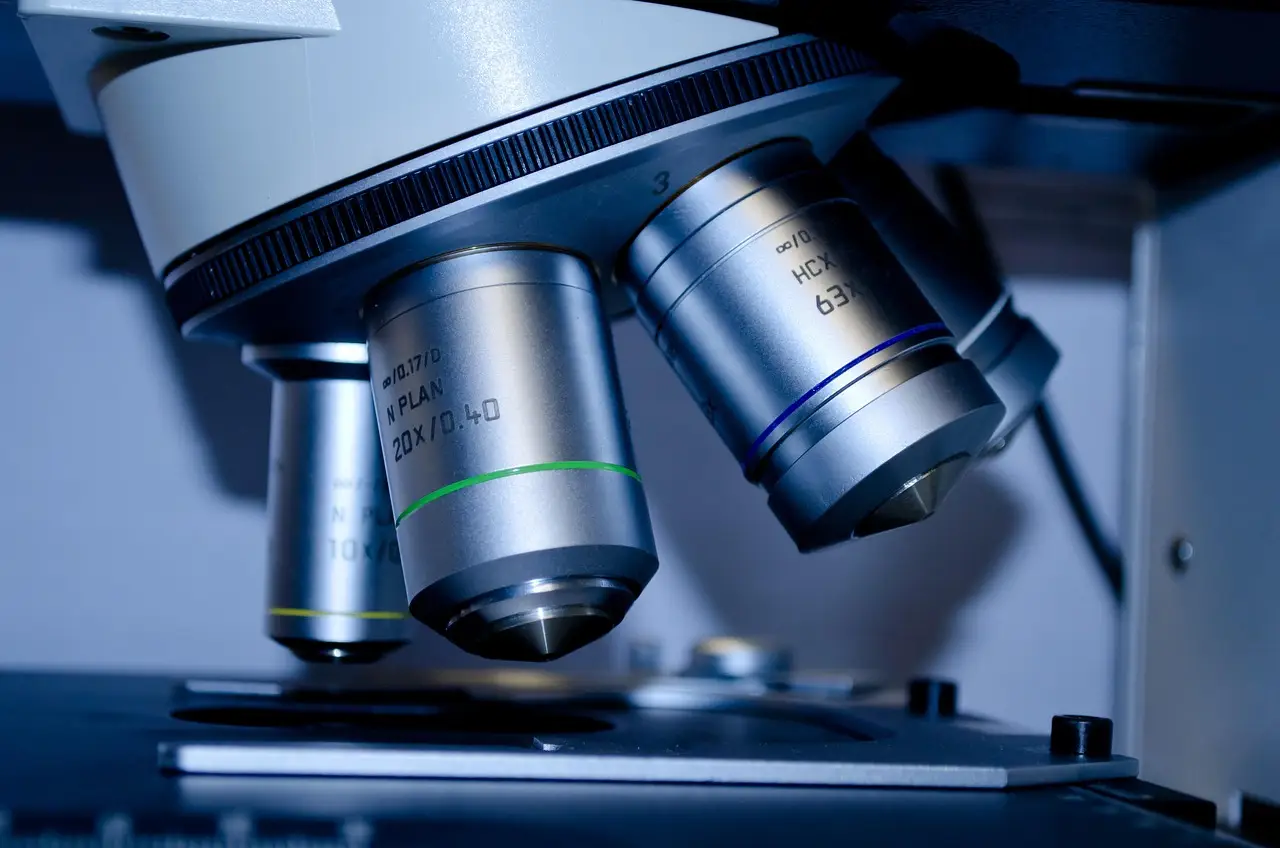
Researchers at the Okinawa Institute of Science and Technology (OIST) have built a microwave amplifier that boosts weak quantum signals by more than 1,000-fold while adding only 2.55 quanta of noise — barely above the absolute quantum limit of 0.5 set by the laws of physics. The device, described in Nature Communications in 2026, operates at temperatures near absolute zero and is already moving toward commercialization.
Why does amplification matter for quantum computing?
Reading out a qubit's state resembles taking notes at a closed-door summit: a single microphone inside the room must capture every speaker without disturbing the discussion. Turn up the gain, and the equipment adds a background hiss of its own.
Superconducting quantum computers face exactly this problem. Their amplifiers work at millikelvin temperatures to suppress thermal noise, yet even there the first amplification stage adds noise of its own. That noise propagates through every later stage, making a qubit's state harder to determine from a single measurement and producing errors.
Dr. Yuimaru Kubo, head of the Hybrid Quantum Device Team at OIST, frames the advance through the history of an older technology. "Despite being invented before optical lasers, masers—microwave lasers—have been left far behind because they often require cryogenic conditions to function, which made them impractical until very recently," he explained. "But now, with quantum computers operating at temperatures very close to absolute zero, we have given them new life as very promising candidates for amplifying quantum signals with very little noise."
How does the diamond maser work?
Masers were first demonstrated in 1954, six years before the laser. Both rely on stimulated emission: when an incoming photon's energy matches the gap between an electron's excited and ground states, the electron can emit an identical photon.
The OIST device exploits spins — the intrinsic magnetic state of electrons — inside nitrogen impurities known as P1 centers, embedded in a special diamond at the heart of the amplifier. A relatively weak microwave field pumps most of the spins into a higher-energy state. Incoming microwave signals then trigger those excited spins to release their energy, amplifying the signals at the same frequency.
"We were surprised by how much amplification we could achieve using such a small amount of microwave power," Kubo added.
Where does it beat today's amplifiers?
Current quantum-limited amplifiers each make compromises, and the diamond maser avoids all three at once:
- Josephson parametric amplifiers reach low noise but saturate when reading multiple qubits simultaneously, limiting how many qubits can be measured at once.
- Kinetic inductance parametric amplifiers handle stronger inputs but demand more electrical power and extra wiring, raising cost and complexity as systems scale.
- Conventional superconducting amplifiers fail in magnetic fields, which semiconductor-based spin-qubit platforms require.
The new maser, like most solid-state masers, operates inside a magnetic field, so it works with spin-qubit platforms. It combines more than 1,000-fold amplification, near-quantum-limited noise of 2.55 quanta, high input-power tolerance, and simple wiring — a balance the field has struggled to strike.
What comes next?
The findings are preliminary in one respect: the device is a laboratory demonstration now undergoing further development toward commercialization, so real-world deployment in working quantum computers remains to be shown. The Nature Communications paper is authored by Morihiro Ohta and colleagues (DOI: 10.1038/s41467-026-79021-7).
The implications stretch beyond computing. Low-noise microwave amplification underpins spectroscopy, nuclear magnetic resonance — the technology behind MRI scanners — and fundamental physics experiments, including searches for dark matter. A device that whispers almost as quietly as physics allows could make all of them louder where it counts.
via phys.org/rss-feed/ (Source)
More from Priya Raman
Show full bio
Senior reporter covering people, launches and day-to-day practice in general science news at SciBeat.
430 articles
Nearby plates
- Microscopic Sound Waves Triple a Diamond Qubit's Memory
- ETH Zurich Quantum Computer Stores Memory as Tiny Vibrations
- Millimeter-wave qubit readout limits state changes at 99.2% fidelity
- Purdue Tackles Three Big Roadblocks in Light-Powered Quantum Chips
- Physicists Propose a Supercurrent Way to Read Qubits Without Wrecking Them