Plate Nº 88 · recorded October 10, 2026
Earth & ClimateReported finding
Diverting Food Scraps From Landfills Could Cut US Methane by 6%
Diverting food scraps from landfills could cut US methane emissions by 6%, according to an analysis. Food and yard waste rotting in landfills accounts for nearly 10% of the country's methane emissions.
By Elena Vasquez3 min read674 words
In brief
- Diverting all food and yard waste from US landfills could cut national methane emissions by 6%
- Food and yard waste in landfills accounts for nearly 10% of US methane emissions
- The analysis was published on August 13, 2026
- Methane is a more potent greenhouse gas than carbon dioxide over short time horizons
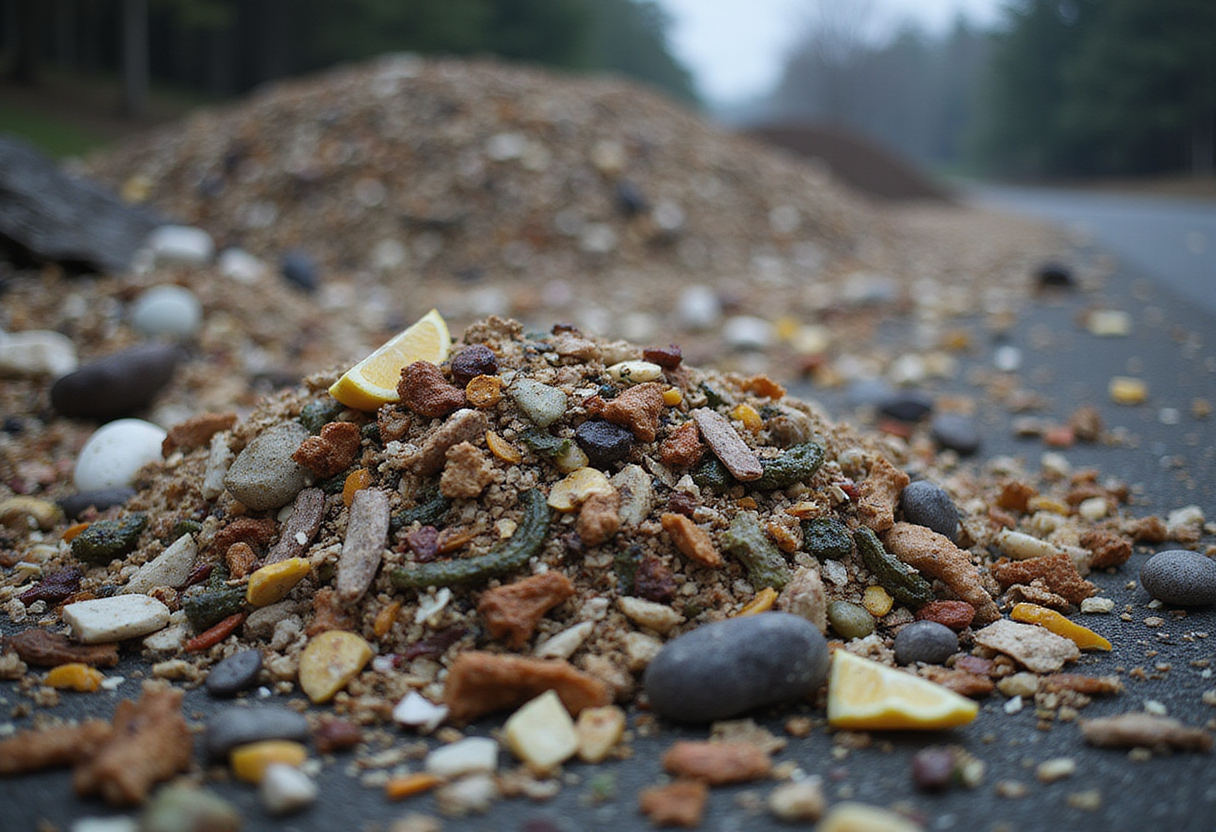
Diverting food scraps from landfills could trim US methane emissions by 6%, according to an analysis dated August 13, 2026. The estimate reframes household food waste as a measurable slice of one of the most potent greenhouse gases warming the planet.
Food and yard waste decomposing in U.S. landfills accounts for nearly 10% of the country's methane emissions, the analysis found. That single number captures two problems at once: a methane source that grows whenever people throw away food, and a waste stream that residents and municipalities could redirect with existing tools.
What makes methane different?
Methane is a greenhouse gas with a warming effect per molecule significantly stronger than carbon dioxide over short time horizons. It also breaks down in the atmosphere within about a decade, much faster than CO2, which persists for centuries.
That short atmospheric lifetime gives methane a special role in climate strategy. Cutting emissions delivers faster warming reductions than trimming carbon dioxide — one reason researchers and policymakers have focused on methane as a near-term lever.
Methane also contributes to ground-level ozone, a pollutant linked to respiratory illness and reduced crop yields, which adds an air-quality cost on top of its warming effect.
Why do landfills produce methane?
When organic matter breaks down without oxygen, it ferments rather than decomposes cleanly. Anaerobic bacteria — microbes that thrive in airless environments — convert sugars, fats, and proteins into a mix of methane and carbon dioxide.
Landfills are engineered to bury waste tightly, creating exactly the conditions these microbes prefer. Food scraps, grass clippings, and branches are especially methane-rich compared with paper or wood, which is why this waste stream has drawn the attention of climate researchers.
What does "diversion" mean in practice?
Keeping food out of landfills does not mean it disappears. Three practical routes exist:
- Composting, where microbes break down scraps in the presence of oxygen and produce a soil amendment rather than methane.
- Anaerobic digestion, a controlled industrial process that captures methane from decomposing waste and burns it for electricity or heat.
- Source reduction, which means simply wasting less food in the first place.
Each route has tradeoffs. Backyard composting handles small volumes but struggles with meat, dairy, and oily foods. Municipal programs require trucks, drop-off sites, and public education. Digesters need capital investment and a steady feedstock, but they recover energy and avoid the landfill entirely.
How large is the 6% figure?
The 6% figure represents the potential methane reduction if all food and yard waste in the U.S. were diverted from landfills. It does not account for methane that may be released during composting or digestion, though those emissions are typically far lower than open-landfill conditions.
The estimate also assumes the U.S. could capture or process all organic waste — a logistical leap that no current policy approaches. A more realistic scenario, with partial diversion, would yield a smaller cut. Researchers frame 6% as an upper bound rather than an immediate target.
What are the limitations?
The finding is a modeling exercise, not a measurement of an active program. It does not quantify the cost of building composting infrastructure at national scale, nor does it address how households would change their habits.
Methane from oil and gas operations, livestock, and coal mines each contributes a larger share of the U.S. total, and those sources face different policy tools. Broader adoption of food-waste diversion would depend on local government capacity, funding, and public participation — variables no single number can capture.
Why does the number still matter?
Even with those caveats, the 6% figure gives policymakers an anchor. Methane has drawn renewed attention as a near-term climate lever, and food waste is one of the few sources where individual behavior, municipal policy, and industrial technology all intersect.
A kitchen scrap tossed into a landfill becomes part of a climate problem far larger than the trash can it lands in. Diverting it could be one of the simpler pieces of the methane puzzle — provided the infrastructure and habits line up.
via agupubs.onlinelibrary.wiley.com (Original)
More from Elena Vasquez
Nearby plates
- U.S. Irrigation Avoids 6.86 Gigatons of Emissions via Spared Land
- Indonesia's Underground Peat Fires Are Surging Early in 2026
- 3D-Printed Bioreactor Turns Waste Methane Into Chemicals With 10x Efficiency
- New polystyrene is half plant-based and designed to fall apart for recycling
- Light-Powered Iron Complex Turns Nitrate Pollution into Usable Fuel