Plate Nº 38 · recorded November 14, 2026
Earth & ClimateReported finding
Drip Irrigation Plus Winter Watering Keeps Arid Soils Productive
A Nov. 5 npj Sustainable Agriculture study finds drip irrigation plus autumn or winter salt-leaching keeps arid-soil yields high and stable over decades.
By Marcus Bennett3 min read587 words
In brief
- Study published in npj Sustainable Agriculture on Nov. 5, led by Chen Yaning of the Chinese Academy of Sciences.
- Drip irrigation has been used in arid northwest China for more than 30 years.
- Autumn or winter irrigation leaches accumulated salts into deeper soil layers during the nongrowing season.
- Freeze–thaw cycles in winter and spring redistribute the added water through the soil profile.
- Paper DOI: 10.1038/s44264-026-00198-x.
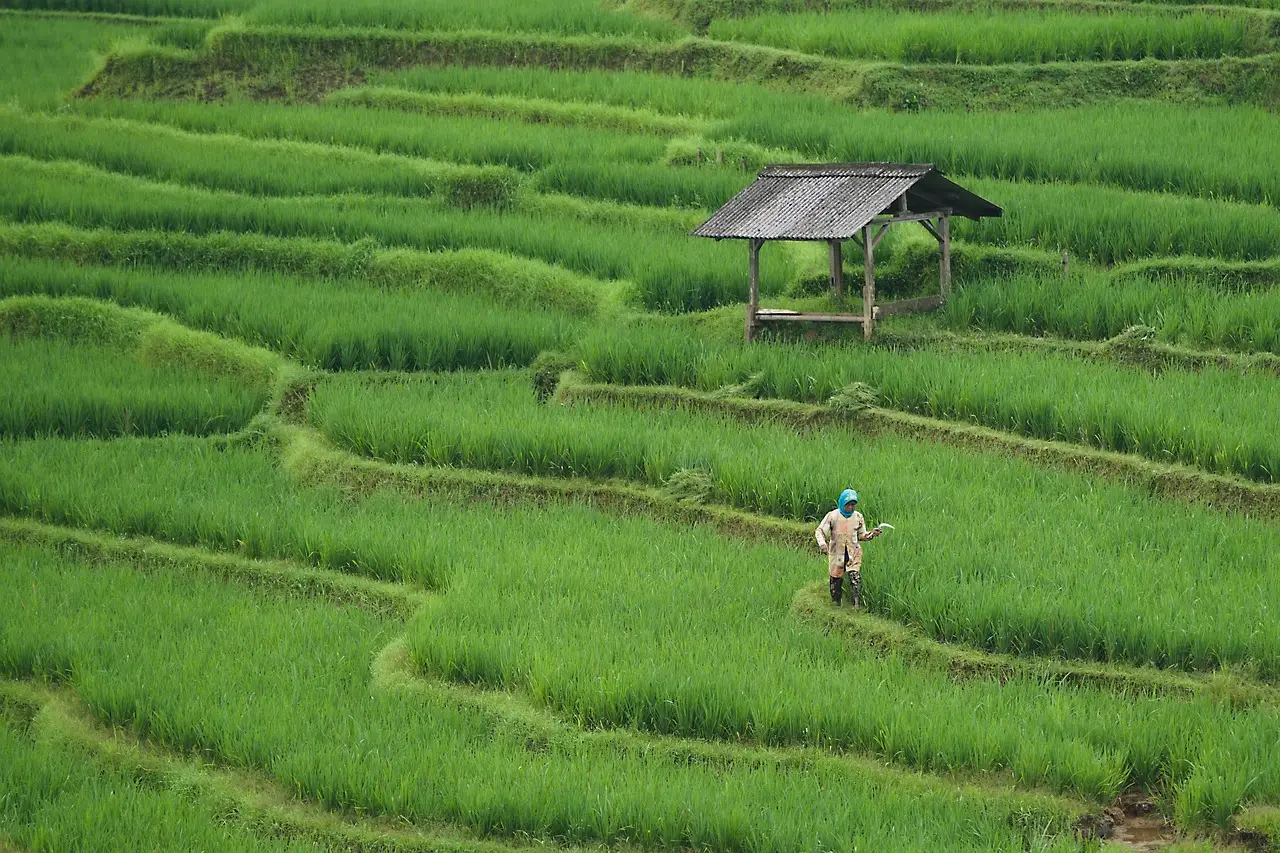
Thirty years of drip irrigation in China's arid northwest can sustain high, stable crop yields — provided farmers pair it with autumn or winter irrigation to flush salt from the root zone, a study published in npj Sustainable Agriculture on Nov. 5 concludes.
The research was led by professor Chen Yaning of the Xinjiang Institute of Ecology and Geography, part of the Chinese Academy of Sciences, working with Chinese Academy of Engineering academician Yin Feihu of the Xinjiang Academy of Agricultural and Reclamation Sciences and professor Wang Zhenhua of Xinjiang Agricultural University.
For practitioners, the finding addresses a dispute that has run since drip systems spread across the region more than 30 years ago. Drip irrigation raises water-use efficiency and supports more intensive cropping in irrigated oases. But researchers have long disagreed about what the technology does to soil over decades.
One camp argues that insufficient leaching and evaporation-driven salt buildup cause secondary salinization — a process in which irrigated soil becomes too salty for crops. The other camp holds that drip lines push salts away from crop roots and maintain a dynamic balance between accumulation and stable yields.
What did the researchers actually find?
Drawing on systematic case analyses, the team found both sides capture part of the picture. Long-term drip irrigation reduces salinity in the crop root zone even as salts accumulate elsewhere in the soil profile. Lower salt around the roots eases salt stress during early growth, when crops are most vulnerable.
But the salt does not disappear. It moves instead.
- Salts carried in irrigation water accumulate at the outer edge of the wetted soil zone around each emitter.
- Evaporation concentrates salts near the soil surface in the exposed zones between plastic mulch films.
- Where leaching is insufficient, this accumulation raises the risk of secondary soil salinization.
The takeaway: drip irrigation alone relocates salt; it does not remove it.
Why does off-season irrigation matter?
Autumn or winter irrigation closes the loop. Applying water at the soil surface during the nongrowing season lets it infiltrate through the soil profile and push accumulated salts into deeper layers. The added water then redistributes through the soil during winter and spring freeze–thaw cycles.
Together, the study finds, these processes maintain a long-term water–salt balance in the root zone, underwriting the sustainability of drip systems and the stability of yields.
Reservoir economics reinforce the schedule. Reservoirs with limited storage can hold only part of the water available in winter for the following growing season. Diverting water that would otherwise sit unused into autumn or winter irrigation turns a surplus into a salt-management tool — a practical gain in regions where water is scarce.
The study, which synthesizes case evidence rather than reporting a single new field trial, should be read as a mechanism-level account of how two irrigation seasons interact, not as a universal prescription. Local soil conditions, water quality and drainage all shape outcomes.
What changes for irrigated farms?
The researchers state that coordinating irrigation across seasons lets farms maintain high yields under long-term drip irrigation. Water-saving irrigation during crop growth, combined with salt leaching in the off-season, offers a practical model for irrigated agriculture in other arid regions facing the same salt-vs-scarcity trade-off.
Pair the seasons, and the salt stays off the roots.
The paper is Yaning Chen et al., "Mechanisms sustaining stable crop yields under long-term drip irrigation in arid regions," npj Sustainable Agriculture (2026), DOI: 10.1038/s44264-026-00198-x.
via phys.org/rss-feed/ (Source)
More from Marcus Bennett
Show full bio
News editor covering regulation, policy and their impact on general science news at SciBeat.
417 articles
Nearby plates
- Half the Groundwater Sustaining US Produce Isn't Coming Back
- A water budget reveals Rayalaseema's groundwater inequality
- Some rivers lost flow between 1951 and 2020 even as rainfall rose
- U.S. Irrigation Avoids 6.86 Gigatons of Emissions via Spared Land
- Asian Water Tower Loses 24 Billion Tonnes of Groundwater a Year