Recorded November 24, 2026
Space & AstronomyReported finding
Euclid telescope spots oldest known quasar, just 630 million years post-big bang
ESA's Euclid telescope found the oldest known quasar, J1504+6252, formed 630 million years after the big bang and weighing 360 million suns — a puzzle for black hole formation models.
By Elena Vasquez2 min read491 words
In brief
- Quasar J1504+6252 formed 630 million years after the big bang, about 13.1 billion years ago
- It is the first quasar ever recorded with a redshift beyond 8, and holds about 360 million solar masses
- Euclid has flagged 31 quasars in 1.5 years, including 12 beyond redshift 7
- The discovery beat Euclid's previous record, set in July, by 40 million years
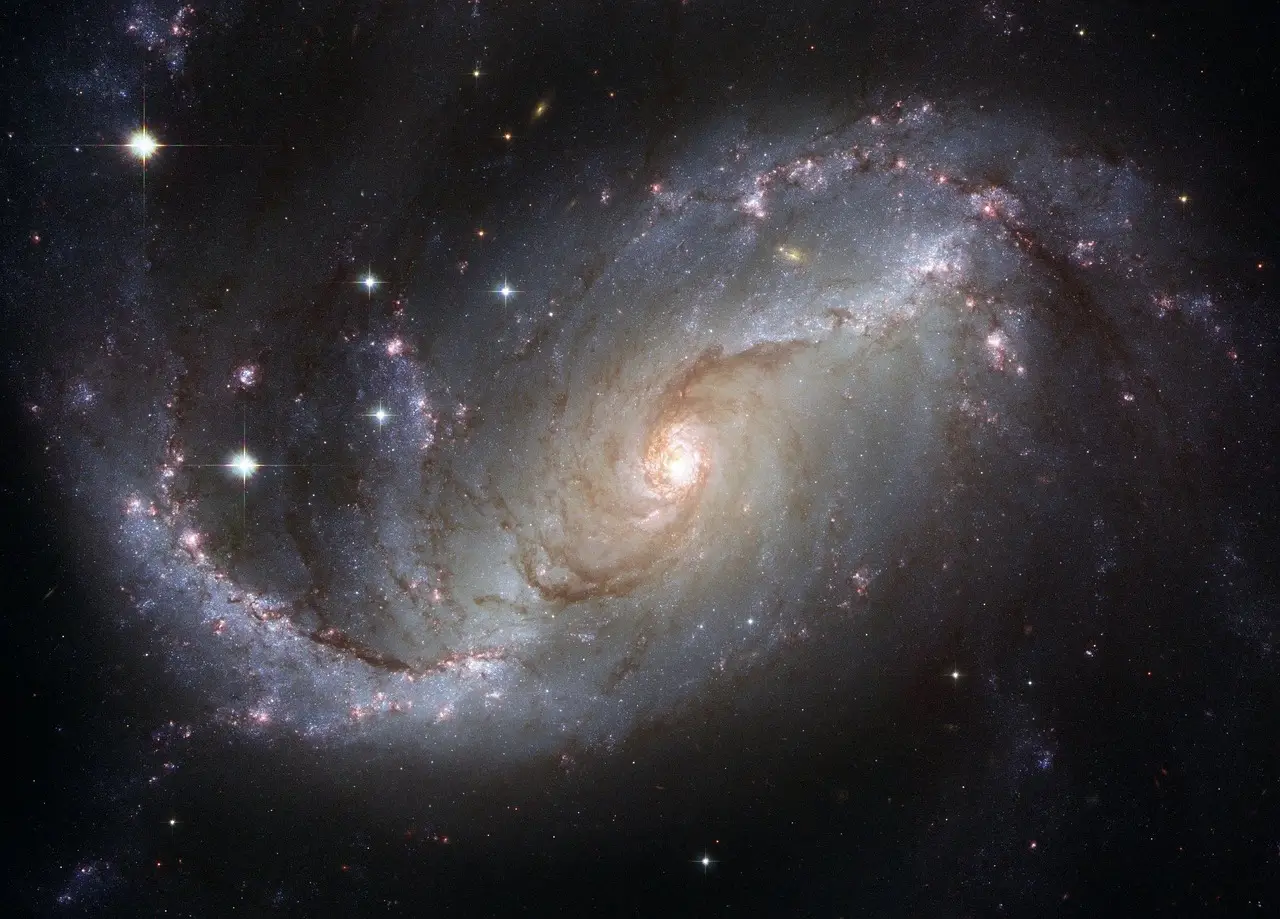
Astronomers have found the most distant — and therefore oldest — quasar ever observed: an object that formed just 630 million years after the big bang. ESA's Euclid space telescope spotted it, and a study published today in the journal Astronomy and Astrophysics confirms the record. The find beats Euclid's own previous mark by 40 million years, set only four months ago in July.
The quasar, now classified as J1504+6252, appears as it existed roughly 13.1 billion years ago. At that point the universe was just five percent of its current age. That's a look-back into the cosmos's infancy.
What is a quasar?
A quasar forms when a supermassive black hole at a galactic core inhales gas and dust while spitting out tremendous energy. During this comparatively brief phase of a galaxy's lifecycle, the nucleus can shine brighter than the entire galaxy around it.
Even so, a luminous object like J1504+6252 is hard to spot that deep in space-time. That's where Euclid comes in.
Why does Euclid keep finding these?
ESA launched the telescope in 2023 to study dark matter and dark energy, two forces estimated to make up about 95 percent of the universe yet still poorly understood. Quasars give researchers valuable chances to learn about those forces and their roles in the cosmos's formative eons.
The results are stacking up fast. In barely 1.5 years, Euclid has flagged 31 quasars, including 12 beyond a redshift of 7. Redshifting happens when light waves stretch toward the infrared as they cross the universe — the greater the redshift, the older the source. J1504+6252 is the first quasar ever recorded with a redshift beyond 8.
Takeaway: a telescope built for dark matter has become the best quasar-hunter in history, and it's breaking its own records in months.
Why does this quasar puzzle astronomers?
J1504+6252 is young and enormous at once, and that combination doesn't fit current theory. The object holds a mass equivalent to about 360 million suns, and researchers say it's unclear how a quasar that massive even formed so early in cosmic history.
Its behavior adds to the mystery. Despite its age, it's devouring material at a comparatively slow pace. That implies it grew during unprecedentedly fast spurts early in its life — a feature that challenges existing models of black hole formation.
These are initial assessments, and the study's authors flag that uncertainty themselves. The growth models, not the observation, are what's under strain.
What happens next?
Astronomers have nicknamed the quasar Dún Aonghasa, after a prehistoric clifftop fort in Ireland overlooking the Atlantic. Like the fort, J1504+6252 sits at the edge of the visible cosmos.
They expect Euclid to find multiple more quasars beyond redshift 8 in the years to come. Each one will sharpen the picture of how the universe's first giant black holes came to be.
via popsci.com (Source)
More from Elena Vasquez
Show full bio
Correspondent covering money, funding and market shifts around general science news at SciBeat.
613 articles