Plate Nº 27 · recorded November 18, 2026
Health & Medicine ResearchReported finding
FDA Clears First Bone Graft Material Made From Pearl Shells
FDA 510(k) clearance lets PearlBone Putty 1600, a bone graft material converted from pearl shell nacre in 24 hours, be sold in the US for fracture repair.
By Elena Vasquez3 min read678 words
In brief
- FDA granted 510(k) clearance to PearlBone Putty 1600, the first bone graft material made from pearl shell nacre.
- A patented chemical reaction converts nacre's calcium carbonate into bone's calcium phosphate in 24 hours.
- Shells come from Pinctada maxima oysters off Western Australia, recycled from pearl farming by-products.
- The US orthopaedic products market is worth an estimated $1.1 billion a year.
- Marine Biomedical still needs US partners to manufacture and distribute the putty.
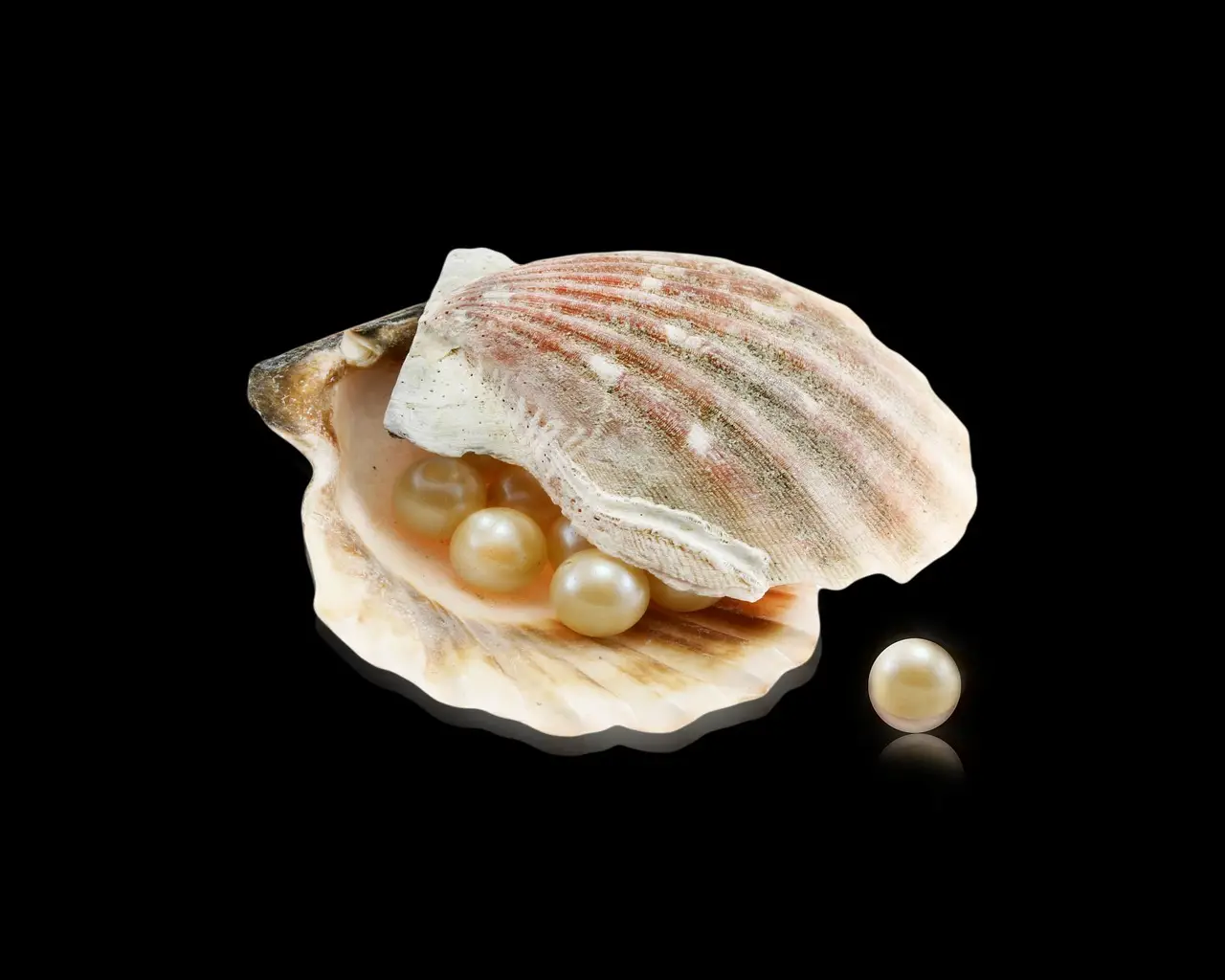
The US Food and Drug Administration has cleared the first bone graft material ever made from mother-of-pearl. The product, PearlBone Putty 1600, received 510(k) clearance, meaning it can now be marketed and sold in the United States for repairing bone fractures.
The material comes from pearl shells — specifically shells of the Pinctada maxima pearl oyster, harvested off the coast of Western Australia. It's the first replacement bone graft built from nacre, the shiny inner layer of oyster shells. And it's been years in the making.
How do you turn a shell into bone?
The research team developed a patented chemical reaction that converts the calcium carbonate of nacre into the calcium phosphate of human bone. The whole transformation takes 24 hours.
"We developed and patented a technology that converts nacre, the mineralized structure of pearl shell, into a bone mineral matrix composite," said Minghao Zheng, a regenerative biologist at the University of Western Australia and one of the researchers behind PearlBone.
"Essentially, we found a way to accelerate a biomineralization process that took millions of years in nature, into a process that could be completed in a day," Zheng said.
In practice, the process works like this: grind the oyster shells into a powder, then mix that powder with a calcium phosphate salt and water. The mixture sets by itself into what the researchers call a nacre-based calcium orthophosphate composite, or NCOC.
The team published part of this work in the journal Materials & Design, where they described how the composite was produced.
What can it actually do in the body?
According to the researchers, the material does several jobs at once.
- It keeps its mechanical strength after setting.
- It promotes cell attachment, proliferation and osteogenesis — that's the process of new bone formation — in laboratory tests.
- It biodegrades faster than many substitutes, so the body can replace it with normal bone.
"Overall, our data showed that NCOC produced through self-setting reactions, presents advantages such as accelerated biodegradation and osteostimulative properties, making it a promising bone substitute for effective bone regeneration," the researchers wrote in their paper.
In plain terms: the putty fills a gap, invites natural bone cells to grow into it, and slowly gets replaced by real bone.
There are limits, though. FDA rules state that grafts of this type cannot be "intrinsic to the stability" of the bone overall. So PearlBone fills gaps while a bone heals, often alongside hardware such as plates or screws. It could eventually be used for almost any bone damaged by injury or surgery.
There's a sustainability angle too. The shells are by-products of the pearl farming industry that would otherwise be discarded. It is, essentially, recycled oyster shell.
Why do doctors need another option?
Current bone repair choices each carry drawbacks. The gold standard is taking bone from elsewhere in the patient's own body, which guarantees a good match but causes pain and stretches out surgery time.
Artificial bone substitutes exist as well, but they don't always integrate well. They can fall short on strength and on how quickly the body absorbs them.
PearlBone aims to sit between those poles: off-the-shelf convenience with biological behavior closer to natural bone healing.
When can patients get it, and what's it worth?
Not right away. Marine Biomedical, the biotech company behind PearlBone, still needs to work with US partners to manufacture the putty and distribute it to clinical and commercial buyers.
The commercial stakes are real. The US is the world's largest market for orthopaedic products, worth an estimated $1.1 billion a year.
"[The FDA approval] reflects years of scientific research and extraordinary dedication," said Rolee Kumar, CEO of Marine Biomedical.
One caution is worth stating plainly: 510(k) clearance means the device is judged substantially equivalent to existing products, not that it's a breakthrough therapy. Long-term clinical performance in patients will be the real test. For now, a discarded oyster shell has cleared the toughest regulatory hurdle between the seabed and the operating room.
via sciencealert.com (Source)
More from Elena Vasquez
Show full bio
Correspondent covering money, funding and market shifts around general science news at SciBeat.
503 articles
Nearby plates
- Stem Cell Infusion Cut Fractures 94% in Small Osteoporosis Trial
- Tiny Tunnels Inside Bone May Be Secret to Its Renewal
- Electric Implant Cuts Blood Sugar Without Drugs — In Mice, So Far
- Neutron Imaging Reveals 66-Million-Year-Old Blood Vessels in T. Rex Rib
- Lasers Turn Ordinary Plastic Into Billions of Tiny Diamonds