Plate Nº 93 · recorded October 2, 2026
Health & Medicine ResearchReported finding
First Clitoral Reconstruction Surgery Shows Promising Results
Dutch surgeons have performed the first clitoral reconstruction after vulvar cancer surgery. In 23 patients, 90% regained the ability to have a clitoral orgasm, usually within six months.
By Priya Raman3 min read613 words
In brief
- 90% of the first 23 patients regained the ability to achieve a clitoral orgasm, typically 3–6 months after surgery.
- The technique repositions clitoral nerve bundles and covers the new tip with a graft of cheek tissue (buccal mucosa), adding about 15 minutes to the operation.
- The reconstruction arrives 40 years after the first penile reconstruction surgery in 1987; nine Dutch hospitals are now training in the method.
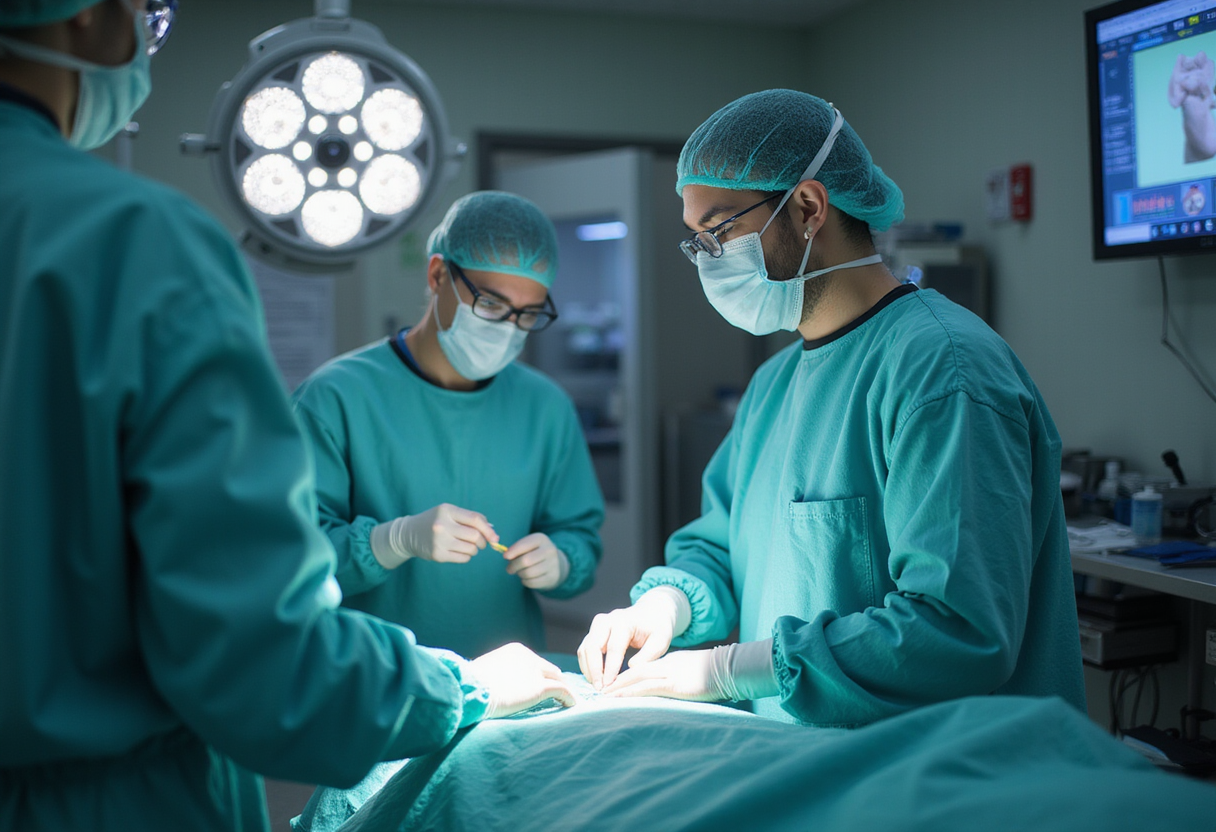
Surgeons in the Netherlands have developed the first surgical technique for reconstructing the clitoris after cancer treatment — a milestone that comes four decades after the first comparable procedure was devised for the penis.
In the first group of 23 women with vulvar cancer who received the reconstruction, 90% were able to achieve a clitoral orgasm again after surgery. For most of them, this happened between three and six months after the operation. The researchers, from Radboud university medical center (Radboudumc), published their results in the journal Gynecologic Oncology.
Why the procedure was needed
Vulvar cancer is rare. Around 450 women in the Netherlands receive the diagnosis each year, and in roughly one-quarter of those cases the tumor lies in or near the clitoris. Surgery can save lives, but when the disease affects this part of the anatomy, the surgical team often has to remove part of the clitoris itself.
"When the tumor is located in or around the clitoris, we sometimes have to remove part of it," explains gynecologic oncologist Mieke ten Eikelder of Radboudumc. "Until now, the wound was simply closed afterward, and the clitoris disappeared beneath a layer of skin, with little attention paid to quality of life or whether orgasm would still be possible."
The first reconstructive surgery for the penis after cancer was performed in 1987. No equivalent option existed for women until now.
How the technique works
Plastic surgeon Tim Nijhuis developed the procedure together with Ten Eikelder. It relies on the fact that the clitoris is richly supplied with nerve bundles — the cords of nerve tissue that carry sensation, including the signals behind sexual pleasure.
"Once the tumor has been removed, the nerve bundles are released and repositioned to create a new clitoral tip," Nijhuis explains. "We then cover it with a small graft of buccal mucosa." Buccal mucosa is the moist tissue that lines the inside of the cheek. Surgeons chose it because it closely resembles the natural tissue surrounding the vulva. Repositioning the nerves, rather than burying them under skin, is what gives the reconstructed clitoris a chance to remain sensitive.
The reconstruction adds only about 15 minutes to the cancer operation itself, which means it can fit into standard surgical care without major extra burden on the patient.
Recovery takes up to a year
The healing process follows a predictable pattern, according to the initial patients. "Initially, the clitoris may be overly sensitive or, conversely, less sensitive," Ten Eikelder says. "However, recovery is generally optimal after one year. In most women, sensation returns to a level comparable to what it was before surgery."
Beyond vulvar cancer, the researchers say the technique may also help women who have undergone female genital mutilation, a practice that can involve partial removal of the clitoris.
Early results, important caveats
The 90% success figure comes from a small initial group of patients treated at a single center, and the researchers are careful not to oversell it. They emphasize that further study is needed to confirm the findings.
A nationwide scientific research program is now underway. Eight other Dutch hospitals treat vulvar cancer, and all of them are joining a follow-up project in which gynecologic oncologists and plastic surgeons will learn the technique. Nijhuis and Ten Eikelder are also training specialists from other countries. Through this wider program, the team plans to measure whether the reconstruction genuinely improves sexual function and quality of life, and to work out how it can be integrated safely into everyday clinical care.
Publication details
The study appears as: Mieke ten Eikelder et al., "Clitoral reconstructive surgery for patients with vulvar carcinoma," Gynecologic Oncology (2026). DOI: 10.1016/j.ygyno.2026.07.013.
via Medical Xpress (Source)
More from Priya Raman
Show full bio
Senior reporter covering industry trends and analytics at SciBeat.
57 articles
Nearby plates
- Aspirin Falls Short in Preventing Liver Metastasis Recurrence
- Medical Records Barely Track Menopause, Study of 240,000 Women Finds
- Electric Current Could Reshape Corneas Without Lasers or Cutting
- Autonomous AI Freed Up 8,500 Dermatology Appointments in UK Study
- Menopause Training in U.S. Family Medicine Is Widespread but Uneven