Plate Nº 59 · recorded November 13, 2026
Biology & EvolutionReported finding
First Known Test for Dangerous 'Mirror Life' Relies on Twisting Light
UK scientists propose the first detection method for hypothetical mirror life, using twisting light to reveal reversed molecules before the threat ever materializes.
By Priya Raman3 min read620 words
In brief
- Researchers from the University of Strathclyde and Durham University published the first known mirror-life assay principle in Royal Society Open Science in 2026.
- The method uses circularly polarized luminescence, a twisting-light property, with fluorescent probes to detect reversed molecular handedness.
- No laboratory tests were run in the study; existing CPL technology could be adapted into cameras, microscopes and scanners.
- Mirror life has never been discovered or developed, and researchers rate it as a low-likelihood, high-severity biosecurity threat.
- Multiple scientific and regulatory bodies now call for tight restrictions on developing mirror bacteria in laboratories.
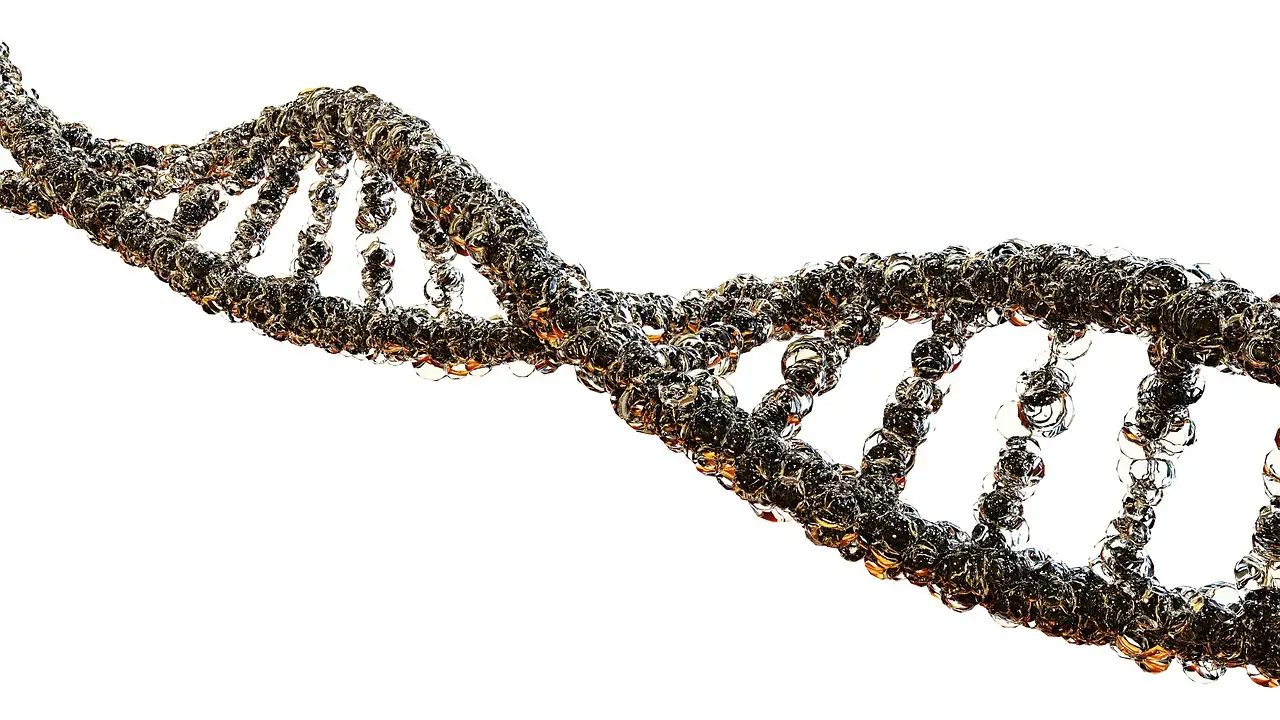
Researchers at the University of Strathclyde and Durham University have published the first known detection principle for "mirror life" — hypothetical organisms built from molecules flipped from their natural form — in the journal Royal Society Open Science in 2026. The method relies on a twisting property of light, and no mirror organism needs to exist for it to be tested.
"In this perspective, we have set out the first known assay principle to discriminate against mirror life," the researchers write in their paper.
Mirror life has never been discovered or developed. Yet many scientists take the threat seriously, because many of life's basic building blocks — including DNA and amino acids — carry a natural "handedness". If that handedness were reversed, the way a DNA double helix twisting to the left instead of the right would be, such looking-glass organisms could slip past the biological defenses of animals, plants and humans.
"Mirror life presents a low-likelihood but high-severity global biosecurity threat that has attracted the attention of bioscientists, governments and international security organizations," the researchers write.
How would the detection work?
The proposed assay uses circularly polarized luminescence, or CPL — a property of light whose waves twist like a corkscrew as they travel, revealing the handedness of whatever emitted them. That handedness is also called chirality.
Circularly polarized light is not new; some cinema 3D glasses already use it. The researchers propose adding fluorescent probes (molecules that glow under light) to a sample, then measuring the way the emitted light spirals. Reversed molecular structures would twist the light the wrong way.
"Assuming that mirror life is chemically analogous to conventional terrestrial life, these CPL signals could, in principle, be used to assess chirality and thereby provide a method for screening against mirror life," the researchers write.
The study ran no laboratory tests. Instead, the authors describe how existing CPL detection technology could be adapted into cameras, microscopes and other scanners. Two advantages stand out:
- Mirror organisms would not need to be developed to validate the approach.
- Several different probes could be used in tandem to reduce the chances of false positives.
Why does mirror life worry scientists?
A leading concern is mirror bacteria. Existing drugs are tuned to a particular molecular chirality, so mirrored microbes could render antibiotics and other medicines useless and seed pandemics that cannot be controlled.
Preparing is difficult precisely because the threat does not yet exist. Beyond development in biological laboratories, the researchers suggest mirror life might be found on other planets or in isolated parts of Earth — possibilities they rate as much less likely.
Several scientific and regulatory bodies have now recognized the danger and are calling for tight restrictions on developing mirror bacteria in labs, though bad actors could always ignore the rules. The researchers' answer is to build detectors and countermeasures before anything appears.
"The CPL method could provide a first-line assay for identifying extant mirror life biohazards, while also offering a foundation for bio-surveillance efforts that would likely be necessary for practical safeguarding against artificial mirror life," they write.
What comes next?
The team now wants to test some of these fluorescent probes on ordinary cells, which would reveal more about how their flipped counterparts could be detected. Substantial work remains in fine-tuning both the light detection and the fluorescent staining stages.
"We encourage other researchers who are experts in these techniques to consider how methods and equipment could be adapted and used for screening against mirror life, and where complementary analysis may be practicable," the researchers write.
Because the paper outlines an assay principle rather than validated results, its conclusions remain preliminary. Even so, a detector designed before the hazard exists is the surest safeguard against it.
via sciencealert.com (Source)
More from Priya Raman
Show full bio
Senior reporter covering people, launches and day-to-day practice in general science news at SciBeat.
379 articles
Nearby plates
- Scientists propose a polarized-light test for “mirror life”
- AI-Powered Nanogap Sensor Detects Life's Molecular Handedness
- Nobel Prize in Chemistry Goes to Mirror Molecule Pioneers Kagan and Soai
- New synthesis controls handedness in 17-ring molecular spiral
- Five Plant-Enzyme Mutations Rewired a Mirror-Image Sensor