Plate Nº 90 · recorded November 16, 2026
Earth & ClimateReported finding
Fog Is Becoming More Common Across Southern Australia
Southern Australia gained up to an extra hour of fog per year from 1980 to 2024, a new nationwide study finds, defying a global decline driven by warming and cleaner air.
By Priya Raman4 min read762 words
In brief
- Southern Australian regions gained roughly 30 minutes to one extra hour of fog per year between 1980 and 2024.
- Canberra is Australia's foggiest city, likely because it sits in a valley.
- In December 2023, fog contributed to a multicar crash on Victoria's Western Freeway that hospitalized 20 people.
- The affected regions normally record fewer than 50 hours of fog per winter.
- The study appears in the Journal of Hydrometeorology (DOI: 10.1175/jhm-d-26-0099.1).
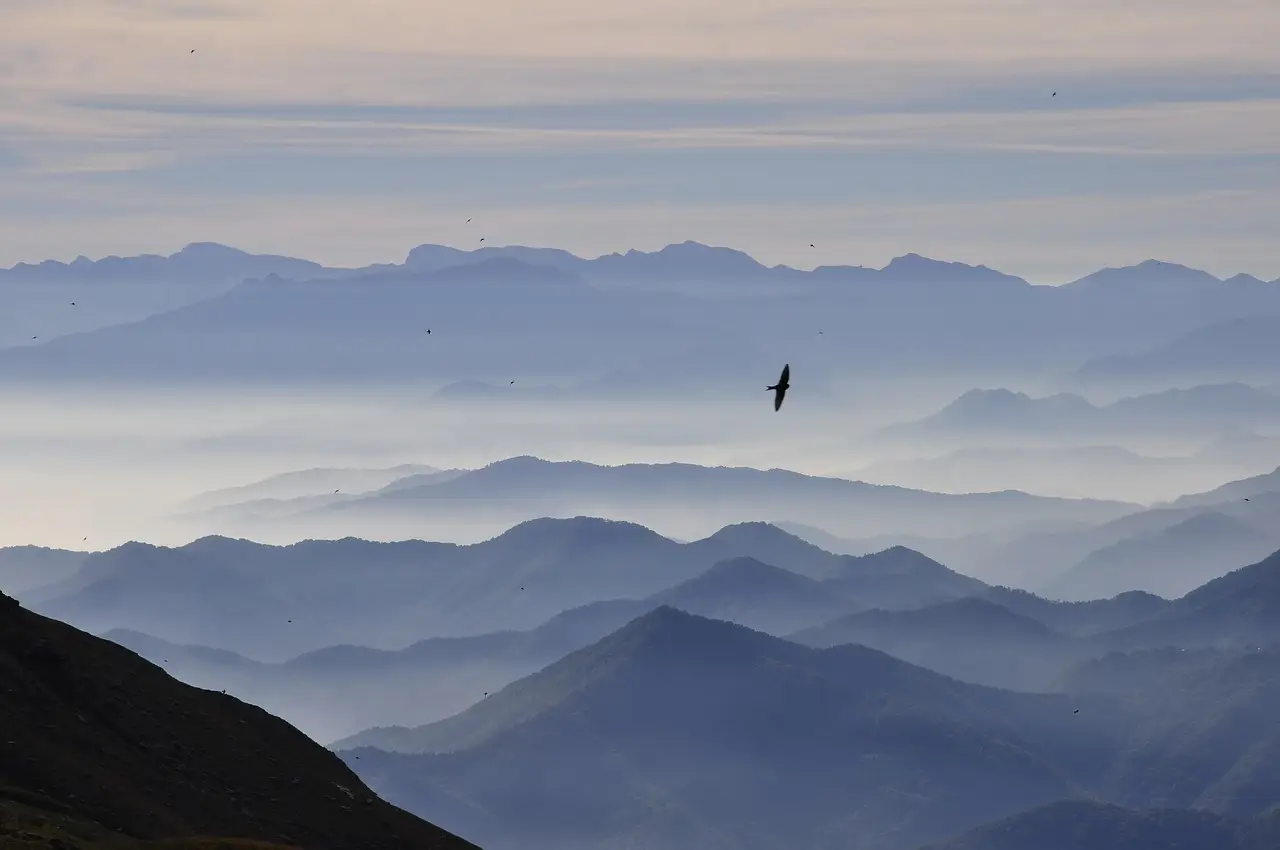
Parts of southern Australia gained roughly 30 minutes to one extra hour of fog each year between 1980 and 2024, according to Australia's first nationwide study of fog — a trend that runs against the global pattern of declining fog.
The finding matters because fog is not merely an inconvenience. In December 2023, thick fog contributed to a multicar crash on Victoria's Western Freeway that sent 20 people to the hospital. Aviation, too, depends on accurate fog prediction; any traveller grounded by low cloud understands the cost of an overlooked weather phenomenon.
The study, led by Kimberley J. Reid and colleagues, appears in the Journal of Hydrometeorology (DOI: 10.1175/jhm-d-26-0099.1). It draws on the Bureau of Meteorology's high-resolution reanalysis, a tool that combines observations of temperature, pressure, humidity and winds with advanced weather models to estimate whether fog was present each hour from 1980 to 2024. This approach lets researchers cover places without weather stations — important because fog is difficult to observe and the special instruments required sit mostly at airports.
What is fog, and how does it form?
Fog is a low-lying cloud that forms near Earth's surface. When water vapor cools enough to condense, tiny droplets suspend in the air — droplets too light to fall as rain, yet dense enough to block light from reaching our eyes.
Scientists classify low cloud as fog when it reduces visibility below 1 kilometer (0.6 miles). Three ingredients are required: moisture in the air, cool temperatures, and cloud condensation nuclei (tiny particles such as dust and pollution on which water molecules gather into larger droplets).
The most common type in Australia is radiation fog, which forms in the early hours of a calm winter morning and disappears after sunrise. Clear, starry nights let land release heat into space efficiently; as the ground cools, moisture near the surface condenses into fog. A second type, sea fog, forms when warm, moist air flows over cooler ocean water. In Chile's Atacama Desert, residents capture regular sea fogs on huge meshes to produce drinking water and even grow lettuce.
Related phenomena deserve distinction:
- Mist: like fog but less dense, reducing visibility to between 1 and 5 kilometers (0.6 to 3.1 miles).
- Smog: pollution mixed with a low-level cloud, a blend of the words smoke and fog. Before air pollution laws arrived in the 1950s, deadly multiday smogs plagued London and industrial towns such as Donora in the United States.
- Haze: polluted air that limits visibility without containing enough water to form a cloud.
Where and when does fog strike Australia?
Fog is less common in Australia than in fog-prone regions such as Delhi, San Francisco and Cape Town, thanks to a warmer climate, relatively clean air and warm ocean currents. Consequently, Australian research on fog trends is sparse, and most existing studies concern airports and the aviation industry.
The new climatology shows fog is most common from fall through spring, with winter the foggiest season. Coastal areas see more fog, because more moisture is available in the air. Mountain and valley terrain, such as the Great Dividing Range, is particularly prone.
Canberra is by far the foggiest city in Australia, likely because it sits in a valley — worth remembering when booking winter morning flights. The coastal Northern Territory also appears to be a hot spot, although the authors caution it remains unclear why, and how reliable the result is, given sparse fog observations in the Australian tropics.
Why is southern Australia bucking the global trend?
The headline result surprised the researchers: more winter fog is forming over parts of southern Australia, particularly western Victoria, South Australia's Eyre Peninsula and southeast Western Australia. That extra 30 minutes to one hour per year may sound modest, but these regions typically record fewer than 50 hours of fog across an entire winter — a meaningful proportional jump.
Globally, fog is decreasing in many places because of global warming and reduced air pollution. The authors suspect southern Australia's opposite trend is linked to broader weather patterns: scarcer rainfall and more frequent winter high-pressure systems. High-pressure systems discourage cloud formation, producing clear winter nights that often lead to foggy mornings.
This remains a preliminary interpretation. To determine whether the trend will continue, the researchers call for more study, improved weather models and sustained investment in Australia's weather and climate modeling sectors — preparation that could reduce grounded flights and multicar pileups alike.
For now, the mornings in Canberra will stay white a little longer.
via phys.org/rss-feed/ (Source)
More from Priya Raman
Show full bio
Senior reporter covering people, launches and day-to-day practice in general science news at SciBeat.
425 articles