Plate Nº 87 · recorded September 30, 2026
Health & Medicine ResearchReported finding
How Many Steps Should a Preschooler Take? Science Now Has a Number
The first international step-count benchmarks for preschoolers show children aged 3 and 4 log a median of 18,542 steps a day — with huge variation between individuals, sexes and countries.
By Priya Raman3 min read602 words
In brief
- Children aged 3 and 4 take a median of 18,542 steps per day, based on data from more than 3,500 children in 44 countries collected between 2018 and 2025.
- Among 3-year-olds, daily steps ranged from 1,124 (least active) to 29,320 (most active); boys consistently logged more steps than girls.
- The study is observational and country samples were small, so the reference values offer a rough benchmark, not an explanation of what drives the differences.
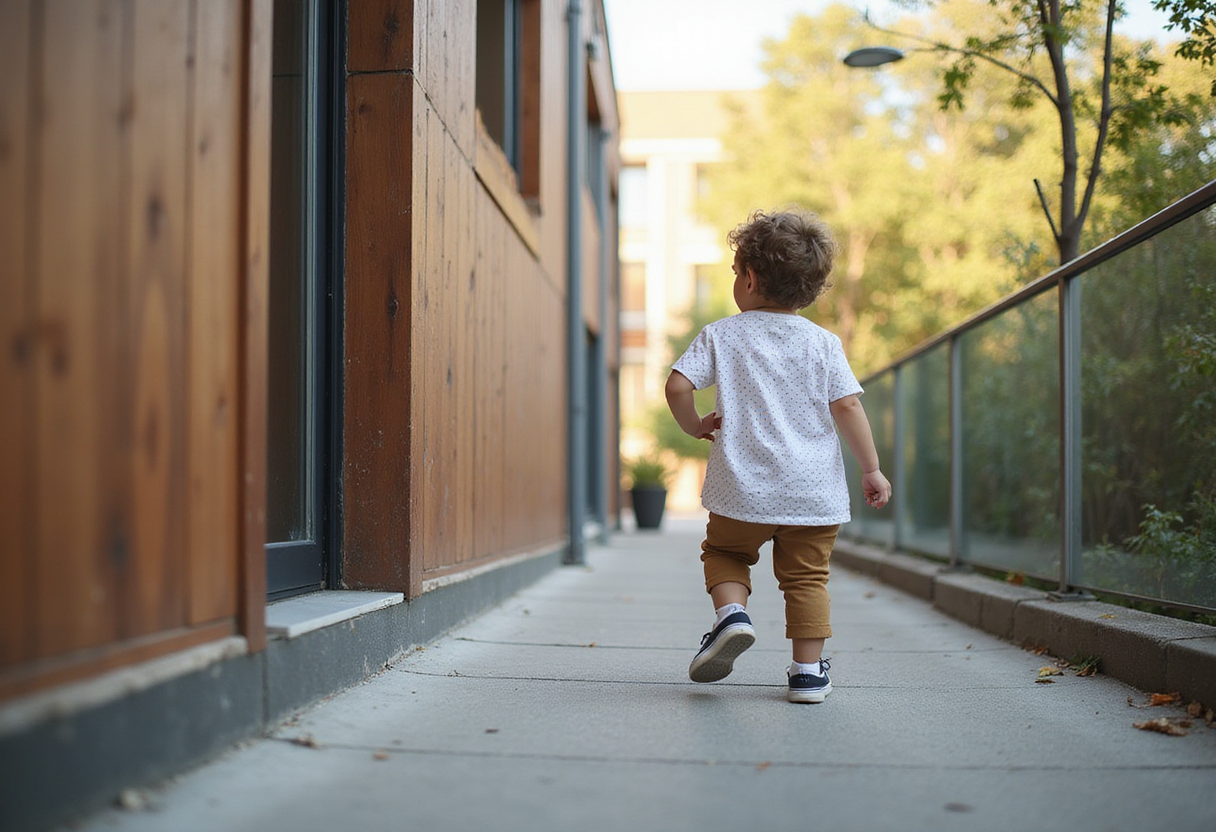
Children ages 3 and 4 take a median of 18,542 steps per day, according to the first international reference values for daily step counts in preschool-age children, published in The Lancet Child & Adolescent Health. That figure, however, hides enormous variation between individual children.
The study, led by Jesús del Pozo-Cruz and colleagues, tracked more than 3,500 3- and 4-year-olds across 44 countries between 2018 and 2025. Each child wore a step counter on their hip for 24 hours a day over a minimum of three days. It is the largest effort yet to establish objective benchmarks for physical activity at this age.
Why measure steps in young children?
Early childhood is a critical window for growth and development. Researchers have linked low activity during these years to excess weight gain and delayed motor development — the progression of skills like running, jumping and balancing.
Yet doctors and parents have very few objective tools to track physical activity in young children or to identify those at risk of moving too little. Step counts offer a simple, widely accessible proxy: a rough but practical stand-in for overall physical activity that requires nothing more than a basic accelerometer or pedometer.
Until now, no international reference values existed for this age group, meaning there was no yardstick against which an individual child's activity could be compared.
Wide differences in daily steps
The new data reveal just how much step counts vary among preschoolers. Among 3-year-olds, the least active children took 1,124 steps a day, while the most active took 29,320 — a difference of more than 26,000 daily steps between the extremes.
Boys consistently recorded more steps than girls. Among 3-year-olds, the median was 18,064 steps for boys compared with 16,426 for girls. Among 4-year-olds, the gap persisted: medians were 19,477 steps for boys and 18,321 for girls. A median is the midpoint of a group's values, meaning half of the children fell above it and half below.
Where children live also appeared to matter. Children in low- and middle-income countries, and those living in rural areas, recorded higher average daily step counts than children in high-income countries and urban areas.
A growth chart for activity — with caveats
The researchers suggest their reference values could work much like pediatric growth charts, the familiar curves doctors use to check whether a child's height and weight fall within a typical range. In this case, an individual child's daily step count could be compared against an international benchmark to flag unusually low activity.
But the authors urge caution. The study is observational and captures only one short window in time, so it cannot explain why these differences exist — whether they stem from environment, culture, childcare arrangements or other factors remains an open question.
The researchers also note that the country-level samples were relatively small. That limitation may restrict how far the findings can be generalized to entire national populations.
In short, the numbers provide a first, rough yardstick rather than a diagnosis. A child taking far fewer than the median is not necessarily unhealthy, and a child above it is not automatically in the clear. Still, for a field that has lacked any objective benchmark for preschoolers, the new reference values mark a concrete step forward.
Reference: Jesús del Pozo-Cruz et al., Global reference values for daily steps in preschool children (SUNRISE): a cross-sectional analysis from 44 countries, The Lancet Child & Adolescent Health (2026). DOI: 10.1016/s2352-4642(26)00188-4
via Medical Xpress (Source)
More from Priya Raman
Show full bio
Senior reporter covering industry trends and analytics at SciBeat.
57 articles
Nearby plates
- Where You Live May Speed Up How Fast Your Body Ages
- One Weekly Session of Isometric Exercise May Keep Blood Pressure Down
- Exercise May Protect Aging Joints Through microRNA-29
- Diet and Exercise Reverse Early-Onset Type 2 Diabetes in Half of Cases
- Exercise Program Boosts Attention and May Slow Aging in Breast Cancer Survivors