Plate Nº 43 · recorded October 10, 2026
Health & Medicine ResearchReported finding
Human Milk Responds Selectively to Maternal Diet, Two Studies Find
Two international studies analyzed 25,000+ compounds in milk from 1,000+ mothers in four countries, finding some nutrients shift with maternal diet while others stay tightly locked by biology.
By Priya Raman3 min read596 words
In brief
- More than 25,000 compounds were profiled in nearly 2,000 human milk samples collected from over 1,000 mother-infant pairs.
- Participating families came from Canada, Burkina Faso, Tanzania, and Pakistan across four continents.
- More than 20 researchers from 13 organizations across six countries collaborated through the IMiC Consortium.
- B vitamins, selenium, and triglyceride profiles responded to maternal nutritional supplementation, while many other milk components did not.
- The nutrition study by Trenton Dailey-Chwalibóg et al. was published in Science in 2026, DOI: 10.1126/science.aee9284.
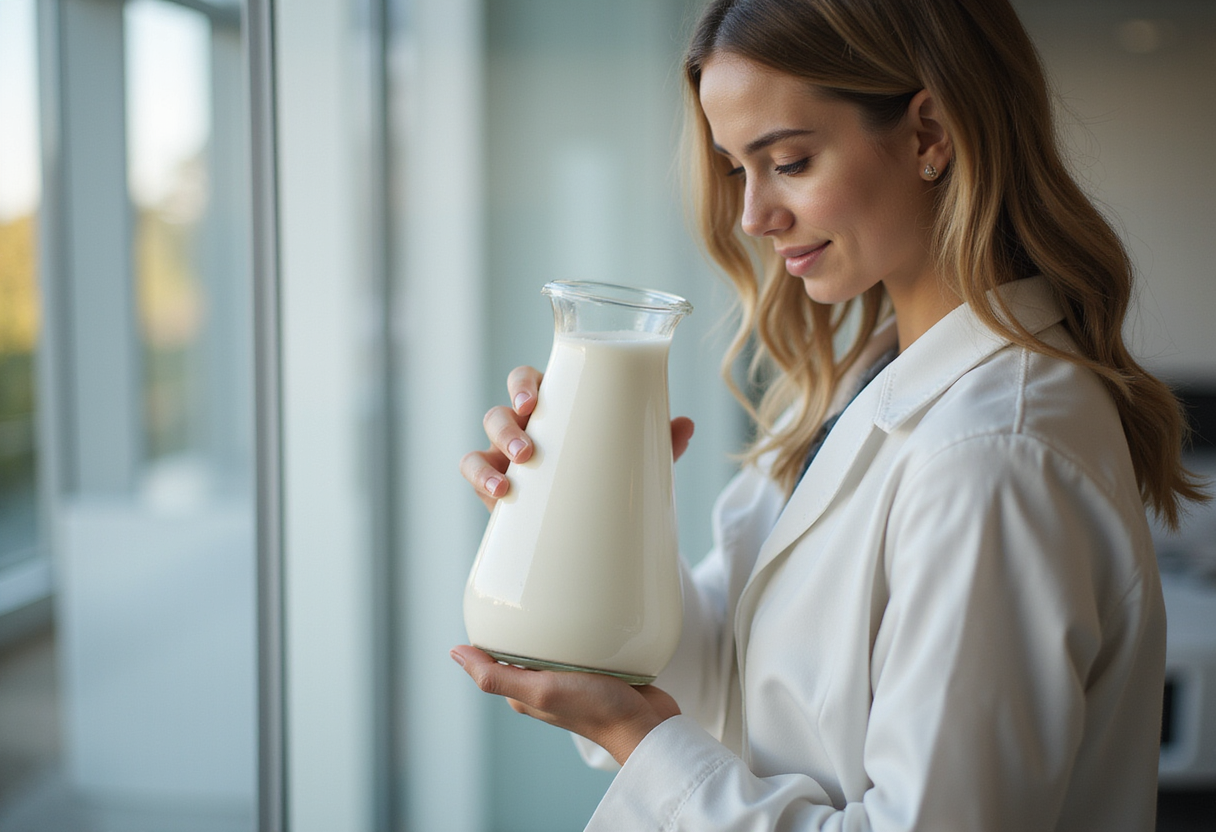
In one of the most comprehensive analyses of breast milk ever conducted, scientists profiled more than 25,000 compounds in nearly 2,000 milk samples from over 1,000 mothers and infants across four countries. The work, published in Science, shows that some milk components shift with maternal nutrition while others stay tightly locked by the body's own regulation.
The research comes from the International Milk Composition (IMiC) Consortium, a collaboration led by the University of Manitoba with more than 20 researchers from 13 organizations across six countries and four continents. Participating families came from Canada, Burkina Faso, Tanzania, and Pakistan.
What did the researchers actually measure?
The team profiled human milk at a molecular scale rarely attempted before:
- Samples: nearly 2,000 individual milk donations
- Compounds tracked: more than 25,000 distinct molecules
- Mother-infant pairs: over 1,000
- Geographic reach: four countries across four continents
"Together, the studies show that human milk is neither completely fixed nor simply a reflection of maternal diet," said Dr. Meghan Azad, IMiC director and a professor of pediatrics and child health at the University of Manitoba. "Some components respond readily to maternal nutritional interventions, while others are tightly regulated or reflect the biology of the lactating breast."
Which milk components respond to a mother's diet?
The first paper tested whether nutritional supplements given to lactating mothers change what ends up in their milk. Three trials in low-resource settings tracked the effects.
The answer was selective. B vitamins, selenium, and triglyceride fat profiles all shifted when mothers received supplements. Many other components did not.
"This tells us that milk is not simply a reflection of what a mother eats, but a highly regulated biological system," said Dr. Trenton Dailey-Chwalibóg, the study's lead author and a senior research fellow at Ghent University who also serves as a principal investigator at AFRICSanté in Burkina Faso.
The finding carries practical weight. Identifying which milk components are modifiable could help researchers design supplements that more deliberately improve what reaches breastfed infants, especially in places where maternal undernutrition is common.
What does milk reveal about the lactating breast?
The second study stepped back from maternal diet entirely. It looked for molecular patterns in milk linked to how the mammary gland itself functions: milk synthesis and secretion, the epithelial barrier (the thin layer of cells lining the gland's ducts), tissue remodeling, and immune activity.
Shared patterns emerged across diverse populations, suggesting common biological rules governing how the lactating breast operates.
"Human milk gives us a rare, noninvasive window into the biology of the lactating mammary gland," said Dr. Liat Shenhav, the mammary gland study's senior author and an assistant professor at New York University's Grossman School of Medicine. "By looking at molecular patterns across diverse populations, we can begin to identify shared features of mammary function and understand how they relate to maternal metabolism and infant growth."
Why does this recasting of milk matter?
For decades, breast milk research treated the fluid as a nutrient mix. The new papers recast it as a measurable biological output of the mammary gland, shaped partly by diet and heavily governed by the body's own systems.
The researchers say the work opens new directions for lactation biology. Future interventions could target maternal nutrition, mammary function, or infant growth with more precision, though the authors caution that translating molecular findings into clinical guidance will require additional study.
Both papers appeared in Science in 2026. The nutrition study by Trenton Dailey-Chwalibóg and colleagues is available via DOI: 10.1126/science.aee9284.
via Medical Xpress (Source)
More from Priya Raman
Show full bio
Senior reporter covering industry trends and analytics at SciBeat.
207 articles
Nearby plates
- Pediatricians Renew Push to Ban Raw Milk, Warn of H5N1 Risk
- Dairy Trans Fats Don't Raise Heart or Diabetes Risk, 22-Study Review Finds
- AI tool predicts chromatography retention times on unfamiliar instruments
- 160-Million-Year-Old Peptides Outperform Modern Human Versions
- Postpartum GLP-1 Prescriptions Jumped 24-Fold, Study Finds