Plate Nº 35 · recorded October 10, 2026
Biology & EvolutionReported finding
Humpback Whale Mother Stayed With Dead Calf for Days, Study Finds
Researchers observed a humpback whale mother staying with her presumed stillborn calf for several hours and possibly days off Australia's Gold Coast in 2025. The case is the first documented in a baleen whale.
By Marcus Bennett3 min read600 words
In brief
- The encounter took place in 2025 off Australia's southern Gold Coast.
- The mother remained beside the calf for several hours and possibly longer.
- The paper was released on September 22, 2026 in the journal Discover Animals.
- It is the first documented case of post-mortem attendance in a baleen whale.
- The study's identifier is DOI 10.1007/s44338-026-00232-9.
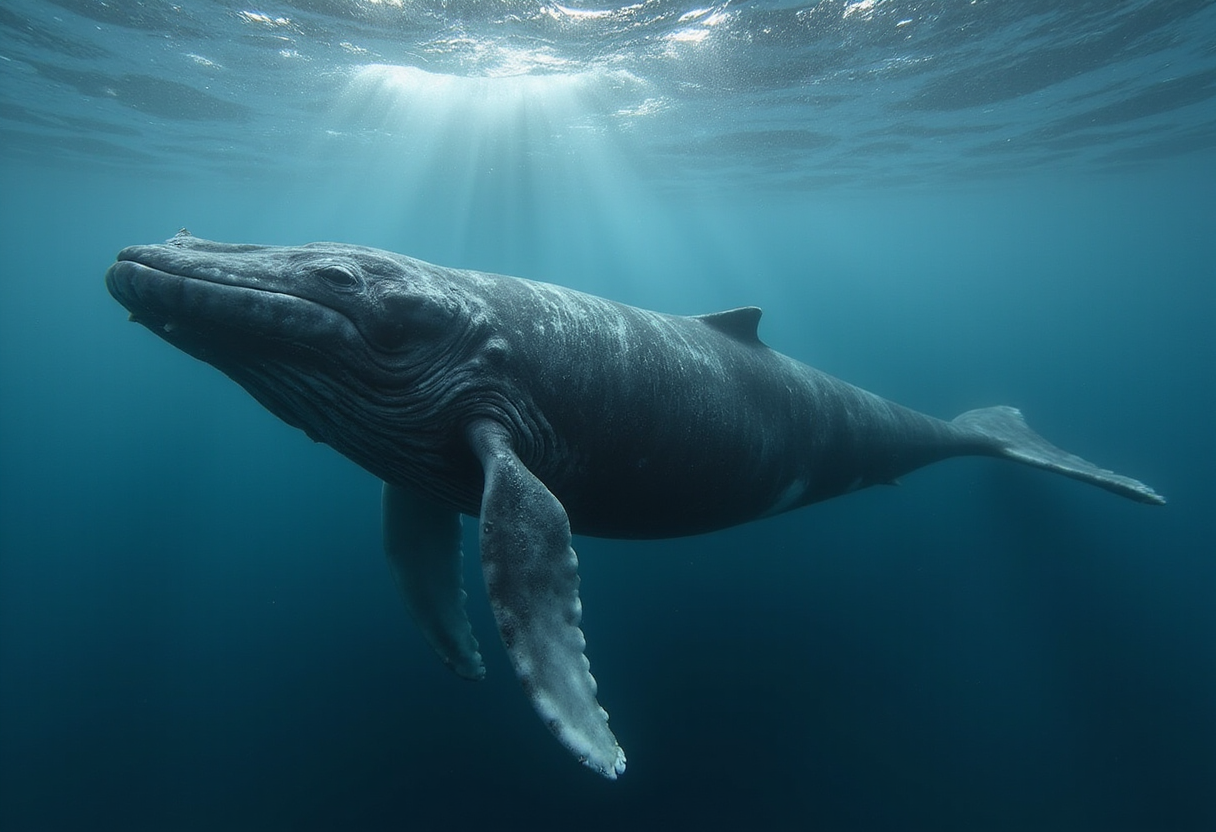
In 2025, a humpback whale mother was seen off Australia's southern Gold Coast, lingering beside a presumed stillborn calf for several hours and possibly days. The observation, published in the journal Discover Animals on September 22, 2026, marks the first documented case of post-mortem attendance in a baleen whale.
A Sea World Foundation rescue boat crew spotted the pair in waters off southeastern Queensland. A female humpback swam with a calf that appeared to have died at or near birth. An escort whale was also nearby.
The mother stayed close to her calf, maintained eye contact, and positioned herself alongside the body in ways the researchers compared to nurturing behavior seen in other socially complex mammals.
What did the mother whale actually do?
The team recorded several specific behaviors during the encounter:
- She remained within a body length of the calf for multiple hours.
- She kept her eyes oriented toward the calf.
- She repositioned herself to stay next to the body as surface conditions shifted.
- She did not lift the calf above the surface, a behavior previously reported in toothed whales such as dolphins and orcas.
The last point matters. Most published accounts of mothers attending dead young come from toothed cetaceans — whales and dolphins with teeth, including dolphins, orcas, and sperm whales. Baleen whales, which filter-feed using comb-like plates instead of teeth, account for far fewer such records.
How unusual is this case?
The report is the first peer-reviewed documentation of a humpback mother attending a stillborn calf. Dr. Meynecke noted that toothed-whale cases typically involve mothers carrying or pushing the dead young above the surface. The Gold Coast mother instead stayed under or at the surface, a pattern researchers had not previously described in humpbacks.
"Unlike reports of toothed whales where mothers have been observed lifting their dead calves to the surface, this humpback whale mother showed prolonged post-mortem behavior and attention towards her deceased calf under the surface," Meynecke said.
Could grief be involved, or just instinct?
The researchers are careful not to claim grief directly. They frame the underwater attention as evidence of maternal attachment and emotional complexity, and stop short of attributing human-like mourning.
To answer that question, the team calls for more systematic reporting of neonatal deaths in large whales. Rare events are hard to study when each case looks different.
"This case study highlights the need for continued systematic documentation of rare neonatal mortality events to better understand the cognitive, emotional, and evolutionary significance of post-mortem behavior in large whales," Meynecke said.
"Understanding how non-human animals responded to death provides insight into their emotional lives, social bonds, and cognitive capacities," he added.
What was it like at sea?
For Andrew Mulville, captain of the Sea World Foundation rescue boat, the scene stood out precisely because it did not match normal humpback sightings.
"When I actually worked out what was happening, I was totally surprised," Mulville said. "At first sight, I thought it was just two whales resting on the surface, but their behavior was unusual. It was definitely not what I was expecting to see out at sea that day."
What comes next?
The case adds a single data point to a thin literature. Researchers say future observations could clarify whether the 2025 behaviors are typical or atypical for the species, and what role maternal experience or birth complications might play.
The study, titled "First documentation of humpback whale (Megaptera novaeangliae) post-mortem attendance of a stillborn," appears in volume 3 of Discover Animals. Its DOI is 10.1007/s44338-026-00232-9.
via dx.doi.org (Original)
More from Marcus Bennett
Nearby plates
- Baby Whales Are Washing Up Dead in Argentina, and Scientists Are Racing to Find Out Why
- Healthy Calves Born Without 'Essential' Pregnancy Protein
- 1.4-Million-Year-Old Footprints Reveal Larger Paranthropus Than Expected
- Gobi Desert Fossil Rewrites 40-Year Mammal Evolution Theory
- Wild elephants use 40+ intentional gestures to say 'move away'