Plate Nº 51 · recorded November 14, 2026
Space & AstronomyReported finding
Lumina Simulation Shows Both Stars and Black Holes Ended the Dark Ages
The record-breaking Lumina simulation, spanning 1.5 billion light-years in 432 billion cells, shows stars and supermassive black holes split the work of reionizing the early universe.
By Marcus Bennett4 min read775 words
In brief
- Lumina simulates a volume over 1.5 billion light-years wide, divided into 432 billion sectors, resolving scales down to about 1,400 light-years.
- Initial results were published October 26 in the Monthly Notices of the Royal Astronomical Society.
- The simulation covers a two-billion-year stretch starting about 50 million years after the Big Bang.
- Hydrogen reionization completed about 12.5 billion years ago; full helium reionization began around 12.8 billion years ago and finished 1.2 billion years later.
- Stars ionized hydrogen and singly ionized helium; supermassive black holes fully ionized helium.
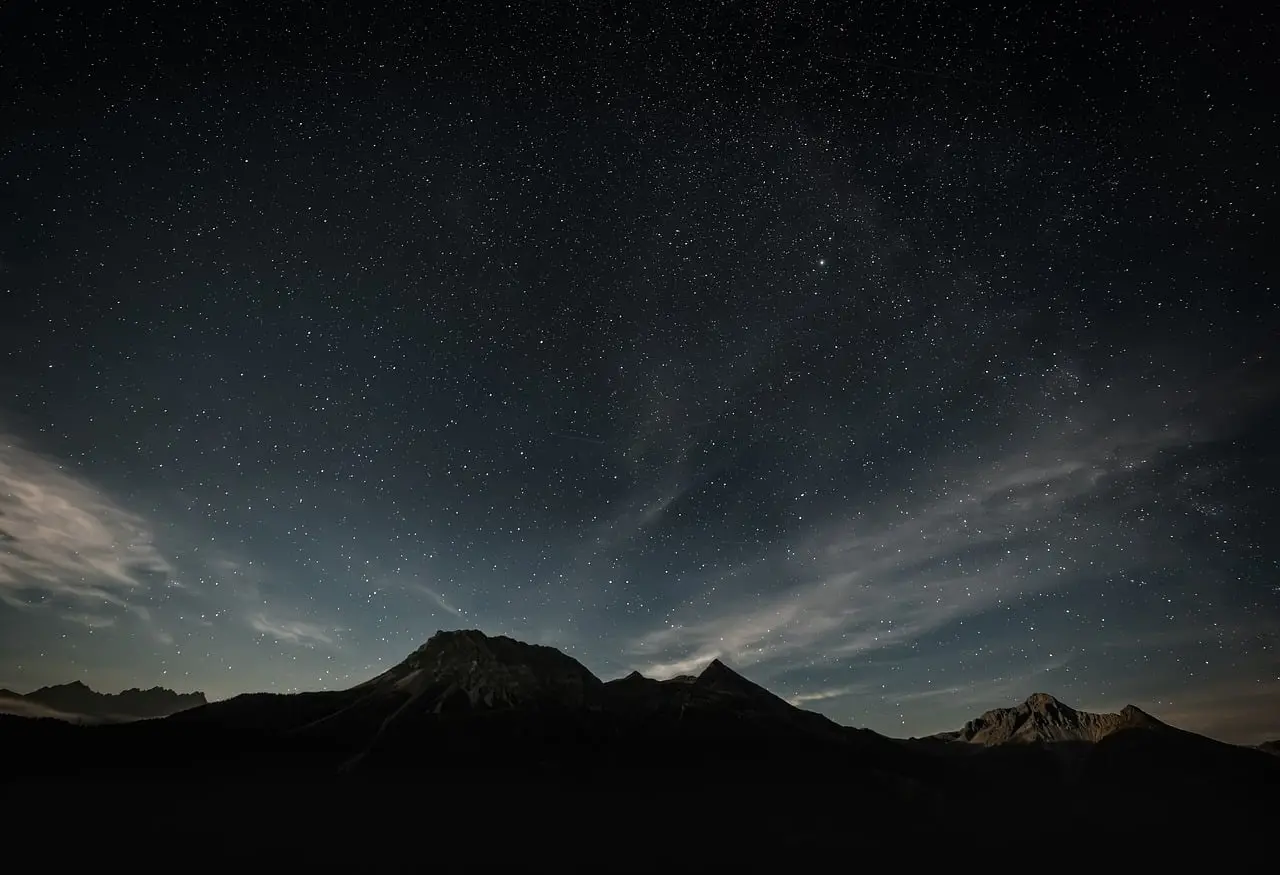
The universe's cosmic 'dark ages' ended through a joint effort: stars ionized all of the hydrogen and most of the helium, while supermassive black holes finished the job on helium. That is the headline result of Lumina, a record-breaking cosmological simulation published October 26 in the Monthly Notices of the Royal Astronomical Society by a large international team of scientists.
Lumina models a stretch of cosmic history about which observations tell us little: the two-billion-year period beginning roughly 50 million years after the Big Bang, when the first stars and galaxies formed. It is the most detailed simulation ever run over such a large chunk of the universe.
How big is the simulated volume?
The numbers behind the run set it apart. Lumina tracks physical conditions across a volume of space more than 1.5 billion light-years wide, yet resolves details down to scales of about 1,400 light-years. To do this, the team divided the volume into 432 billion individual sectors of space and followed multiple physical parameters in each one as conditions evolved over time.
That combination matters for practitioners. Small-scale resolution keeps the physics of star formation honest; huge overall volume lets structures such as galaxy clusters — and rare but powerful quasars, the ionizing-radiation sources that only appear in large simulated regions — form naturally and exert their outsized effects on the surrounding gas.
Lumina also applies what the team describes as the most sophisticated physics ever used at this scale, tracking hydrogen, helium, dark matter and ionizing radiation from multiple sources. One known limitation: it leaves out magnetism, which remains too complex to calculate in a run of this size.
Takeaway: this is the first simulation that resolves star-forming physics while spanning a volume large enough for quasars and clusters to emerge.
What was reionization, and why does it matter?
The early universe was hot, dense and opaque, filled with ionized gas — charged particles like electrons and protons — that scattered photons in random directions and blocked light from traveling freely. About 380,000 years after the Big Bang, the cosmos cooled enough for atomic nuclei and electrons to combine. The gas became electrically neutral, stopped absorbing light effectively, and the universe turned transparent.
Gravity then went to work. Cooling matter drew together into galaxies, clusters and superclusters, while stars coalesced and supermassive black holes grew in galactic centers. Both stars and those black holes emitted intense high-energy photons, including ultraviolet light, which stripped electrons off atoms once again. Because the universe had expanded so much by then, the gas density had plummeted and the cosmos stayed transparent — the state it remains in today, more than 13 billion years later.
Astronomers have argued for years over which source did the reionizing. Lumina's answer is both. Stars ionized hydrogen and removed one electron from helium atoms, but helium clutches its electrons more tightly than hydrogen; fully stripping the second electron required the higher-energy output of huge black holes in galactic centers.
Takeaway: the long-running either-or debate resolves into a division of labor between stars and black holes.
What dates does the simulation produce?
The initial results put hard numbers on the timeline:
- Hydrogen reionization completed about 12.5 billion years ago.
- Full helium reionization — both electrons stripped — began around 12.8 billion years ago and finished roughly 1.2 billion years later.
The team expects more subtle findings to keep astronomers busy matching theory against observations for some time. In that sense, the researchers compare the Lumina dataset to surveys from instruments like the Vera C. Rubin Observatory: both deliver data of sufficient depth and resolution to be mined for discoveries for years to come.
These are preliminary published results from the first Lumina analysis, and the model's omissions — magnetism among them — mean its outputs are hypotheses to test against observations, not settled fact.
Takeaway: the simulation converts a vague era into a dated sequence of events astronomers can now check.
Why simulations fill the gap
Observations of this epoch are scarce, but the underlying physics — gravity, the flow of photons through matter, the radiation output of stars and galaxies — is well understood. A simulation can seed virtual space with hydrogen, helium, dark matter and radiation, apply the laws of physics, and watch how thousands, millions or billions of regions interact over simulated time. As computers and code have improved, these models have grown steadily more complex, and Lumina is the latest step in that evolution.
A simulated universe can tell us a lot about the real one — and either way, understanding it a little better is the goal.
via scientificamerican.com (Source)
More from Marcus Bennett
Show full bio
News editor covering regulation, policy and their impact on general science news at SciBeat.
412 articles
Nearby plates
- Smithsonian's Lumina Simulation Recreates the Universe's First 2 Billion Years
- Simulations Trace First Stars to Chemical Clues in Today's Universe
- Three active black holes found in a galaxy 12.5 billion years away
- Milky Way may have begun as thousands of small galaxies, model shows
- Simulations Reconstruct How the First Stars Forged the Universe