Recorded November 22, 2026
Reported finding
Mathematician Claims Claude AI Helped Prove the Riemann Hypothesis
Anthropic researcher Levent Alpöge claims he and Claude proved the generalized Riemann hypothesis, a 167-year-old Millennium Problem. Verification is underway; here's what it would and wouldn't change.
By Elena Vasquez3 min read662 words
In brief
- Anthropic researcher Levent Alpöge posted a claimed proof of the Riemann hypothesis on his personal website, developed with the AI model Claude
- The proof targets the generalized Riemann hypothesis (GRH), one of seven Millennium Prize Problems posed in 2000, worth $1 million
- Riemann proposed the hypothesis about 167 years ago; it concerns the distribution of prime numbers
- The proof was written in Lean, a language that machine-checks logical consistency; independent verification is underway
- A proof would not directly threaten RSA encryption, which depends on factoring large numbers, not on primality testing
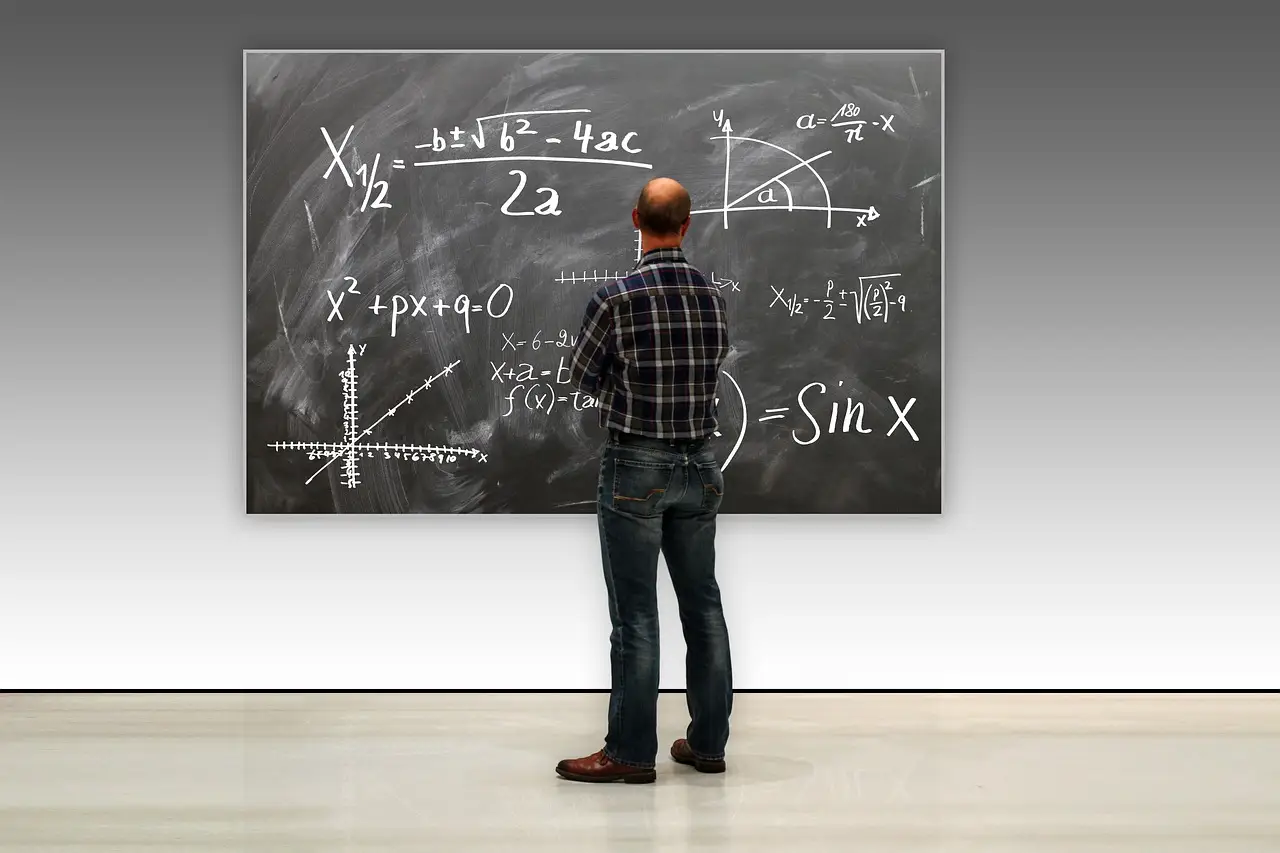
A mathematician at AI company Anthropic claims he has proved one of mathematics' oldest open problems — with the help of Claude, the company's AI model. Levent Alpöge posted the claim on his personal website, writing: "I believe I have, working with Claude, discovered a proof of the Riemann Hypothesis."
The claim is unverified. Alpöge included a Claude-generated proof written in Lean, a programming language that checks whether mathematical arguments are logically airtight. Other mathematicians are now racing to verify the work independently, and early, informal responses suggest the proof may hold. That's the hardest fact of the story. Everything else is still provisional.
What is the Riemann hypothesis?
Bernhard Riemann proposed the hypothesis about 167 years ago. It concerns prime numbers — numbers divisible only by themselves and 1 — and an unproven assumption about the hidden patterns governing how they're distributed. Mathematicians have long regarded it as one of the greatest unsolved problems in the field.
The Clay Mathematics Institute named it one of seven "Millennium Prize Problems" in 2000. Solving it carries a $1-million prize.
Why the 'generalized' version matters more
Alpöge's proof technically targets the "generalized Riemann hypothesis," or GRH. That's a broader, more powerful extension of Riemann's original idea to a much wider class of functions related to the primes.
Proving GRH would cascade through mathematics. Many elaborate results built on its presumed truth would suddenly be confirmed as true, as journalist Joseph Howlett has explained. Algorithms in computational number theory — the study of numbers by computer — and in the analysis of algebraic number fields could improve immediately. Any practical payoff for everyday users would likely take longer, and stay invisible to most people.
Does this break your online banking?
No. Prime numbers underpin RSA, a widely used encryption scheme that protects online banking and encrypted communications. Its security rests on how hard it is to factor enormous numbers back into their prime building blocks.
GRH doesn't change that. Knowing whether a number is prime isn't the same as finding which primes multiply together to produce the giant numbers behind RSA. A proof would sharpen mathematicians' understanding of the first problem but offers no known shortcut for the second. Your encrypted transactions appear safe from any GRH-derived attack, for now.
Is the real story about AI?
Arguably yes. If the proof checks out, its most consequential impact has little to do with primes. It would signal AI's growing capacity for superhuman scientific discovery.
The problem has resisted more than 150 years of attacks by some of humanity's best mathematical minds. Experts don't think proving GRH is just a matter of more computation — it likely requires genuinely new techniques and ideas. A large language model achieving it, even with heavy guidance from an expert like Alpöge, would be the strongest evidence yet that AI can do more than explain known theorems or assist with proofs. It would suggest AI can generate and rigorously establish new knowledge in ways humans seemingly cannot.
Not everyone welcomes that. One prominent mathematician told Howlett earlier this year that an AI capable of proving the Riemann hypothesis would be so powerful and disruptive that he'd prefer never to meet it.
The reach could extend well beyond number theory. Mathematics underpins theoretical physics, engineering and computer science. An AI that can crack GRH today could, tomorrow, help researchers tackle problems in those fields that have stayed beyond human reach — a shift from AI as a calculation tool to AI as an autonomous scientist running entire lines of theoretical inquiry.
Whether humans could even understand the final outputs of such AI-driven advances remains an open question.
For ordinary readers, then, the news isn't about prime numbers or sudden change in daily digital life. It's about a future — perhaps imminent, not immediate — in which machines outpace humans at making fundamental intellectual discoveries. That's a sobering thought, and a fitting close.
via scientificamerican.com (Source)
More from Elena Vasquez
Show full bio
Correspondent covering money, funding and market shifts around general science news at SciBeat.
592 articles
Nearby plates
- Anthropic mathematician claims Claude proved the Riemann hypothesis
- A Mathematician Claims Claude Solved the Riemann Hypothesis
- Independent Checkers Find AI's Riemann Proof Almost Certainly Real
- Anthropic staffer claims Claude helped solve Riemann Hypothesis
- Alpöge and Buckmaster claim loophole-free Navier-Stokes proof