Plate Nº 56 · recorded October 10, 2026
Neuroscience & MindReported finding
Metabolism and Touch: Two Hidden Forces That Shape the Human Brain
Two UCLA studies in Cell and Science show brain stem cells take cues from glucose metabolism and physical contact with thalamic fibers, shifting which neurons they build.
By Elena Vasquez5 min read1,054 words
In brief
- Two UCLA-led studies published September 4, 2026, appear in the journals Cell and Science.
- Interfering with the pentose phosphate pathway made radial glia produce more inhibitory neurons and later-stage cell types.
- Physical contact with thalamic projections pushed stem cells to produce more excitatory upper-layer neurons, a type expanded in humans.
- The thalamus–radial glia contact point was linked to NRXN1, a gene whose mutations are associated with autism spectrum disorder.
- The researchers say this point of contact very likely does not exist in rodents.
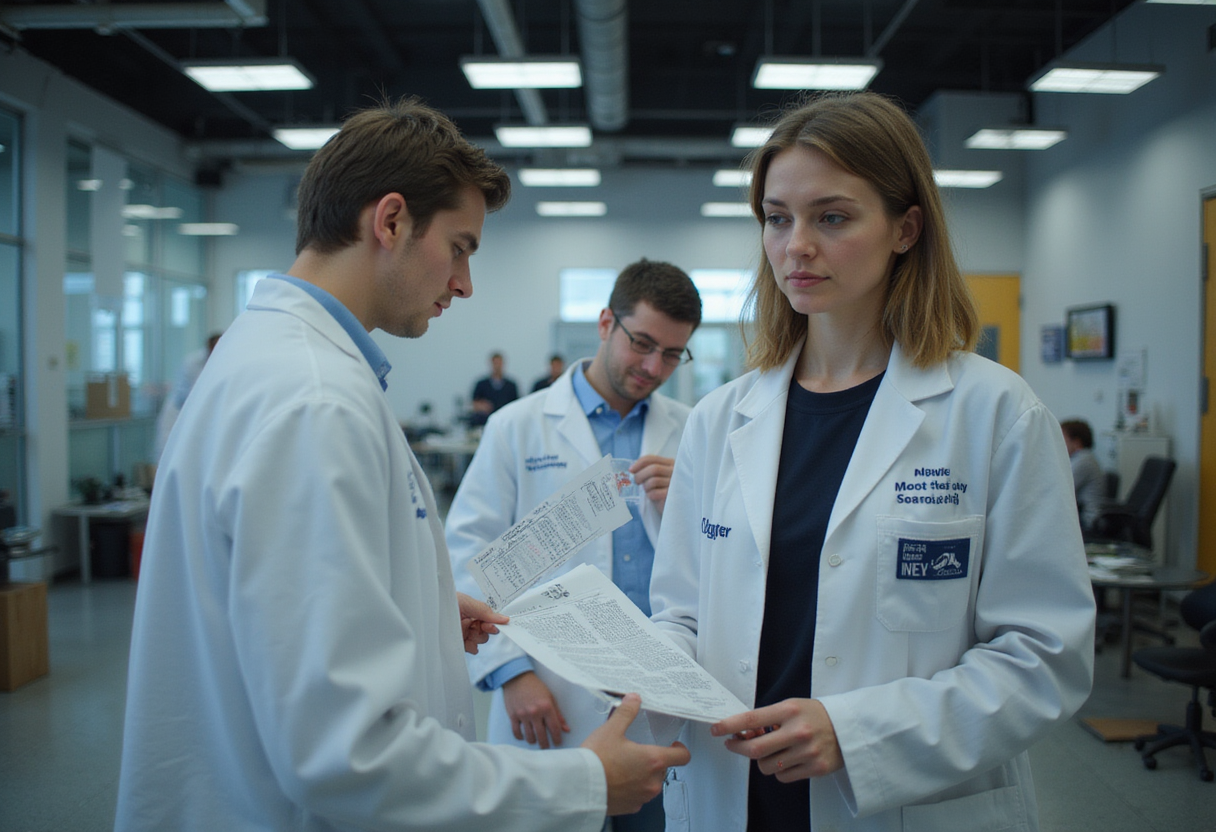
Two studies published on September 4, 2026, in the journals Cell and Science reveal that the stem cells building the human brain take their instructions from two unexpected sources: the way they process sugar, and physical contact with signal-carrying fibers arriving from the thalamus.
UCLA researchers found that radial glia — stem cells that produce much of the cerebral cortex — change what types of brain cells they generate depending on both nutrient processing and direct physical signals from other parts of the developing brain. Those signals can shift the production of neurons toward upper-layer cells, a type especially expanded in humans compared with other species.
What are radial glia?
Before birth, the brain assembles itself through a long chain of cellular choices. Radial glia sit at the center of that process. These stem cells generate large numbers of the neurons and support cells that make up the cerebral cortex, the region responsible for thought, memory, and language.
Researchers also believe radial glia help drive the unusually large expansion of the human cortex relative to other species. Most disappear before birth, though similar cells can reappear later in brain cancers for reasons scientists still do not fully understand.
"Radial glia are the coolest cells that have ever existed," said Aparna Bhaduri, an assistant professor of biological chemistry at UCLA's David Geffen School of Medicine. "They're really key to making us human. But they're also at the center of many neurodevelopmental and neuropsychiatric disorders, as well as cancer — so understanding how they make their decisions is one way to start understanding how those conditions arise."
How does metabolism steer cell fate?
In the Cell study, a team led by co-first authors Jessenya Mil and Jose Soto built a detailed atlas of metabolism in the developing human cortex. The project joined Bhaduri's lab with Heather Christofk's lab, and analyzed donated human tissue alongside brain organoids — miniature, lab-grown brain structures created from stem cells.
The findings pointed to an unexpected conclusion: metabolism does not simply power brain development from the background. It can actively influence which kinds of cells the brain produces.
The researchers found that radial glia rely heavily on the pentose phosphate pathway, a metabolic process that uses glucose to produce building materials for rapidly dividing cells. When the scientists reduced available glucose or interfered with this pathway, the stem cells switched their output. They began generating more inhibitory neurons and other cell types that normally appear later in development.
"What was surprising is that metabolism isn't just a passive thing that happens in the background," said Bhaduri, who is a member of both the UCLA Broad Stem Cell Research Center and the UCLA Health Jonsson Comprehensive Cancer Center. "It can really control how stem cells make decisions."
The results, while preliminary, could eventually help scientists examine how maternal nutrition, metabolic disorders, and other environmental influences affect the developing brain. The metabolic atlas itself also stands as one of the most detailed resources yet for studying human brain development.
Why do thalamic fibers arrive so early?
The second study, published in Science and led by first author Claudia Nguyen, examined a completely different source of developmental information: the thalamus, a structure deep inside the brain that relays information throughout the nervous system.
Scientists have known for years that thalamic neurons send long, wire-like projections toward the cortex, where they eventually connect with specific neurons. But anatomical studies show that in humans, these fibers reach the cortex long before those final connections form. That timing raised a question: why arrive so early?
Working with human stem cell-derived brain "assembloids" — lab models that combine multiple brain-region-like structures — the UCLA team found part of the answer. The thalamic projections physically touch radial glia while the brain is still developing.
That contact changed the stem cells' behavior. It pushed them to produce more excitatory neurons, the primary signal-carrying cells of the cortex. The effect was strongest for upper-layer neurons, which are particularly expanded in the human brain.
"We already knew that these projections influence how the cortex develops," Bhaduri said. "What we specifically found is that this influence comes through an actual physical connection between the projections and the radial glia — a point of contact that just hasn't been identified before, and one that very likely does not exist in rodents."
Where does an autism-linked gene fit in?
The researchers tied this physical interaction to NRXN1, a gene already known for helping neurons form connections with one another. Mutations in NRXN1 have previously been linked to autism spectrum disorder.
To investigate its role, the team built assembloids from patient-derived cells carrying an NRXN1 mutation. In these models, the altered thalamic signals behaved differently from signals produced by unaffected cells. Those changes shifted the balance between the number of stem cells and the neurons they generated, offering a possible avenue for studying how early developmental disturbances shape the cortex.
What do the two studies have in common?
One study examined metabolism; the other explored neural connections. Yet both arrive at the same broader conclusion: radial glia do not make their developmental decisions in isolation. Their behavior is continuously shaped by signals from the environment around them.
The studies also highlight how far organoid technology has come. Roughly a decade ago, scientists had few practical ways to directly investigate how uniquely human neural stem cells behave. Today, brain organoids and assembloids allow researchers to recreate key features of human brain development in the laboratory and test questions that animal models alone cannot answer.
Bhaduri hopes the findings will push scientists to treat metabolism and physical cell-to-cell connections as active drivers of development rather than background processes.
"Ultimately, these studies give us a glimpse under the hood of how these cells make decisions," she said. "Understanding those decisions is a first step toward understanding normal brain development, disease vulnerability and, potentially, how similar stem-cell programs operate in brain cancer."
The research drew support from the National Institutes of Health, the National Science Foundation, the Simons Foundation, the Chan Zuckerberg Initiative, and more than a dozen other funders. As with any laboratory-based work, the findings come from organoid and donated-tissue models, and their implications for human health will require further study.
via stemcell.ucla.edu (Original)
More from Elena Vasquez
Nearby plates
- Human Brain Grows From Two Separate Cell Lineages, Study Finds
- Human Microglia Take Up to 8 Years to Mature, Study Finds
- Brain Wiring Starts Precise, Not Random, Mouse Study Finds
- Brain Arises From Two Separate Cell Sources, Not One, Study Finds
- Chameleon Embryos Share a Developmental Trick Once Thought Unique to Mammals