Recorded November 19, 2026
Earth & ClimateReported finding
Monterey Bay Turned a 'Blue Desert' as El Niño Collapses Plankton
El Niño has cut Monterey Bay's phytoplankton biomass by up to ten-fold — the lowest since before 2000 — after record 19.22°C water blocked nutrient upwelling and collapsed the food web's base.
By Elena Vasquez4 min read764 words
In brief
- Phytoplankton biomass dropped up to ten-fold in parts of Monterey Bay, lowest chlorophyll since before 2000.
- MBARI's M1 mooring recorded a record 19.22°C (66.6°F) at 60 m depth on Nov. 12, 2026.
- Diatoms largely vanished from bay waters after Oct. 8.
- Divers on Oct. 26 reported the clearest water since the buoy's 2021 deployment; humpback whales are absent.
- Full ecosystem impact won't be clear until spring and summer 2027.
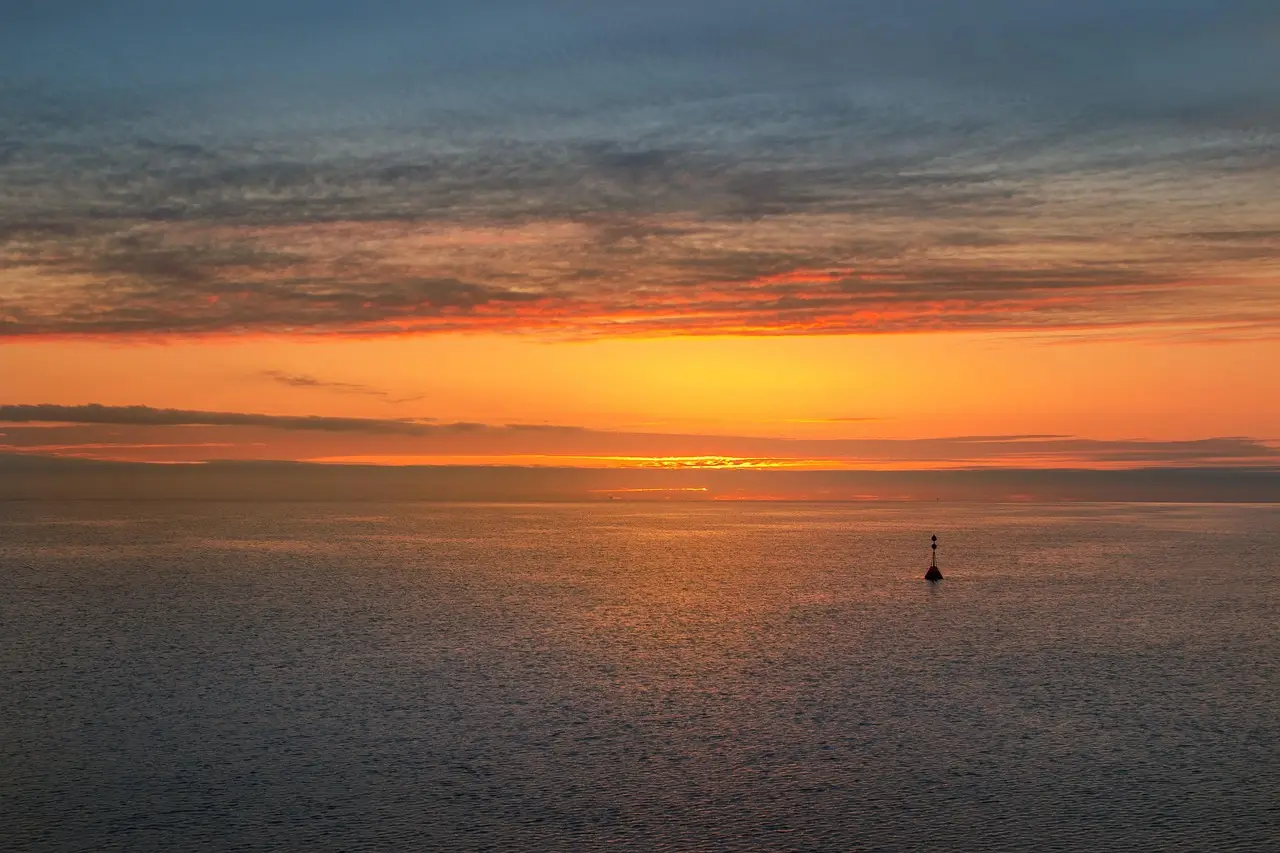
Phytoplankton biomass in Monterey Bay has fallen as much as ten-fold in some areas, the lowest chlorophyll levels satellite data have shown off Central California since before 2000. Researchers at the Monterey Bay Aquarium Research Institute (MBARI) blame the 2026–2027 El Niño, which has pushed exceptionally warm water into the bay and cut off the nutrient supply that plankton need.
"It was only a matter of time until we would observe the biological consequences of El Niño," said Francisco Chavez, a senior scientist and biological oceanographer at MBARI. "It was like things fell off a cliff. Other marine life that depend on these plankton in some form or another will be severely impacted, but the full impact won't become clear until the upcoming spring and summer."
What happened in the water?
Two MBARI instruments caught the collapse in near-real time. One is a robotic microscope moored near the head of Monterey Bay's submarine canyon. The other is an autonomous underwater vehicle named "Pontus" that surveys the north bay daily.
In early October, the microscope — an Imaging FlowCytobot, or IFCB — logged a sharp drop in plankton abundance over just three days. Diatoms, single-celled algae with glass-like shells that normally dominate the bay's plankton, crashed on Oct. 4 and have been largely absent since Oct. 8. Total carbon biomass, a standard measure of ocean productivity, has kept declining.
Pontus confirmed the pattern. Starting Oct. 8, its sensors recorded warmer water near its solar docking station off Santa Cruz. Chlorophyll dropped soon after, then bioluminescence — a proxy for the small organisms that graze on plankton. Both signs pointed to the same conclusion: the base of the bay's food web had collapsed.
The numbers are stark. On Nov. 12, MBARI's M1 mooring, which has monitored the heart of the bay for nearly 40 years, recorded a new time-series high of 19.22°C (66.6°F) at 60 meters — about 200 feet — underwater.
Why did the plankton disappear?
The mechanism is interrupted upwelling. Normally, cool, nutrient-rich water rises from the deep canyon to the surface and fuels the plankton blooms that sustain the bay's food web. The warm El Niño water has pushed the thermocline — the boundary between warm surface water and cold deep water — deeper, blocking that upward flow of nutrients.
Surface waters across the northeastern Pacific were already warmer than average for most of the year due to the North Pacific Gyre Oscillation, a marine heat wave often called the "warm blob." El Niño strengthened that heat wave off Southern California and drove a Kelvin wave — a slow-moving band of warm water — toward the California coast in October.
Monique Messié, a senior research specialist who leads MBARI's Data Integration and Interdisciplinary Oceanography Team, compared satellite data from October 2025 with this October's readings. "This really is a dramatic change," she said. "The color scale in these plots is logarithmic, so we're looking at a 10-fold decrease in phytoplankton biomass in some places, like off Big Sur."
How do researchers see it happening?
The IFCB, developed by Woods Hole Oceanographic Institution and built by McLane Labs, photographs suspended particles and uses a machine-learning model to identify plankton and estimate their volume. MBARI installed one on its wave energy conversion buoy near the head of Monterey Canyon in 2021 and shares the hourly data through CeNCOOS, the Central and Northern California Ocean Observing System.
"The IFCB complements the other suite of instrumentation MBARI has deployed across Monterey Bay, giving us a near-real-time picture of how the phytoplankton communities are shifting and reorganizing in the presence of El Niño," said CeNCOOS research specialist Patrick Daniel.
CeNCOOS director Henry Ruhl said the investments in observing technology are "proving very capable in capturing and sharing information on the dramatic shifts in ocean health caused by El Niño."
What comes next for the bay's wildlife?
Plankton feed krill and anchovies, which in turn feed whales, commercially important fish and other predators. Researchers expect cascading effects, though they caution the full picture won't emerge until spring and summer.
Anecdotes already match the data. Divers servicing MBARI's buoy on Oct. 26 reported the clearest water since the buoy's deployment — clear water means little plankton. Whale-watching boats report missing humpbacks. Beachgoers have found large numbers of malnourished and dead seabirds.
Current and archived monitoring data are available through the California Ocean Observing Systems El Niño dashboard and statewide data portal. For now, the bay's foundation is quietly starving.
via phys.org/rss-feed/ (Source)
More from Elena Vasquez
Show full bio
Correspondent covering money, funding and market shifts around general science news at SciBeat.
592 articles
Nearby plates
- Ocean acidification linked to declines in a coastal food chain
- Predator 'Alarm Scents' Predict Toxic Algal Blooms Seven Weeks Early
- Lab Robots Grow Deep-Sea Microbes That Die at the Surface
- Weddell Sea deep water carries stable organic carbon, study finds
- Swimming Sea Cucumbers Intercept Sinking Carbon in the Deep Ocean