Plate Nº 81 · recorded October 30, 2026
Biology & EvolutionReported finding
Neanderthal DNA in Your Genome Follows a 200,000-Year-Old Pattern
Roughly 2% of non-African genomes is Neanderthal, and X chromosome data shows the mating was directional — mostly Neanderthal males with human females — across 200,000 years.
By Nathan Brooks5 min read946 words
In brief
- About 2% of the genome of non-African people today is Neanderthal, down from roughly 5% some 50,000 years ago.
- At least two distinct interbreeding pulses occurred: one around 45,000 years ago and one over 200,000 years ago.
- The drop from 5% to 2% Neanderthal ancestry happened in roughly 10 human generations.
- Nearly 90% of Neanderthal ancestry in humans came from a main pulse 50,000–45,000 years ago, likely in the Middle East.
- No archaeological site has ever shown Neanderthals and Homo sapiens in the same dated layer.
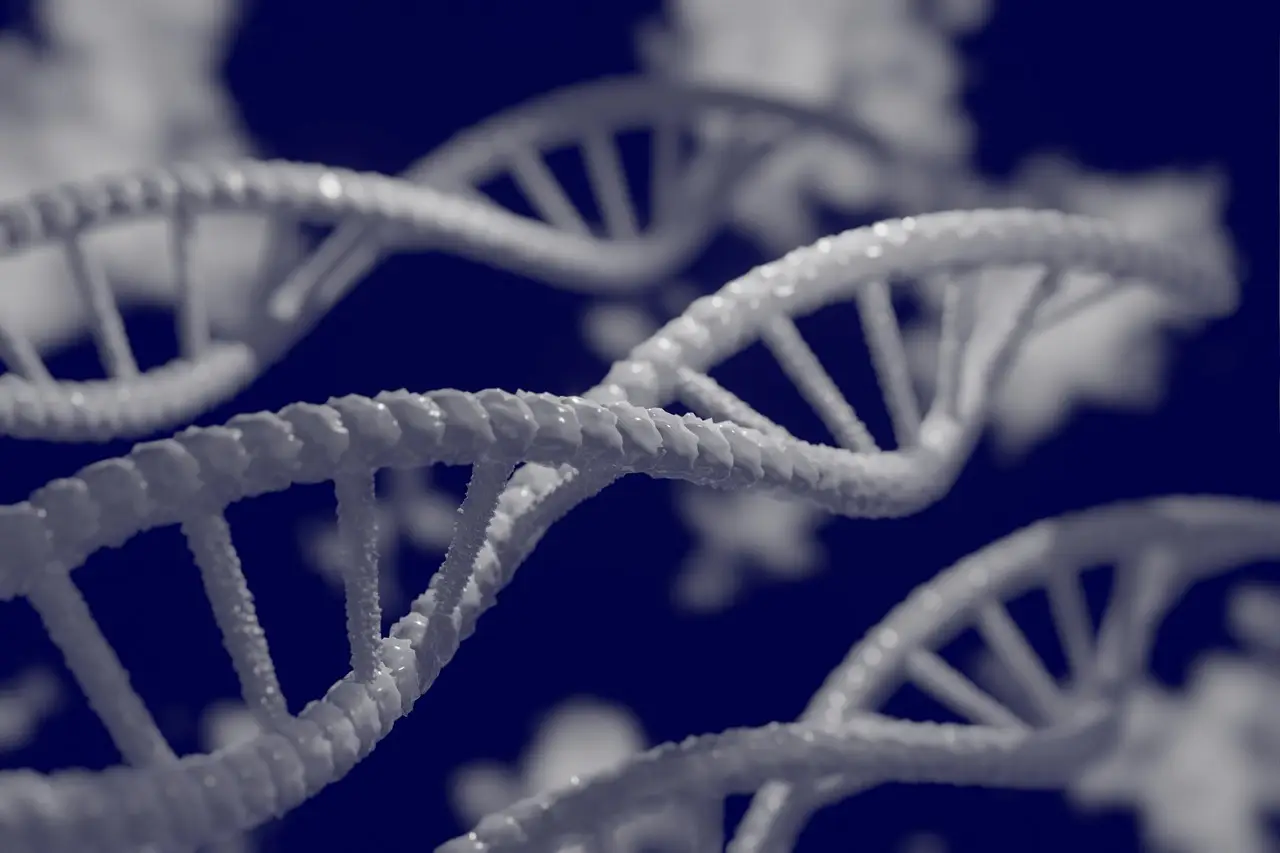
Roughly 2% of the genome of every person alive today outside Africa is Neanderthal, and new genetic research shows that DNA didn't arrive randomly. It arrived through directional, socially patterned mating — mostly Neanderthal males with modern-human females — across at least two distinct periods separated by some 200,000 years.
That's the core finding from a team led by Alexander Platt, an evolutionary biologist at the University of Pennsylvania's Perelman School of Medicine. The work builds on a puzzle that has nagged researchers since the first high-coverage Neanderthal genome was sequenced in 2010: Neanderthal DNA shows up in consistent proportions across our genome, but is conspicuously scarce on the X chromosome, one of the two sex chromosomes, which makes up about 5% of our DNA.
What did the X chromosome reveal?
The leading explanation had been negative selection — the idea that harmful Neanderthal gene variants on the X were weeded out over thousands of generations. Platt's team tested this. If Neanderthal X variants were inherently harmful, then modern-human X variants should have been advantageous inside Neanderthals, showing up preferentially in protein-coding regions or the regulatory sequences that control gene activity.
That's not what they found. Neanderthal X chromosomes carried more modern-human DNA in noncoding stretches — DNA that doesn't build proteins. That pattern reflects reproduction, not selection.
The X is unusually sensitive to who mated with whom. Mothers contribute two-thirds of all X chromosomes in a population, fathers only one-third, because males inherit their single X exclusively from mom. Platt's simulations suggested what he called a persistent, recurring mating preference: males with more Neanderthal ancestry reproduced with females with more modern-human ancestry. That held across two mating pulses — one roughly 45,000 years ago, which produced most Neanderthal DNA in non-African genomes today, and an earlier one over 200,000 years ago.
Preference or biology?
The X chromosome data shows who reproduced, not who wanted whom. Rajiv McCoy, a geneticist at Johns Hopkins University, noted that biology alone could produce the same signal. Hybrid pregnancies may simply have succeeded more often when the father was Neanderthal. Recent studies suggest Neanderthal red blood cells restricted fetal growth, and that Neanderthal mothers carrying hybrid offspring were more prone to preeclampsia, a life-threatening pregnancy complication.
"Our models have no way of distinguishing mating from mating that produces a viable and fertile offspring," McCoy said.
Is there any archaeological evidence of contact?
No. Bridget Alex, a human evolutionary biology researcher at Harvard, put it bluntly: "Despite a century and a half of Neanderthal research, no one's ever found a Neanderthal and Homo sapiens fossil in the same exact layer dated to the same exact period at the same exact site."
The closest thing is Grotte Mandrin in France's Rhône Valley. Neanderthal artifacts fill layers dating to about 57,000 years ago; then one thin layer, dated between 56,800 and 51,700 years ago, holds different stone tools and a single Homo sapiens tooth; above that, Neanderthal artifacts return around 51,700 years ago. Excavator Ludovic Slimak of the University of Toulouse described "two human populations occupying the same landscape, probably encountering one another, while remaining culturally and biologically very different." What strikes him most, he said, is "not mixture but proximity without fusion."
How different were the two societies?
Genetics suggests very. At Sunghir, a 34,000-year-old Russian burial site, two Homo sapiens adolescents with no immediate family tie were buried head to head under thousands of ivory beads — evidence of wide social networks. At Chagyrskaya cave in Siberia, Neanderthals buried together included a father and his teenage daughter, plus a pair sharing roughly a quarter of their DNA. Neanderthals lived in small, insular, patrilocal groups — males stayed, females moved — with low genetic diversity. Alex called them "like an endangered species," a population "always on the verge."
Why did the DNA fade so fast?
Fernando Villanea, a population geneticist at the University of Colorado Boulder, has run the numbers. Around 50,000 to 45,000 years ago, Neanderthal DNA made up about 5% of the modern human genome. It dropped to today's 2% in roughly 10 human generations — a purge that ran both directions, with human DNA also being selected out of Neanderthal genomes.
"That's very fast," Villanea said. "A lot of hybrids did not survive to reproduce, and the ones that did probably had to deal with life-long health problems."
Villanea, whose 2018 study in Nature Ecology & Evolution documented multiple interbreeding episodes, argues the real story is demographic. Late Neanderthals were roughly 10 times more inbred than the modern humans expanding out of Africa, and were outnumbered as their cold-adapted ecosystems shrank. His model: "human groups absorbing surviving Neanderthal individuals and raising their children in a mostly human group." A 2024 study by Leonardo Iasi and colleagues supports this, finding nearly 90% of today's Neanderthal ancestry came from one main pulse roughly 50,000 to 45,000 years ago, likely in the Middle East.
A 2026 study of 27 late Neanderthals from Belgium and France adds a telling detail: none showed recent modern-human ancestry, even as contemporary humans carried Neanderthal DNA — suggesting hybrid children were raised in human groups, not Neanderthal ones.
What we still don't know
Whether encounters were consensual, coerced, or transactional remains unanswerable. "We still wouldn't know if it was consensual or coerced," Alex said. Slimak, writing mid-excavation from Grotte Mandrin, urged restraint: "Genes do not preserve past loves. They preserve what was transmitted. And between transmission and lived experience lies almost the whole of human society."
via Live Science (Source)
More from Nathan Brooks
Show full bio
Market editor covering companies, deals and strategy in general science news at SciBeat.
268 articles
Nearby plates
- Proteins From 20 Fossils Give Denisovans a Face of Their Own
- Gobi Desert Fossil Rewrites 40-Year Mammal Evolution Theory
- Animals May Have Evolved 200 Million Years Earlier Than Fossils Show
- Adult Fossil Confirms Homo erectus Roamed Southern Africa 2 Million Years Ago
- Bat Genomes Reveal Why Some Species Live 50 Years Without Cancer