Plate Nº 22 · recorded November 16, 2026
Neuroscience & MindReported finding
Neanderthal Gene Variant Still Shapes Human Brains Today
A four-letter deletion inherited from Neanderthals shrinks the brain's occipital lobe and may cut schizophrenia risk by about 5 percent per copy, a PNAS study finds.
By Priya Raman3 min read649 words
In brief
- A four-DNA-letter deletion on chromosome 14, inherited from Neanderthals, is linked to occipital lobe volume reductions of about 0.85 cubic centimeters per copy.
- Carriers show roughly 5 percent lower schizophrenia risk per copy, nearly 10 percent for two copies, with no significant link to general intelligence.
- All five sampled Neanderthal genomes carried the deletion; both Denisovan genomes did not.
- The surrounding DNA stretch of nearly 60,000 letters indicates recent interbreeding rather than ancient shared ancestry.
- The study by Hugo Zeberg and Svante Pääbo was published in the Proceedings of the National Academy of Sciences.
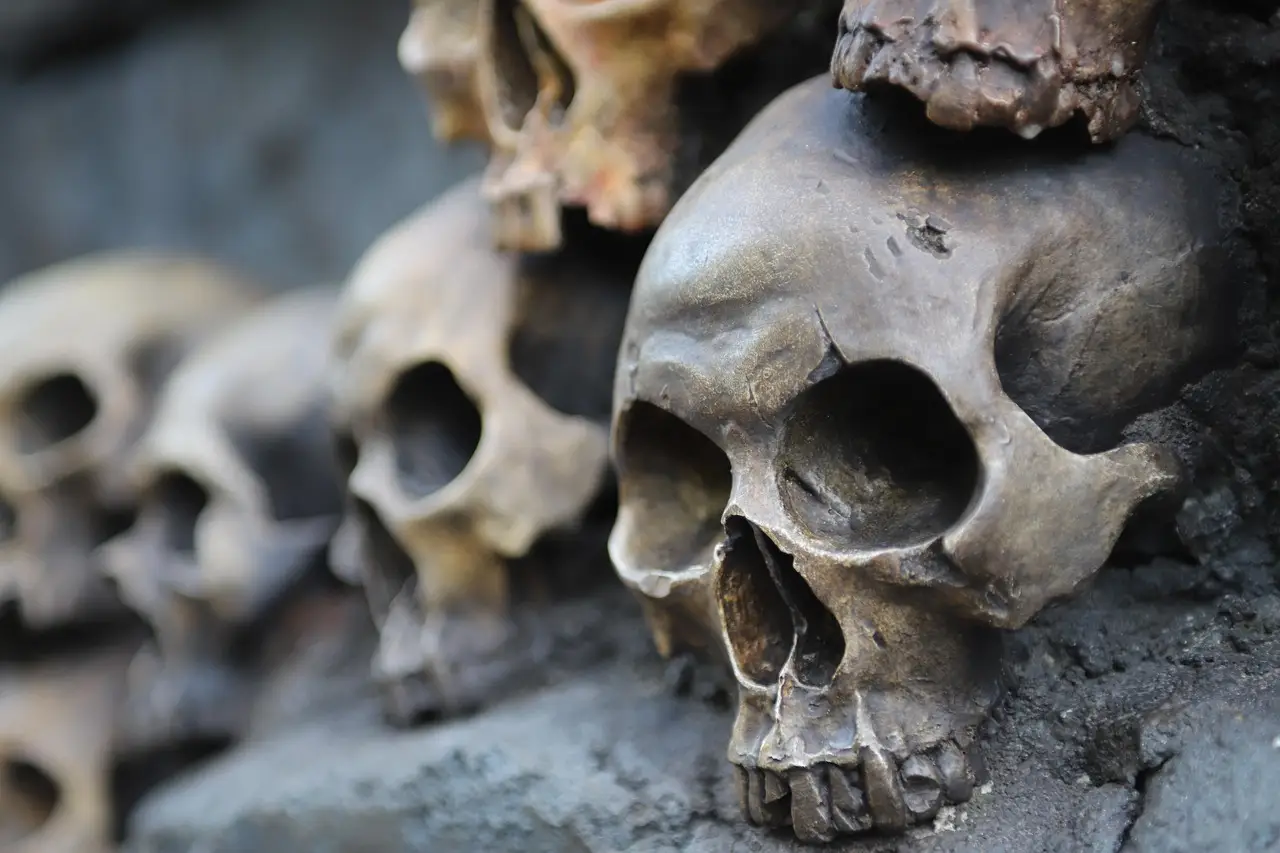
A single Neanderthal gene variant, a deletion of just four DNA letters on chromosome 14, is measurably shrinking a part of the living human brain and may lower the risk of schizophrenia by around 5 percent per copy. That is the central finding of a new study published in Proceedings of the National Academy of Sciences by anthropologists Hugo Zeberg and Svante Pääbo of the Max Planck Institute for Evolutionary Anthropology.
The variant is associated with reduced volume of the occipital lobes (the region at the back of the brain that houses the visual cortex, the tissue that processes what the eyes receive) — by about 0.85 cubic centimeters per copy. Notably, the researchers found no significant association with general intelligence and little or none with educational attainment.
"These findings caution against equating the size of a brain region with cognitive abilities," the authors write.
What did the researchers actually find?
Tens of thousands of years ago, the last Neanderthal disappeared. Yet traces of their DNA persist in the genetic code of Homo sapiens, influencing traits from hair texture to how the body stores fat. Zeberg and Pääbo asked whether any inherited Neanderthal variant also shapes the brain.
Earlier genome studies had identified four locations in living humans associated with occipital lobe size. Three of those variants appear in sub-Saharan African populations. The fourth — the tiny deletion near a gene called DAAM1, which plays a role in brain development — appears only outside that region.
That distribution mattered. Neanderthals interbred with modern humans after our ancestors migrated out of Africa, so Neanderthal DNA appears at much lower levels in sub-Saharan populations, where most ancestors never encountered them.
How did they prove the Neanderthal link?
The researchers compared the variant against ancient DNA from five Neanderthals and two Denisovans (another extinct group of ancient humans). All five Neanderthals carried the deletion. Neither Denisovan did.
Still, the deletion might have come from a much older common ancestor of both species. To rule this out, the team examined the DNA surrounding the variant. Recombination (the process by which inherited DNA stretches are gradually broken up and reshuffled across generations) fragments old genomic regions over time. A variant passed down from an ancestor hundreds of thousands of years ago should sit amid heavily scrambled DNA.
Instead, the researchers found a stretch nearly 60,000 DNA letters long — far too intact for such ancient inheritance. The evidence pointed to a much more recent entry into the human genome, through interbreeding with Neanderthals.
"Here, we show that a common genetic variant influencing occipital brain volume in present-day people was inherited from Neanderthals," Zeberg and Pääbo write.
Why does the variant shrink, not enlarge, the lobe?
The result carries an apparent paradox. Fossil skulls suggest Neanderthals had proportionally larger occipital lobes than modern humans, yet carriers of the deletion today have smaller ones. Their skulls, elongated front to back rather than rounded like ours, held brains comparable in size to ours — sometimes larger.
The researchers argue this is no true contradiction. Brain shape depends on many genes plus factors such as eye and body size; one variant is a single thread in a complex weave, and in isolation it cannot reveal much about the Neanderthal brain itself.
What about schizophrenia?
The team then searched genetic data from the Psychiatric Genomics Consortium, which studies genetic contributions to psychiatric disorders. Carriers of the variant showed slightly lower odds of schizophrenia: roughly 5 percent lower per copy, and nearly 10 percent for people with two copies.
The study could not determine whether this protection relates to occipital lobe volume or operates through an independent mechanism. The findings remain associations, not proof of cause, and the underlying biology of the DAAM1 influence — which the researchers suspect involves altered gene expression — is not yet established.
One ancient deletion, it seems, is still quietly at work in the modern mind.
via sciencealert.com (Source)
More from Priya Raman
Show full bio
Senior reporter covering people, launches and day-to-day practice in general science news at SciBeat.
425 articles
Nearby plates
- Neanderthal DNA in Your Genome Follows a 200,000-Year-Old Pattern
- Scientists digitally reconstruct face of 315,000-year-old Homo sapiens
- Brain Arises From Two Separate Cell Sources, Not One, Study Finds
- Proteins From 20 Fossils Give Denisovans a Face of Their Own
- Common Genes Carry Nearly Triple the Alzheimer's Risk We Thought