Plate Nº 75 · recorded September 29, 2026
Health & Medicine ResearchReported finding
Nearly 1 in 3 Ukrainian Civilians Shows Signs of PTSD or Complex PTSD
A survey of 2,504 Ukrainian adults finds 31.2% meet criteria for PTSD or complex PTSD, revealing the scale of wartime trauma exposure among civilians.
By Elena Vasquez5 min read903 words
In brief
- 31.2% of 2,504 surveyed Ukrainian adults met criteria for PTSD (25.2%) or complex PTSD (6%).
- Risk factors included being female, older age, lower education, prior military service, war displacement and more traumatic events.
- Data came from a single telephone survey during active conflict, so findings are a snapshot, not a measure of change over time.
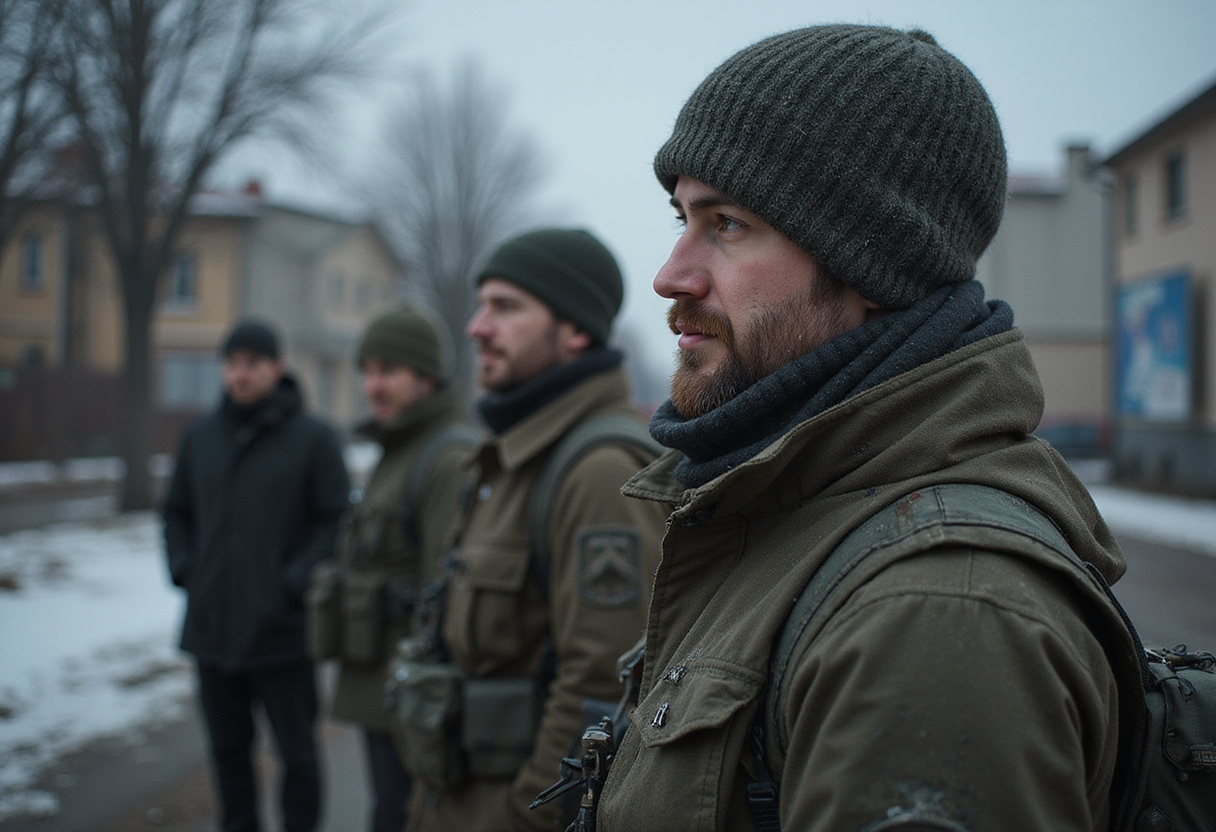
Nearly a third of Ukrainian civilians meet the diagnostic criteria for post-traumatic stress disorder (PTSD) or its more severe form, complex PTSD. That is the central finding of a peer-reviewed study published in the European Journal of Psychotraumatology, based on a nationally representative survey of 2,504 adults living in government-controlled regions of Ukraine.
The figure was 31.2% overall. Broken down, 25.2% of respondents met the criteria for PTSD and 6% for complex PTSD, or CPTSD.
The study is one of the clearest estimates to date of the psychological toll of the ongoing war on Ukraine's civilian population. A decade of Russian aggression, followed by the full-scale invasion in February 2022, has exposed millions of people to shelling, displacement, bereavement and persistent uncertainty.
What PTSD and CPTSD are
PTSD can develop after a person experiences or witnesses trauma. Its symptoms include intrusive memories, anxiety, irritability and sleep problems. Complex PTSD is a related but more severe condition that typically follows prolonged or repeated trauma, such as chronic abuse or captivity.
The survey assessed lifetime exposure to traumatic events, war-related traumas and symptoms of trauma-related mental health conditions. Most participants reported high levels of exposure to both lifetime and war-related traumatic events, including fires or explosions, shelling, destruction caused by the war, and the injury, displacement, disappearance or death of family members or other loved ones.
"A decade of Russian aggression, followed by a full-scale invasion in February 2022, has placed a profound psychological burden on the population. Many people continue to face the threat of shelling, displacement, bereavement and uncertainty in their daily lives, highlighting the urgent need for sustained mental health support," says senior author Dr. Deirdre MacManus, a clinical reader in forensic psychiatry at King's College London (KCL).
"What stands out most from these findings is the sheer scale of trauma exposure," she adds. "The vast majority of people we surveyed had experienced multiple traumatic events across their lives, and many had also been directly affected by the ongoing war through displacement, bereavement, destruction of their communities or concern for loved ones. Despite this, many Ukrainians continue to function and adapt in extraordinarily challenging circumstances."
Who is most at risk
Several factors were associated with a greater likelihood of meeting the criteria for PTSD or CPTSD: being female, older age, lower educational attainment, previous military service, displacement due to the war, and a greater number of lifetime traumatic events and war-related stressors. Being single was the only factor specifically linked to CPTSD rather than PTSD.
The findings also carry a warning about assumptions. "It is important to keep in mind that PTSD and CPTSD are not limited to veterans or people close to combat zones," says co-author Volodymyr Kulyk, a professor in the Department of Social Sciences at Kyiv School of Economics. "They are also widespread among other groups heavily affected by the war, such as internally displaced people, people who suffered from missile and drone attacks on their cities and towns far from the front line, and those taking care of wounded or traumatized people."
An unusual collaboration
The study grew out of what the authors describe as "an unusual collaboration" between mental health researchers and social scientists, all interested in how psychological trauma in Ukraine affects both mental health and sociopolitical outcomes. Alongside KCL and Kyiv School of Economics, the team included researchers from The George Washington University, The University of Manchester, The Center for East European and International Studies (ZOiS) in Berlin, and Combat Stress, a U.K. veterans' mental health charity. The research network "Conflict and Cooperation in Eastern Europe" (KonKoop) initiated the project, led by Professor Gwendolyn Sasse of ZOiS.
That interdisciplinary setup enabled rare access to a robust, nationally representative sample under current wartime conditions. The team collected data through a telephone survey.
A snapshot, not a trajectory
The study has limitations. Researchers collected data at a single point during an active conflict, so the results represent a snapshot rather than a picture of how symptoms change over time. The findings also rely on self-reported symptoms, which may depend on how participants interpreted the survey questions.
Still, one result surprised the researchers. "PTSD was much more common than complex PTSD in this representative national sample," says lead author Dr. Emma Facer-Irwin, a child and adult clinical psychologist and clinical lecturer at KCL. "This may suggest that psychological responses to ongoing war do not always fit neatly into models developed in post-conflict settings. When the threat remains active and unpredictable, the ways people experience and adapt to traumatic stress may be different, and this is an important area for future research."
The stakes for Ukraine's health system are high. "As pressure on Ukraine's health system grows and uncertainty around future humanitarian support increases, understanding the prevalence of PTSD and complex PTSD is essential for planning both immediate and long-term mental health services," Kulyk says.
Principal investigator Sasse frames the results as a call for both clinical and community-level responses. "Trauma-focused treatments are important, but our findings also highlight the value of community support, social connection and population-level mental health initiatives," she says. "As the war continues, supporting the psychological well-being of civilians must remain a public health priority."
The researchers' next project will examine the potential effects of trauma on political attitudes.
via Medical Xpress (Source)
More from Elena Vasquez
Nearby plates
- Weapons in Partner Violence Deepen Psychological Harm, Study Finds
- Childhood Trauma Roughly Doubles Adult Depression Risk, Study Finds
- Cannabis Use Linked to Doubled Violence Risk in Major Review
- For Older Adults, Disaster Risk Builds Long Before the Storm
- Major Review Links Cannabis Use to Higher Violence Risk