Plate Nº 31 · recorded October 10, 2026
Health & Medicine ResearchReported finding
New Drug CS18 Reverses Cancer Treatment Resistance in Lab Tests
An experimental drug called CS18 restored lung cancer drug sensitivity in resistant cells and slowed tumor growth in animal models, according to a study from researchers at Baylor College of Medicine.
By Marcus Bennett3 min read584 words
In brief
- Study published September 22, 2026 in Science Advances, Vol. 12, Issue 32
- CS18 targets TopBP1-BRCT7/8, a protein that controls multiple cancer survival pathways
- The drug restored sensitivity to osimertinib in lung cancer cells that had become resistant
- Researchers tested CS18 in five cancer types, including triple-negative breast cancer and acute myeloid leukemia
- Work was funded by NIH, Department of Defense, and the Rivkin Center for Ovarian Cancer
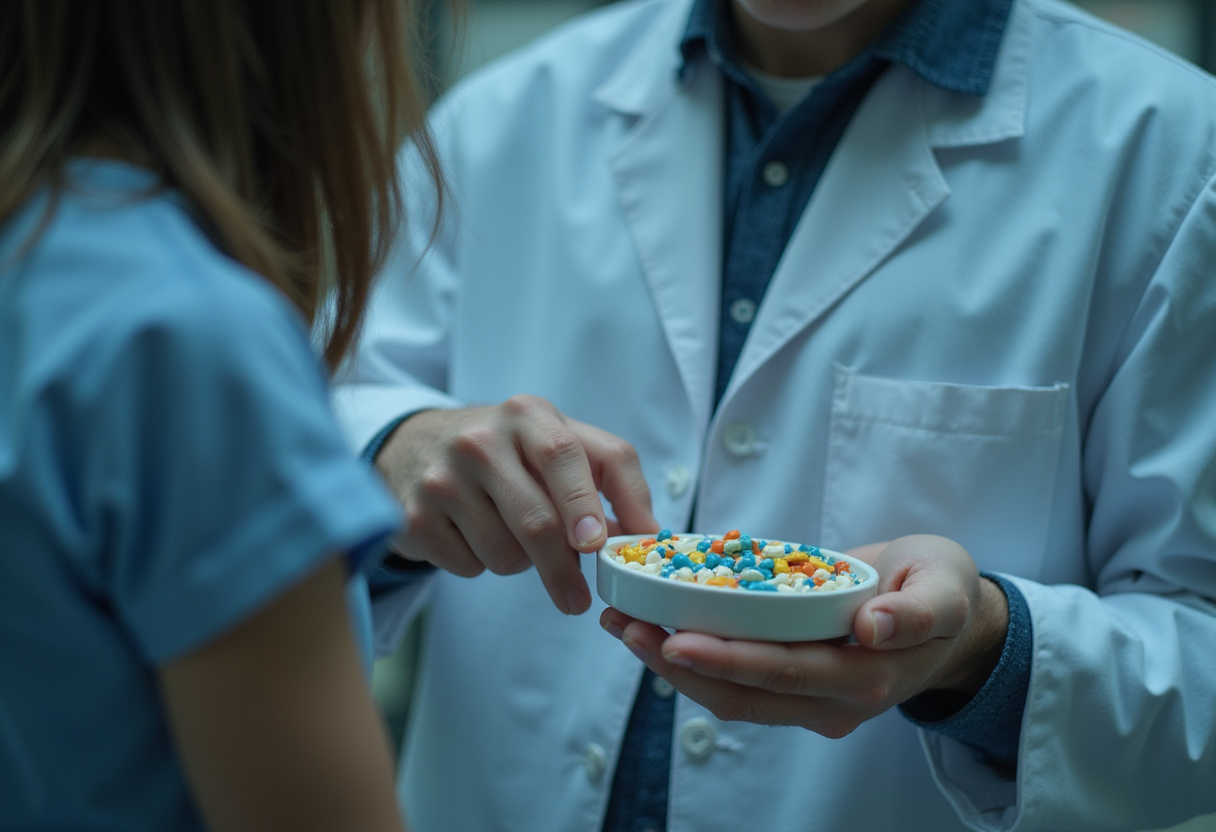
An experimental compound called CS18 restored the effectiveness of an existing lung cancer drug in resistant cells and slowed tumor growth in animal models, according to a study published September 22, 2026, in Science Advances.
Researchers at Baylor College of Medicine in Houston developed CS18 to block a single protein that helps cancer cells survive many different treatments. Because the drug interferes with several survival pathways at once, it may help address one of oncology's toughest problems: tumors that no longer respond to therapy.
What makes cancer resistance so hard to treat?
"Therapeutic resistance is a main obstacle to achieve effective and durable cancer treatments," said corresponding author Dr. Weei-Chin Lin, professor of medicine-hematology and oncology at Baylor.
Lin explained that even when initial therapy works, many patients relapse because cancer cells can activate backup pathways that allow them to overcome the toxic effects of treatment.
What does CS18 target?
Rather than hitting a single pathway, the researchers aimed at a control hub called topoisomerase IIß-binding protein 1, or TopBP1. The team describes TopBP1 as a biological switchboard because it regulates multiple cancer-promoting processes simultaneously.
Specifically, the drug targets a segment of TopBP1 known as BRCT7/8. This section interacts with several key proteins that drive cancer growth:
- MIZ1, a suppressor of the cancer driver MYC
- Mutant p53, which can acquire cancer-promoting functions
- PLK1 and CIP2A, proteins that help cancer cells survive and divide
"All together, these diverse roles position TopBP1-BRCT7/8 as a promising target for intervention," Lin said.
How did the team find CS18?
Researchers screened thousands of chemicals using a combination of computer modeling and laboratory experiments. The search identified a starting compound named 3B6.
They then modified 3B6 and tested numerous versions of the molecule. CS18 emerged as the most effective candidate.
What did the lab tests show?
When CS18 binds to BRCT7/8, the cancer-promoting activities of MYC and mutant p53 decreased, Lin reported. Proteins involved in DNA repair became less active. Cancer cells were more likely to die.
The researchers observed these effects across five cancer cell types:
- Triple-negative breast cancer
- Ovarian cancer
- Lung adenocarcinoma
- Lung squamous cell carcinoma
- Acute myeloid leukemia
CS18 was also less toxic to non-cancerous cells.
The results became particularly notable when the team paired CS18 with cancer drugs already in clinical use. Combining CS18 with PARP inhibitors or osimertinib killed cancer cells more effectively than either treatment used alone.
Could CS18 help where current drugs have failed?
"In the case of lung cancer cells that were already resistant to osimertinib, adding CS18 restored the cells' sensitivity to osimertinib, increasing cancer cell death," Lin said.
In animal models, researchers observed a significant reduction of tumor growth with no major weight loss or other signs of toxicity. These findings are preliminary: CS18 has not yet been tested in humans.
What happens next?
The researchers propose that CS18 warrants further development as a possible component of combination cancer therapies. Such treatments could potentially prevent resistance from emerging or make resistant cancers responsive to therapy again. Clinical development typically takes years, and most experimental compounds never reach approval.
Other Baylor contributors include Fang-Tsyr Lin, Kang Liu, Yang Xiao, Lidija A. Wilhelms Garan, and Helena Folly-Kossi. Shwu-Jiuan Lin, at Taipei Medical University, also contributed to the work.
The study received funding from the National Institutes of Health, the Department of Defense, the Rivkin Center for Ovarian Cancer, and Taiwan's Ministry of Science and Technology.
via dx.doi.org (Original)
More from Marcus Bennett
Nearby plates
- Enzyme's Hidden Second Job May Drive Breast Cancer Drug Resistance
- Same-Day Chemotherapy Turns Into a Booster for Cancer Vaccines
- Lung Cancers Evade KRAS Drugs by Switching Cell Type
- Why a 70-Year-Old Leukemia Drug Still Surprises Scientists
- Stanford Molecule Turns a Lymphoma Driver Into a Cancer Killer