Plate Nº 25 · recorded November 17, 2026
Space & AstronomyReported finding
Niobium 1,000 Times Solar Levels Hints at Planet Born From a Dead Star
A white dwarf shows niobium at 1,000 times solar levels and a 4.399-day brightness signal, hinting at a Jupiter-sized planet built from the star's own ejected remains.
By Marcus Bennett4 min read782 words
In brief
- HS 0209+0832's accreted material contains niobium at over 1,000 times the Sun's abundance.
- A repeating brightness signal with a 4.399-day period suggests a roughly Jupiter-sized planet about six million kilometers from the white dwarf.
- The 1999 Hubble spectrum held about 100 unidentified absorption features, many now attributed to niobium.
- No comparable niobium signature appeared in archival spectra of 33 other metal-enriched white dwarfs.
- The findings were published in Nature Astronomy.
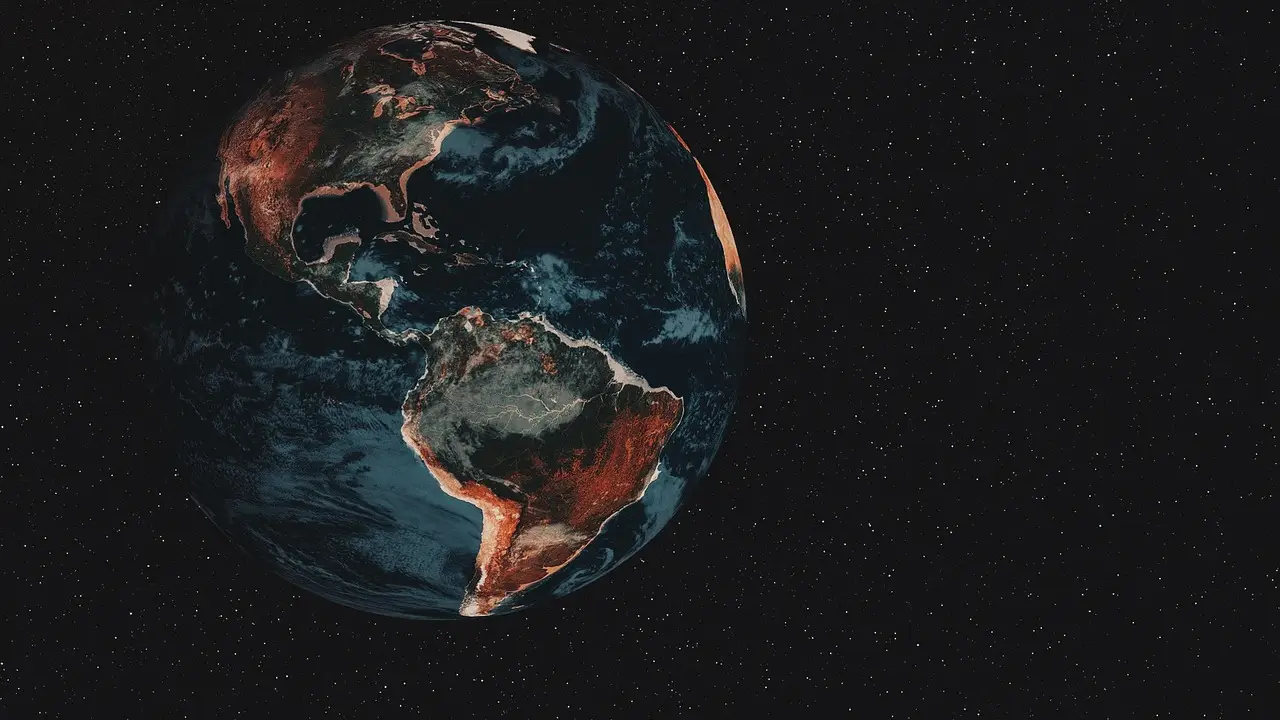
A white dwarf called HS 0209+0832 carries more than 1,000 times the Sun's abundance of niobium in material falling onto its surface — and astronomers at the University of Warwick argue the metal came from a planet the dead star itself may have created. Their findings, published in Nature Astronomy, point to what could be a "second-generation" planet: a world that formed only after its parent star exhausted its nuclear fuel and collapsed into a stellar remnant.
Why does this white dwarf look so strange?
HS 0209+0832 is a white dwarf — the dense, burned-out core of a once-living star, roughly the size of Earth. Its surface sits at about 36,000 degrees Celsius, and it has been cooling for only around five million years, making it a young corpse by stellar standards.
The story began in 1999, when the Hubble Space Telescope recorded the star's ultraviolet spectrum. Astronomers counted roughly 100 absorption features — chemical fingerprints — that they could not match to any known elements at the time.
Those fingerprints matter because white dwarfs have powerful gravity. Heavy elements in their atmospheres sink beneath the visible surface, sometimes within days. Finding them in quantity means something external is feeding the star right now. Usually that material comes from asteroids or rocky planets torn apart by the white dwarf's gravity, and astronomers routinely use this trick to reconstruct the chemistry of destroyed bodies.
Takeaway: heavy metals at a white dwarf's surface are a receipt for recent deliveries, not leftovers from the star's birth.
What did the niobium reveal?
Jamie Williams, a doctoral researcher at the University of Warwick, revisited the 1999 Hubble data with updated atomic tables. Many of the unidentified lines turned out to belong to niobium, a relatively uncommon metal. The spectrum also showed copper and zinc, plus nickel and other elements — yet iron was absent, and silicon appeared only in trace amounts.
That mix is an exceptionally strange combination for debris from a typical rocky planet, which tends to be rich in iron, silicon and magnesium.
The team checked the result against observations from NASA's retired Far Ultraviolet Spectroscopic Explorer. The niobium signal appeared there too. They then searched archival spectra of 33 other metal-enriched white dwarfs and found nothing comparable. HS 0209+0832 stands alone.
Takeaway: one star out of 34 carries a chemical signature nobody has matched to any known class of destroyed planet.
How can a dead star build a planet?
The answer may lie in how stars die. A Sun-like star spends most of its life fusing hydrogen into helium. When core hydrogen runs low, the core contracts and heats while fusion continues in a surrounding shell; the outer layers swell into a red giant. Later, helium fusion builds carbon and oxygen. In the final giant phases, the star becomes unstable and expels much of its outer material into space, leaving a white dwarf behind.
Those expelled layers are not ordinary gas and dust. Nuclear reactions in the star's final phase can enrich them with unusual heavy-element combinations, chiefly through the slow neutron-capture process, or s-process — a chain of reactions in which atomic nuclei absorb neutrons and gradually turn into heavier elements. This process runs strongest in aging stars called asymptotic giant branch stars. Niobium carries exactly this late-stage imprint.
Takeaway: the cloud a dying star sheds can carry factory-fresh heavy metals, the raw stock for new planets.
Did they actually see the planet?
Chemistry alone was not enough, so the team turned to NASA's Transiting Exoplanet Survey Satellite (TESS), which recorded the star's brightness over several months. They found a subtle repeating signal with a period of 4.399 days. The star's brightness varied by only about 0.12%, but the pattern fits a giant planet orbiting roughly six million kilometers from the white dwarf — far closer than Mercury sits to the Sun.
The researchers estimate the world could be approximately Jupiter-sized, though its size and mass have not been directly measured.
The white dwarf remains extremely hot, bathing the planet in intense high-energy radiation. That radiation could strip gas from the planet's atmosphere; some of the escaping material may spiral back onto the star. In other words, the star may now be consuming the very planet that formed from its remains — and that evaporating atmosphere could explain the bizarre blend of niobium, copper and zinc in the star's light.
Takeaway: if confirmed, this system shows planetary systems can get a second act after their star dies. The claim rests on indirect evidence, and the planet itself awaits direct measurement.
via zmescience.com (Source)
More from Marcus Bennett
Show full bio
News editor covering regulation, policy and their impact on general science news at SciBeat.
493 articles
Nearby plates
- The phoenix planet: Astronomers spot a world rebuilt from stellar ashes
- Niobium Around a White Dwarf Hints at a Second-Generation Planet
- Hubble Data Reveals Possible Planet Born Around a Dead Star
- Dead Star With Two Debris Rings May Preview Our Solar System's End
- Hubble Data Hints at a Planet Born After Its Star Died