Plate Nº 23 · recorded November 10, 2026
Earth & ClimateReported finding
2026 on Track to Rank Among Four Hottest Years Ever Recorded
2026 has run 1.47 °C above preindustrial levels, with record oceans, record sea level and a strengthening El Niño expected to push heat into 2027, the WMO reports.
By Elena Vasquez5 min read904 words
In brief
- January–September 2026 averaged 1.47 °C above preindustrial levels; the past four years are the four warmest on record.
- El Niño has intensified since August 2026 and is forecast to be the strongest on record by December, extending into early 2027.
- Glaciers lost over 400 gigatons of ice in 2025—enough to fill five Olympic pools every second of the year.
- A Himalayan glacier collapse and flash flood killed more than 1,300 people in Nepal in late August 2026.
- Greenhouse gas concentrations hit record levels in 2025: CO2 at about 426.8 ppm, 53% above 1750.
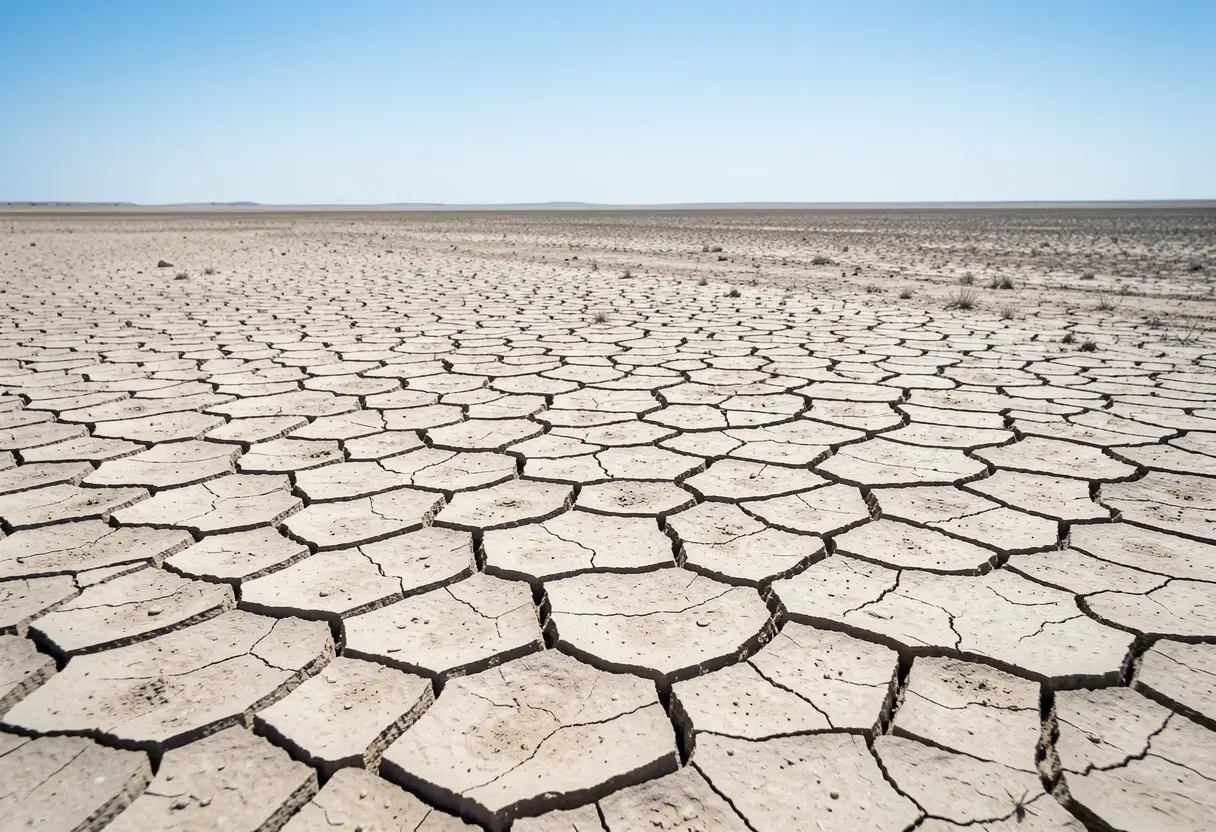
Global average temperature for January–September 2026 ran 1.47 °C above preindustrial levels, putting 2026 on track to join the four hottest years ever measured, according to the World Meteorological Organization's State of the Climate Update 2026, released on the opening day of COP31 in Antalya, Türkiye.
The report shows the past 12 years were individually the warmest on record, and the past four years—2023 through 2026—are the top four. That figure of 1.47 °C (plus or minus 0.13 °C, based on nine international datasets) sits between the whole-year averages for 2025 (1.43 °C) and 2023 (1.46 °C), and below the 2024 record of 1.55 °C. The final number for 2026 will likely be higher, because El Niño keeps adding heat.
What is El Niño doing to this year's numbers?
El Niño is a natural climate pattern that warms the tropical Pacific Ocean and shifts weather worldwide. It doesn't create new heat—it releases heat the ocean has already stored, as WMO Secretary-General Celeste Saulo pointed out: "El Niño doesn't add new heat to the planet. It releases heat from the ocean, which is the warmest ever measured. There is simply more heat available to release."
La Niña, El Niño's cooling counterpart, dominated early 2026 and briefly held temperatures down. El Niño has been intensifying since August and is expected to be the strongest on record by December. It typically raises annual global mean temperatures by 0.1 °C to 0.2 °C, with the biggest impact in the year after it develops. Forecasters expect this event to continue into early 2027.
How much heat is the planet absorbing?
Earth's energy imbalance—the gap between incoming sunlight and heat the planet radiates back to space—hit its highest level since monitoring began in 1960, according to 2025 data. Preliminary figures for January–July 2026 suggest another record.
The ocean absorbs about 90% of that excess heat. Ocean heat content in the upper 2,000 meters (6,600 feet) reached its highest observed value in 2025 and has kept rising through July 2026, making 2026 the tenth straight year of record ocean warmth. Sea-surface temperatures set monthly records or near-records through June, July and August.
Warming rates have climbed sharply over the past two decades, harming marine ecosystems, biodiversity and the ocean's ability to absorb carbon. That warming is projected to continue for hundreds to thousands of years.
What happened to ice, seas and fresh water?
- Sea level hit a record high in 2026. June, July and August saw their highest readings since satellite altimetry began in 1993, a jump possibly tied to El Niño shifting rainfall from land to ocean in the western tropical Pacific.
- Antarctic sea ice reached its third-lowest annual maximum in the satellite era, which dates to 1979. The Arctic maximum was the lowest or second lowest.
- Glaciers lost more than 400 gigatons of ice in 2025—enough to fill five Olympic pools every second all year, and equal to roughly 1 mm of sea-level rise. It was the fourth consecutive year in which all 19 glaciated regions worldwide lost ice.
- Freshwater stored on land—in groundwater, soil, rivers, reservoirs, glaciers and snow—has declined globally since 2014. In 2025, 42% of the assessed global land area had below-normal terrestrial water storage, versus a long-term average of 25%.
What were the human costs?
Extreme events hit lives, food security and livelihoods across multiple regions. European heat waves, drought and wildfires caused more than 30,000 excess deaths in preliminary estimates, with national temperature records broken in at least eight countries. An April 2026 heat wave exposed an estimated 146.5 million people in India to extreme heat.
In late August, a Himalayan glacier collapse and catastrophic flash flood in Nepal killed more than 1,300 people and dealt a massive blow to the country's economy. Tropical cyclones caused devastation and loss of life in many countries as well.
"We have entered a new age of climate extremes. A supersized El Niño is colliding with a planet already superheated by man-made climate change," U.N. Secretary-General António Guterres said. He called on leaders to cut emissions faster, speed a just transition from fossil fuels, and deliver the finance and protection vulnerable countries need.
What comes next?
Greenhouse gases reached record levels in 2025. Carbon dioxide has risen 53% since 1750, from roughly 278 ppm to about 426.8 ppm. Methrose climbed 167% to 1,948 ppb, and nitrous oxide rose 26% to 339.1 ppb. Benchmark stations such as Mauna Loa in Hawaii and Kennaook/Cape Grim in Australia show the increase continued into 2026.
The WHO has, for the first time, classified the anticipated health impacts of El Niño as a health emergency. Risks include heat illness, wildfire smoke, malnutrition, and water- and insect-borne diseases such as cholera, malaria and dengue. Agriculture is already under strain, especially in regions dependent on rain-fed farming.
One bright spot: countries with multi-hazard early warning systems grew from 56 in 2015 to 136 in 2025.
The update includes data only through September 2026, so it misses El Niño's most recent effects. The full State of the Global Climate 2026 report, drawing on dozens of national weather services and U.N. partners, arrives in March 2027.
via phys.org/rss-feed/ (Source)
More from Elena Vasquez
Show full bio
Correspondent covering money, funding and market shifts around general science news at SciBeat.
384 articles
Nearby plates
- Strong El Niño could push 2027 global temperatures to a record
- El Niño Will Push Global Temperatures Past 1.5 Degrees C
- NASA Satellites Track What May Be the Strongest El Niño Since 1950
- NOAA Puts Odds of a Strong El Niño at 83% — and Two Systems May Fail Together
- Regional warming nears levels tied to 1.5°C global rise