Plate Nº 83 · recorded October 10, 2026
Health & Medicine ResearchReported finding
Only 54% of Japanese Adults Would Seek Mental Health Treatment
Only 54% of Japanese adults would seek mental health treatment for serious emotional problems, versus roughly 70% of Americans. Cultural stigma and social distance, not perceived dangerousness, drive the gap.
By Marcus Bennett4 min read717 words
In brief
- Only about 54% of Japanese adults would seek mental health treatment for serious emotional problems, compared with roughly 70% of U.S. adults.
- About 84% of Japanese respondents wanted to socially distance themselves from people with mental disorders, versus 28% for depression in a U.S. sample.
- About 78% of Japanese respondents believed treatment helps major depression, versus roughly 95% of Americans.
- A sense of 'mattering'—feeling important to others—correlated with greater willingness to seek care in the Japanese sample.
- The survey drew on 1,012 Japanese adults and was published in the International Journal for Equity in Health (2026).
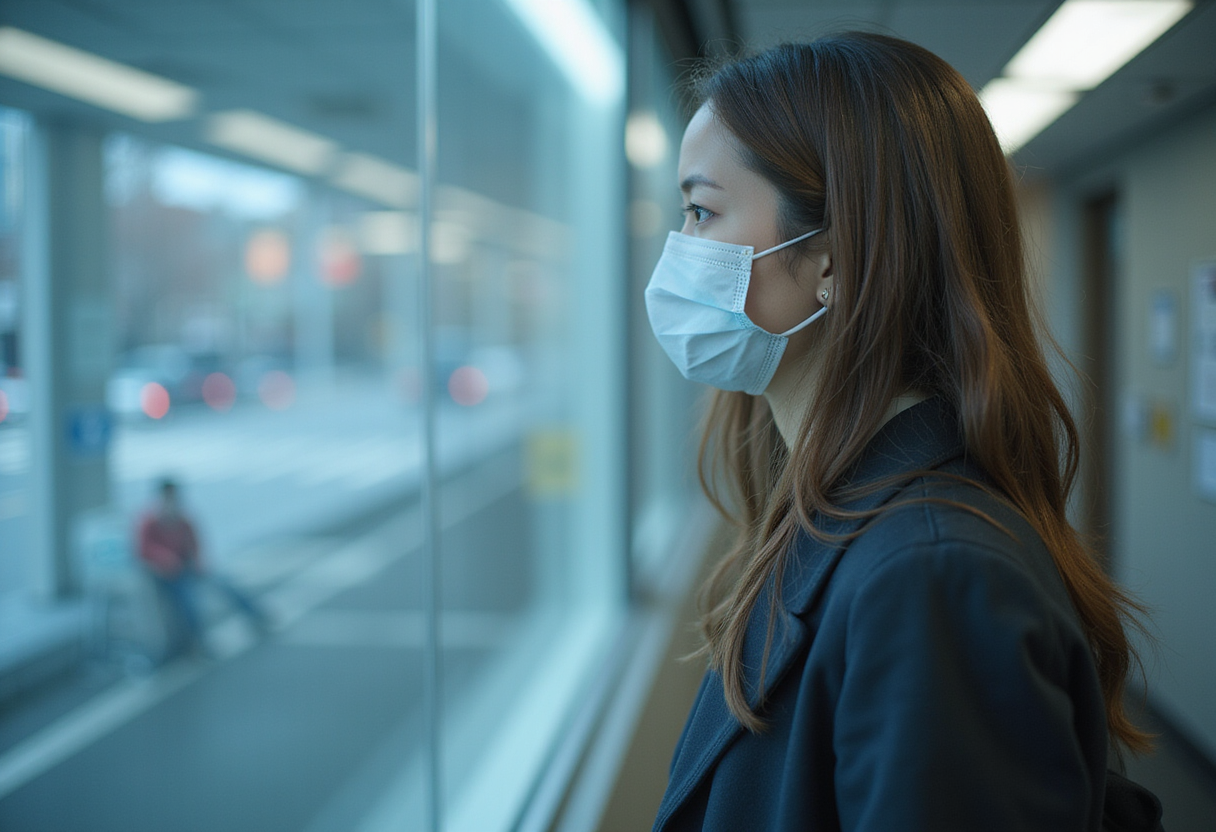
Only about 54% of Japanese adults would seek mental health treatment for serious emotional problems—roughly 16 percentage points below the U.S. rate of about 70%, according to a nationally representative survey led by researchers at the University of California, Riverside.
Where does Japan stand on mental health treatment?
The study, published in the International Journal for Equity in Health, surveyed 1,012 Japanese adults online using a geographically representative sample. Andrew Subica, a professor of social medicine, population, and public health at UC Riverside's School of Medicine, designed the work with Shinichi Nagata, an associate professor at the University of Tsukuba.
The pair then benchmarked their Japanese data against the 2018 U.S. General Social Survey, a long-running measure of American attitudes and behaviors. The contrast was sharp:
- About 54% of Japanese respondents said they would seek treatment for serious emotional problems, versus roughly 70% of Americans.
- About 84% of Japanese respondents wanted to socially distance themselves from people with mental disorders, compared with 28% for depression in the U.S. sample.
- About 78% of Japanese respondents believed treatment could help someone with major depression, versus roughly 95% of Americans.
"These findings show that mental health stigma can take different forms across cultures and nations," Subica said. "You can't simply take an intervention that works in one country and assume it will work for people somewhere else."
How does stigma differ between the two countries?
Japanese respondents were actually less likely than Americans to label people with mental illness as dangerous. But they reported far stronger wishes to keep distance from them, and they were more skeptical that treatment helps.
That pattern inverts the typical U.S. approach. American antistigma campaigns have largely tried to dispel the idea that people with mental illness are dangerous. In Japan, the data suggest, the more productive lever may be reducing social distance.
The team defined "social distance" as a respondent's preference to avoid everyday contact with someone who has a mental disorder—working alongside them, living next door, or welcoming them into the family by marriage.
What's the most surprising finding?
The unexpected lead came from a concept called "mattering"—whether people feel that others care about them and consider them important. In the Japanese sample, a stronger sense of mattering correlated with greater willingness to seek care. Past treatment experience and belief in treatment's effectiveness also helped.
On the other side, wanting more social distance and believing mental illness would resolve on its own were tied to lower willingness to seek help.
Subica said the mattering signal was not on the team's radar before the analysis ran.
"We weren't expecting mattering to have such a strong connection with treatment seeking," he said. "But even in a highly stigmatizing environment, people who feel that they matter to others appear to be more willing to seek treatment for their mental health problems."
What does this mean for public health?
Subica cautioned that the cross-sectional design—measuring attitudes at one moment in time—cannot prove that boosting mattering causes people to seek care. The finding does, however, offer a starting point for trials testing social-connection interventions.
Japan has extensive medical resources. Yet mental health treatment remains underused, even as the country confronts rising depression, anxiety, loneliness, and suicide.
Why does culture matter for stigma?
Subica argued that mental illness in Japan has historically been hidden from public view, with disclosure tied to concerns about a family's reputation and social standing.
"In some cultures, mental illness isn't seen simply as something that affects one person," Subica said. "It can be seen as something that affects the family's status and reputation. The biggest lesson is that culture matters."
Subica brings a personal angle to the work. His mother is Japanese, and he had not returned to the country for many years before starting this research.
"My research has consistently shown me that the culture and communities we live in strongly matter when it comes to people's mental health and physical health in the U.S.," he said. "I wanted to understand whether similar cultural factors were at play in Japan."
The study appears in the International Journal for Equity in Health, DOI 10.1186/s12939-026-03007-6.
via Medical Xpress (Source)
More from Marcus Bennett
Nearby plates
- Loneliness and Desire for Thinness Explain Much of the Teen Girls' Depression Gap
- Childhood Trauma Roughly Doubles Adult Depression Risk, Study Finds
- Education's Mental Health Benefits Depend on a Country's Wealth
- Weapons in Partner Violence Deepen Psychological Harm, Study Finds
- One Year After Ibogaine, Veterans Still See Relief From PTSD