Recorded November 23, 2026
Health & Medicine ResearchReported finding
Polystyrene nanoplastics increase colon tumors in mouse study
A Molecular Cancer mouse study links 50-nm polystyrene particles to more colon tumors, damaged microvilli and depletion of a protective gut bacterium, but human relevance remains unproven.
By James Calloway4 min read815 words
In brief
- Mice fed about 50-nm polystyrene nanoplastics developed far more tumors than mice receiving the same cancer-inducing chemicals alone.
- Polystyrene accumulated in colon-cell lysosomes, depleted Faecalibaculum rodentium and disrupted its production of tumor-protective propionic acid.
- The EPA defines nanoplastics as microplastics below 1 micrometer, while the FDA notes that no universal definition exists.
- Test doses exceeded real-world human exposure, and the study involved mice rather than people.
- Shan Zeng and Ying Han at Central South University led the Molecular Cancer study.
By James Calloway
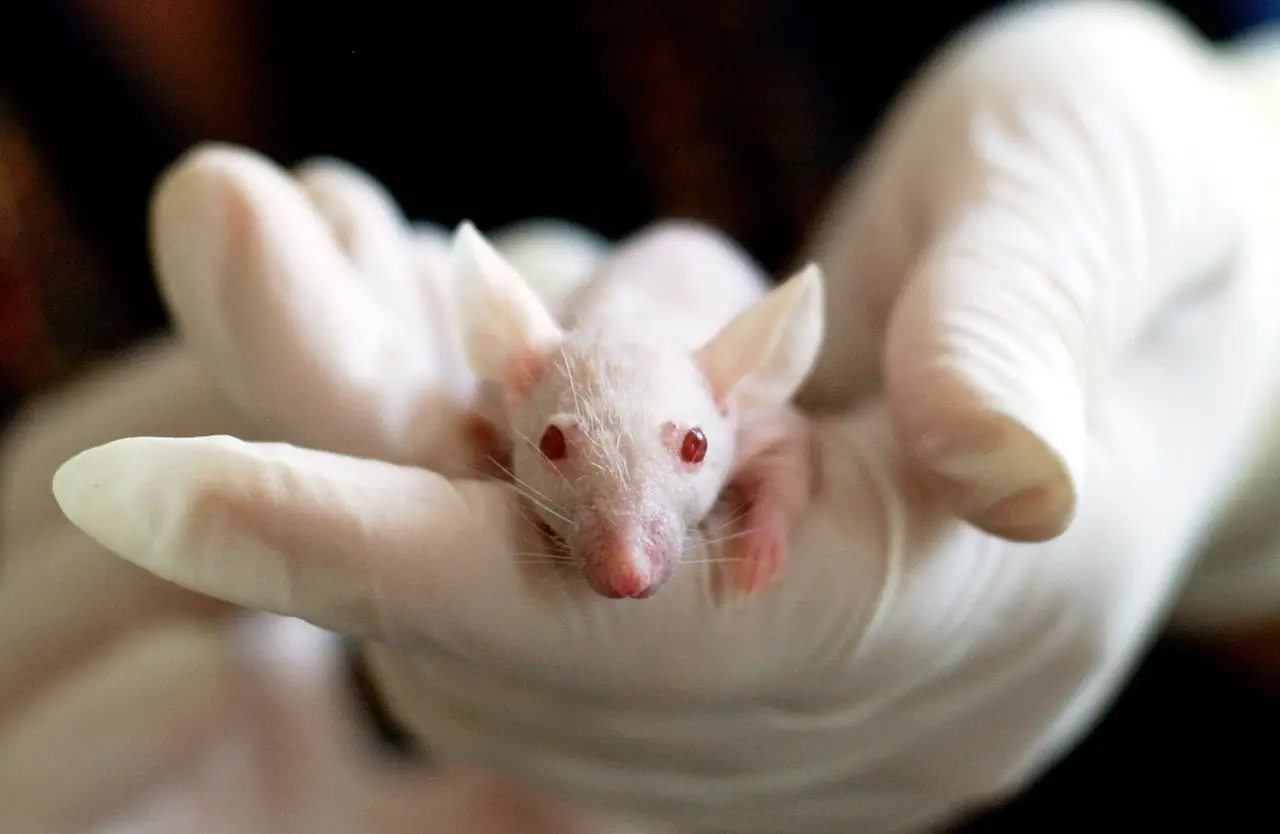
Mice fed polystyrene particles averaging 50 nanometers developed far more colon tumors than mice given the same cancer-inducing chemicals without plastic, a new study in Molecular Cancer reports.
The result does not establish that polystyrene causes colorectal cancer in humans. Every mouse received a cocktail of chemicals known to induce the disease; the plastic-fed mice simply received an added exposure. The experiment asks whether nanoplastics can worsen a cancer-prone gut, not whether they can start cancer on their own.
Polystyrene is one of the world’s most common plastics and appears in food packaging, plastic wraps, storage containers and takeaway cups. Tiny particles can make their way into food and, after swallowing, potentially reach the colon. The packaging connection makes human exposure plausible, although this mouse study cannot quantify it.
The result also fits earlier evidence. Scientists have found colorectal tumors containing a greater variety of microplastics than surrounding tissue, and several mouse studies have linked exposure with tumor proliferation, meaning faster tumor growth. Those observations still do not resolve the human question.
Shan Zeng and Ying Han, oncology researchers at Central South University in China, led the study. The team wrote: “Our findings uncover a previously unrecognized pathway through which polystyrene nanoplastics exacerbate colorectal cancer, underscoring the critical interplay between environmental pollutants, the gut microbiome, and intestinal health.”
The mouse experiment
Some mice also received tiny, spherical polystyrene particles with an average diameter of about 50 nanometers. The US Environmental Protection Agency defines nanoplastics as microplastics smaller than 1 micrometer, or 1,000 nanometers, though the Food and Drug Administration says no universal standard definition exists.
Researchers labeled some particles with a fluorescent marker and tracked them through the mice’s digestive systems until the plastics expected to pass through had left the body. After the researchers euthanized the animals, they found fluorescent plastic in their organs, predominantly in the colon.
On closer inspection, nanoplastics accumulated mainly in lysosomes within colon cells. Lysosomes are cellular compartments that digest and recycle worn-out material; in this case, the polystyrene particles remained trapped inside them.
Although every group received the cancer-inducing chemicals, the mice that also consumed nanoplastics developed far more tumors. The experiment therefore points to an additional effect of the particles within an already cancer-promoting environment.
What mechanism did researchers find?
The polystyrene also appeared to damage intestinal epithelial microvilli. These are the tiny, frilly projections lining the gut, where beneficial bacteria help digest food and where nutrients cross a mucus layer to enter the bloodstream.
One especially relevant bacterium, Faecalibaculum rodentium, became severely depleted in the presence of nanoplastics. The gut microbiome is the community of microorganisms living in the digestive tract, and some of its members can protect the intestine rather than merely digest food.
F. rodentium produces propionic acid, a compound that helps protect cells from tumor formation. According to the researchers, the nanoplastics disrupted this mutually beneficial relationship, potentially creating conditions favorable for colorectal cancer.
Together, the observations fit the authors’ proposed chain: particles collect in the colon, damage the gut lining and deplete a protective bacterium, weakening one of the conditions that normally discourages tumor growth. That is a plausible mechanism, not a settled explanation.
What did an outside expert make of it?
Frank Frizelle, a surgeon and colorectal cancer expert at the University of Otago in New Zealand who was not involved in the research, told The Washington Post: “My own thoughts are that it’s going to prove not to be the microplastics themselves – microplastics are going to prove to be a way of getting through the mucus layer.”
In plain terms, Frizelle suspects particles may act as a passage through the gut’s protective mucus rather than serving as the cancer-causing agents themselves. His interpretation remains an outside expert’s hypothesis, not a result tested by this experiment.
What does this change for people who eat plastic packaging?
For now, the mouse findings do not translate into a human risk estimate. Two limitations stand out:
- The nanoplastics doses were much, much higher than what any human would consume in the real world.
- Mice are not people, and their bodies may process plastics differently.
Even so, scientists have reason to test whether incidental exposure over the long term might produce similar effects in people, especially if it changes the same beneficial gut bacteria. The authors concluded that their findings advance understanding of the health implications of environmental nanoplastics and identify the gut microbiome and its metabolites, the chemical products of microbial activity, as possible targets for intervention against pollution-associated cancer risks.
That is a warning signal, not a verdict. The study identifies a biological pathway worth examining and supplies reasons for direct research on real-world exposure. It does not show that ordinary food packaging causes colon cancer, and it leaves personal risk and consumer guidance unanswered.
via sciencealert.com (Source)
More from James Calloway
Show full bio
Staff writer covering regulation, policy and their impact on general science news at SciBeat.
583 articles
Nearby plates
- Polyethylene plastic linked to fatty liver disease in new study
- Kimchi Bacterium Trapped 87% of Nanoplastics — In a Lab Beaker
- Kimchi bacterium more than doubles nanoplastic excretion in mice
- Microplastics Clog Liver Immune Cells and Drive Fat Buildup in Mice
- Keto Diet Raises Small-Intestine Tumor Risk in MIT Mouse Study