Plate Nº 28 · recorded November 16, 2026
Biology & EvolutionReported finding
Kimchi Bacterium Trapped 87% of Nanoplastics — In a Lab Beaker
A kimchi lactic acid bacterium trapped 87% of nanoplastics in water and 57% in gut-mimicking fluid. Early mouse tests show more plastic in poop, but human evidence is far away.
By Nathan Brooks3 min read670 words
In brief
- Leuconostoc mesenteroides CBA3656 from kimchi trapped 87% of nanoplastics in water and 57% in a gut-mimicking fluid
- Germ-free mice fed the microbe excreted more nanoplastics, per the study in Bioresource Technology (2026)
- A 2025 probiotic study boosted microplastic excretion in mice by 35% and cut intestinal plastic by 67%
- A 2026 yogurt-bacterium study found mice excreted 12 times more microplastics after feeding
- No reliable evidence yet shows microplastics cause disease in humans
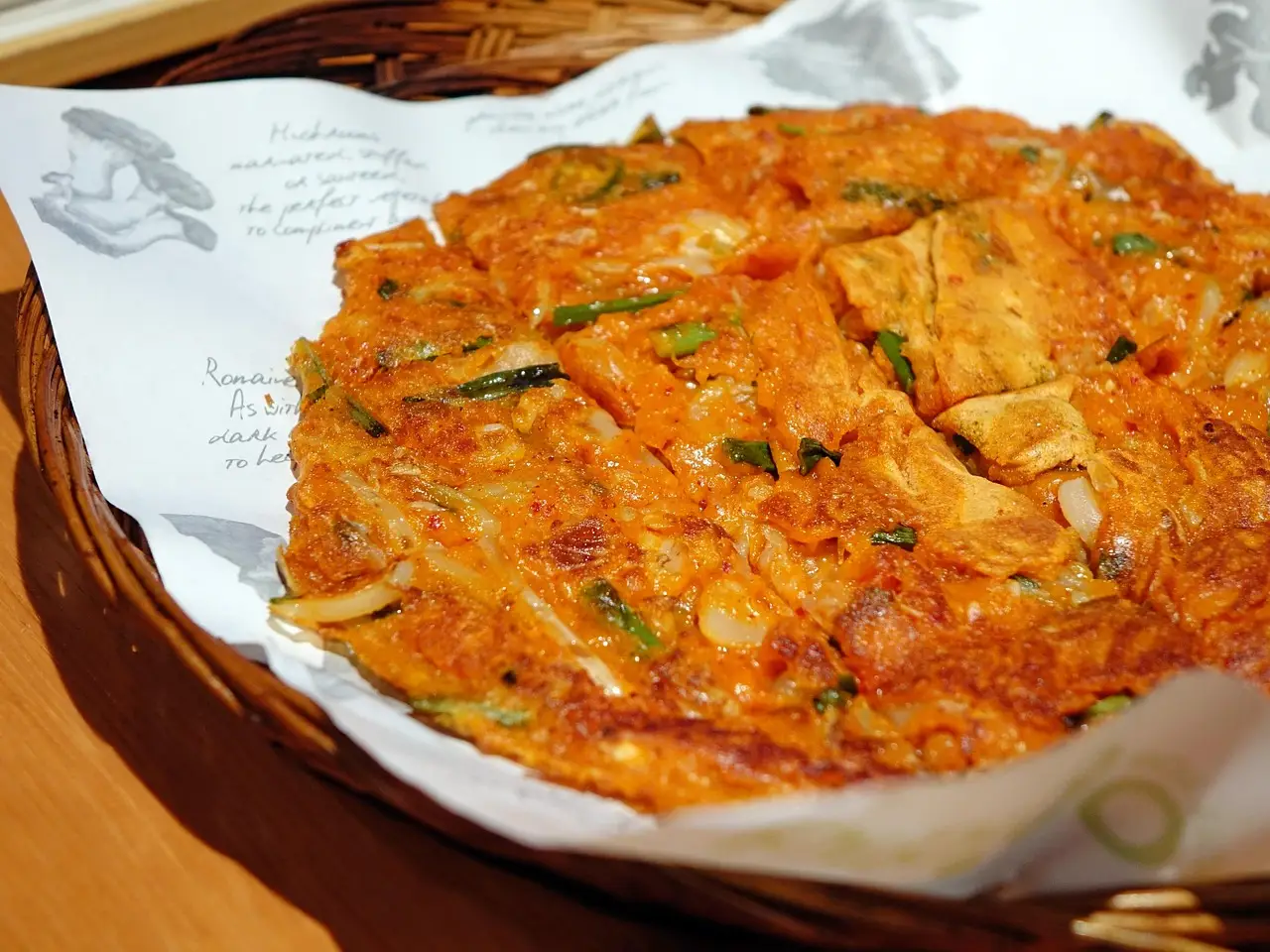
A bacterium pulled from kimchi trapped 87 percent of nanoplastics when researchers mixed it with polystyrene particles in water. In a fluid designed to mimic the human intestine, the same microbe — Leuconostoc mesenteroides CBA3656 — still managed to bind 57 percent of the tiny plastic fragments.
Those numbers come from scientists at the World Institute of Kimchi (WiKim), a government-funded research institute in South Korea that studies the health effects of salted and fermented vegetables. The team, led by microbiologists Se Hee Lee and Tae Woong Whon, published its findings earlier this year in the journal Bioresource Technology.
Here's the catch: these are lab-dish results. They don't yet demonstrate success in a living human gut. In initial animal experiments, though, germ-free mice fed the kimchi-derived microbe did excrete more nanoplastics in their droppings.
How might a kimchi microbe flush out plastic?
The mechanism is surprisingly simple. L. mesenteroides CBA3656 ferments sugars into lactic acid — the same process that turns cabbage into kimchi. The study suggests nanoplastics can stick to the surface of some gut bacteria, essentially hitching a ride as those bacteria pass out of the body.
That could potentially keep the plastic from being absorbed into tissues. "Plastic pollution is increasingly recognized not only as an environmental issue but also as a public health concern," Se Hee Lee said. "Our findings suggest that microorganisms derived from traditional fermented foods could represent a new biological approach to address this emerging challenge."
Is kimchi's bacterium the first to do this?
No. In 2025, a separate study found that certain probiotic strains could boost plastic excretion in mice by 35 percent. Those same microbes cut the amount of plastic lingering in the animals' intestines by 67 percent.
And another study published this year uncovered a parallel in yogurt. Mice fed Lactobacillus delbrueckii subsp. bulgaricus — the classic yogurt bacterium — excreted 12 times as many microplastics in their poop. Their guts also showed fewer signs of intestinal damage.
"This study reports for the first time the role of Lactobacillus delbrueckii subsp. bulgaricus in adsorbing microplastics, promoting their intestinal excretion, and regulating intestinal permeability," those authors wrote. "These findings provide a theoretical basis for further developing this strain as a probiotic formulation to enhance microplastic excretion."
Why the mouse results need caution?
There are real limits to these experiments. The mice in such trials are often bred to have guts free of certain microbes and pathogens, while real microbiomes — mouse or human — are incredibly diverse. Nobody knows yet how interactions with other intestinal bacteria might change the outcome.
There's also a bigger question mark hanging over the whole field. Even if some bacteria speed up plastic excretion, there's no guarantee that improves gut health. Microplastics and their even smaller cousins, nanoplastics, have been linked to numerous health repercussions in studies, but there's no reliable evidence they cause damage or disease in humans. Scientists don't even know how long the particles naturally stick around in us — most seem to pass right through.
The same uncertainty applies to fermented foods generally. Kimchi, like yogurt or kombucha, delivers a wealth of microorganisms to the gut. Some human trials suggest these microbes might alter the microbiome or improve gut health, but research remains scarce.
What happens next?
The WiKim team frames its work as foundational rather than clinical. "Although further field-scale and microbiota-integrated studies are necessary to confirm its applicability in natural ecosystems and the human gut, these findings establish a strong foundation," the authors concluded.
"Collectively, this work not only highlights microbial biosorption as a promising and practical approach to address nanoplastic contamination but also provides new insights into microbe-based strategies for nanoplastic removal in environmental and health contexts."
Translation: the 87 percent figure is a lab result, not a health claim. But it points to a concrete, testable idea — bacteria as a biological cleanup crew for plastic — that researchers can now push through the long pipeline from beaker to mouse to, eventually, human trials.
via sciencealert.com (Source)
More from Nathan Brooks
Show full bio
Market editor covering companies, deals and strategy in general science news at SciBeat.
393 articles
Nearby plates
- Kimchi bacterium more than doubles nanoplastic excretion in mice
- Microplastics Clog Liver Immune Cells and Drive Fat Buildup in Mice
- Polyethylene plastic linked to fatty liver disease in new study
- One 'Biodegradable' Plastic Hit 99.9% Breakdown in 17 Days. Another Stalled at 2.7% in 320
- Microplastics Reach Wild Mammals' Blood 40 Miles From Any Human Infrastructure