Plate Nº 69 · recorded November 12, 2026
Earth & ClimateReported finding
Microplastics Reach Wild Mammals' Blood 40 Miles From Any Human Infrastructure
A Nature study found microplastics in 43 of 47 wild tapirs and anteaters in Brazil, with blood levels rising near human disturbance — even 65 km from infrastructure.
By Marcus Bennett4 min read795 words
In brief
- 43 of 47 tapirs and anteaters had microplastics in their blood
- Microplastics appeared even in animals living over 65 km (40 miles) from human infrastructure
- Blood concentrations rose with human disturbance and proximity to waste facilities
- Study analyzed 26 lowland tapirs and 21 giant anteaters across Amazon, Cerrado and Pantanal
- Published in Nature, 2026, DOI: 10.1038/s41586-026-11285-x
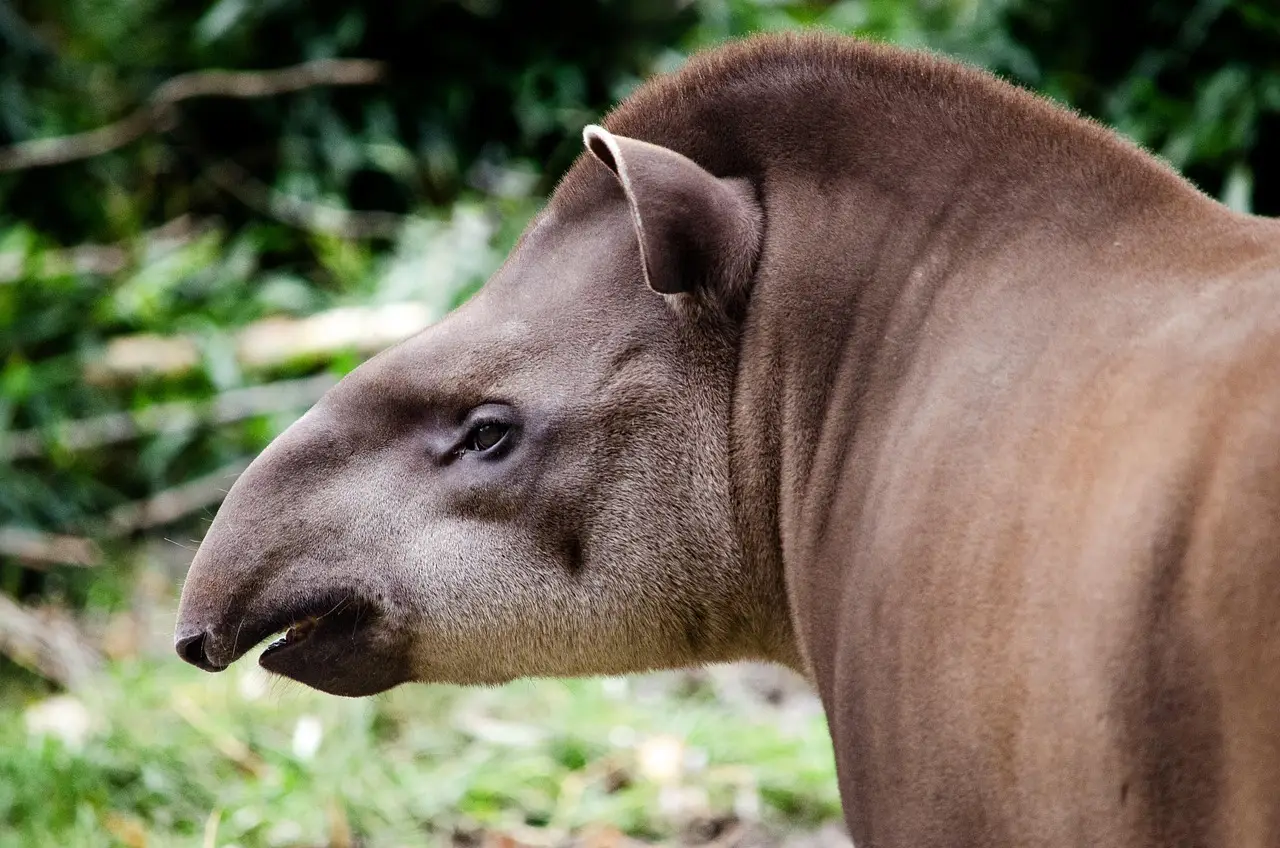
Researchers detected microplastics in 43 of 47 wild tapirs and giant anteaters in Brazil — including animals roaming more than 65 km (40 miles) from the nearest human infrastructure. The study, published in Nature (DOI: 10.1038/s41586-026-11285-x), is the first to demonstrate a quantitative link between human land use and microplastic accumulation in terrestrial mammals.
Why had no one shown this before?
Microplastics — plastic fragments smaller than 5 mm — travel through the atmosphere and ride along in rain, rivers, groundwater and floods. Researchers had already found them in terrestrial wildlife, but nobody had connected exposure levels in the environment to actual concentrations inside individual animals.
"It is widely assumed that a higher microplastic exposure in more human-disturbed areas results in higher microplastic burdens in the animals' bodies," says co-author Prof. Justin Calabrese, research team leader at the Center for Advanced Systems Understanding (CASUY/HZDR — the Helmholtz-Zentrum Dresden-Rossendorf) in Germany. "But to really provide evidence of that was an ambitious effort as we needed to combine in vivo microplastic measurements of free-living wild animals with fine-scale movement data and high-resolution landscape disturbance data. Such integrated data sets simply did not exist."
The takeaway: proving the obvious assumption required combining field biology, laboratory chemistry and data science in a way no research team had previously managed.
How did the team measure it?
Dr. Marcia de Almeida Monteiro Melo Ferraz, a wildlife conservation specialist at the University of British Columbia in Kelowna, Canada, led the study. Her team focused on 26 lowland tapirs (Tapirus terrestris) and 21 giant anteaters (Myrmecophaga tridactyla) living across three Brazilian regions: the Amazon, the Cerrado and the Pantanal.
The researchers collected blood samples for microplastic analysis and fitted the animals with GPS trackers. To fill the gaps between recorded GPS points and to model each animal's home range, they used the open-source software package ctmm (continuous-time movement modeling), which reconstructs likely paths from tracking data.
"The ctmm package uses GPS tracking data to reconstruct and analyze animal movements. In this way, it helps researchers understand how animals use their habitat — that is, where they move and how much time they spend in each area," explains Calabrese, whose group developed the movement-analysis framework over the past 15 years.
"The study is highly interdisciplinary as it required very tight integration of methods used in the field, the laboratory, and by us data scientists," Calabrese adds. "The inherent difficulty in that kind of cross-discipline integration is exactly why no one else has managed to do this so far."
The takeaway: the movement-modeling software turned scattered GPS fixes into a precise picture of each animal's exposure to disturbed landscapes.
What did the blood samples show?
The analysis produced a clear dose-response pattern. Blood concentrations of microplastics were significantly higher in animals whose home ranges included more intensive human disturbance, and also higher in animals living closer to waste management facilities.
"Our goal was to understand how the areas and habitats that animals move through influenced their uptake of microplastics. Animals moving in more disturbed areas, or in closer proximity to human infrastructure, do indeed tend to have higher microplastic burdens, and our paper is the first to demonstrate this linkage for terrestrial mammals," says Calabrese.
The takeaway: more human disturbance in an animal's range measurably means more plastic in its bloodstream.
What about the remote Pantanal?
Every animal sampled in the Pantanal — a remote, seemingly pristine wetland region — carried microplastics in its blood, including individuals living more than 65 km from any human infrastructure. Their concentrations were substantially lower than those of animals near disturbed land, and the GPS data showed no direct exposure to human-modified landscapes for these individuals.
That result signals wide atmospheric or hydrological dispersal of microplastics into even relatively untouched terrestrial environments. The findings remain observational; microplastics are demonstrably hazardous to many species under experimental conditions, but a threat to wild animals is still suspected rather than proven.
The takeaway: no wild landscape studied here is fully free of plastic contamination, though distance from humans clearly lowers the dose.
What changes for conservation practice?
The authors conclude that better waste management around human settlements could greatly reduce microplastic levels in wildlife — a point of special urgency for rapidly developing countries such as Brazil, where waste infrastructure lags behind fast-expanding frontier settlements.
They propose two practical levers:
- Establishing buffer zones around nature reserves in areas affected by human activity.
- Eliminating primary microplastic pollution sources in the immediate vicinity of habitats, which the authors describe as extremely beneficial even at small scale.
The takeaway: managing waste at the local level, not just at the national level, directly lowers the plastic burden carried by wildlife.
via phys.org/rss-feed/ (Source)
More from Marcus Bennett
Show full bio
News editor covering regulation, policy and their impact on general science news at SciBeat.
370 articles
Nearby plates
- Microplastics Clog Liver Immune Cells and Drive Fat Buildup in Mice
- Polyethylene plastic linked to fatty liver disease in new study
- 180 Million Water Tests Show Pollutants Hit Even Protected Rivers
- California rodenticide rules cut exposure in young owls by more than half
- Deep-Sea Metal Nodules Are Alive With Thousands of Tiny Animals