Plate Nº 49 · recorded September 29, 2026
Health & Medicine ResearchReported finding
Resistance Gene Helps C. difficile Survive Hospital Disinfectants
Monash University researchers show an antibiotic resistance gene lets C. difficile spores survive hospital disinfectants, linking drug resistance to spore toughness for the first time.
By Marcus Bennett3 min read526 words
In brief
- Monash University researchers found that an antibiotic resistance gene lets C. difficile build tougher spores that survive hospital-grade disinfectants and high laundry temperatures.
- The study, published in Nature Communications (2026), is the first to link antibiotic resistance directly to bacterial spore construction.
- The resistance gene produces a protein that replaces a key spore-building protein, bypassing the normal antibiotic block on spore formation.
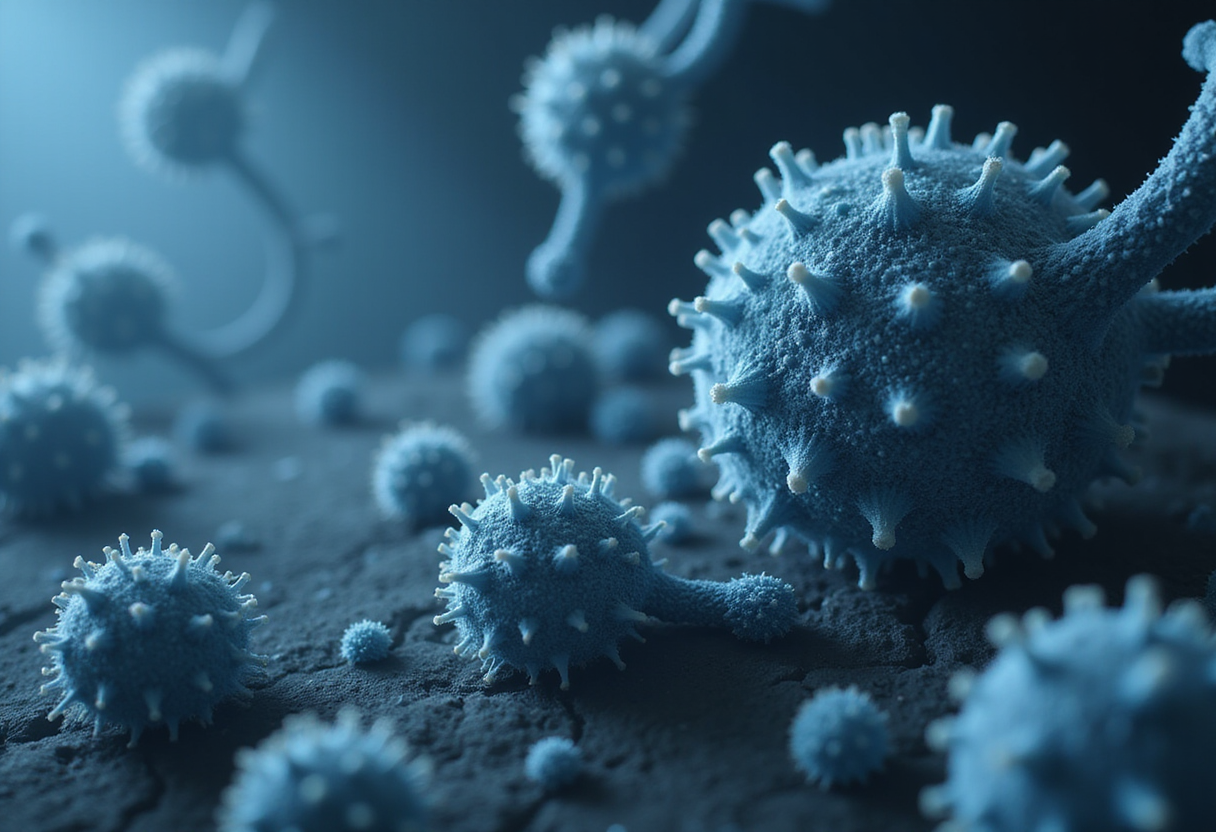
Antibiotic resistance is supercharging dangerous gut bacteria to withstand even hospital-grade disinfectants intended to kill them.
New research from Monash University, published in Nature Communications, shows that the bacterium Clostridioides difficile has acquired a key gene that gives its dormant spores a free pass against both antibiotics and cleaning products.
The finding matters because C. difficile is commonly found in hospitals, where it causes diarrhea that can be deadly for patients who are already ill. Its spores behave like plant seeds — they lie dormant, waiting to activate and spread when conditions are right, such as inside the human gut.
Lead researcher Dena Lyras, interim dean of the Monash Sub-Faculty of Biomedical and Psychological Sciences and director of the Monash Biomedicine Discovery Institute, called the work a crucial step forward in the race against antimicrobial resistance.
"Antibiotics are helping bacteria evolve in ways we hadn't anticipated," Lyras said.
"Our new research shows just how sophisticated their evolution is, with the potential to have disastrous impacts on humans."
"They are not only better at building tolerance to drugs we develop, but making new versions of themselves that can survive better in particular environments, like surfaces where cleaning products are commonly applied," she added.
A resistance gene fortifies spores
Antimicrobial resistance occurs when bacteria stop responding to antibiotics, producing infections that become hard or impossible to treat. The World Health Organization lists this phenomenon as a major global health threat and estimates that it contributes to millions of deaths every year.
The Monash study is the first to uncover a direct link between antibiotic resistance and bacterial spores. Normally, antibiotics block C. difficile from forming spores. But when the bacterium picks up this resistance gene, the block stops working. Instead, the microbe produces even tougher spores that survive hospital-grade cleaning products and high laundry temperatures.
The mechanism works through a protein swap. The resistance gene produces a protein that replaces a key spore-building protein, allowing the bacterium to keep making spores even under antibiotic pressure — and to make hardier ones at that.
The researchers describe this as an alternate pathway of antibiotic resistance in spore-forming bacteria.
Spore survival complicates infection control
First author Dr. Yogitha Srikhanta, a postdoctoral research fellow at Monash Biomedicine Discovery Institute, said targeting the spores could hold the key to a solution.
"Spore survival matters because spores are the main way these pathogens spread between people and through hospitals, homes and the environment," Srikhanta said.
"A resistance gene that changes how spores are built could make infections harder to control and help resistant strains spread more easily."
"We are now investigating ways to deal with this new type of antibiotic resistance," she said.
The study is preliminary in scope — one gene, one bacterium, one set of laboratory conditions — and the team's proposed countermeasures remain under investigation rather than in clinical use. Still, the results suggest that infection control may need to account for spores that standard hygiene routines cannot eliminate.
Publication details: Yogitha N. Srikhanta et al., "Uncovering an alternate pathway of antibiotic resistance in spore-forming bacteria," Nature Communications (2026). DOI: 10.1038/s41467-026-75594-5
via Medical Xpress (Source)
More from Marcus Bennett
Nearby plates
- Scientists Map Three Weak Points in Antibiotic-Resistant Bacteria
- Scientists Find a Way to Kill a Drug-Resistant Deadly Fungus
- Skipping Sweets During Antibiotic Treatment May Protect Gut Microbiome
- Why a Food Poisoning Bacterium Can Also Cause Severe Wound Infections
- Experimental Pill Trial Aims to Slow Congo's Deadliest Ebola Outbreak