Recorded November 24, 2026
Chemistry & MaterialsReported finding
Rice University splits carbon dioxide with visible-light catalyst
Rice University’s copper nanoparticle and cerium oxide catalyst split carbon dioxide under blue light, sustaining carbon monoxide output for 238 minutes at 15,000 micromoles per hour per gram.
By Marcus Bennett4 min read790 words
In brief
- Rice University's catalyst sustained carbon monoxide production for 238 minutes under visible light.
- Peak output reached 15,000 micromoles per hour per gram at 475 nanometers.
- Heat-driven controls degraded within 35 minutes, while the light system produced nearly three times more carbon monoxide than materials without cerium oxide.
- Cooling the reaction chamber to 10 degrees Celsius increased carbon monoxide production.
- The study appeared in the Proceedings of the National Academy of Sciences in 2026 under DOI 10.1073/pnas.2628340123.
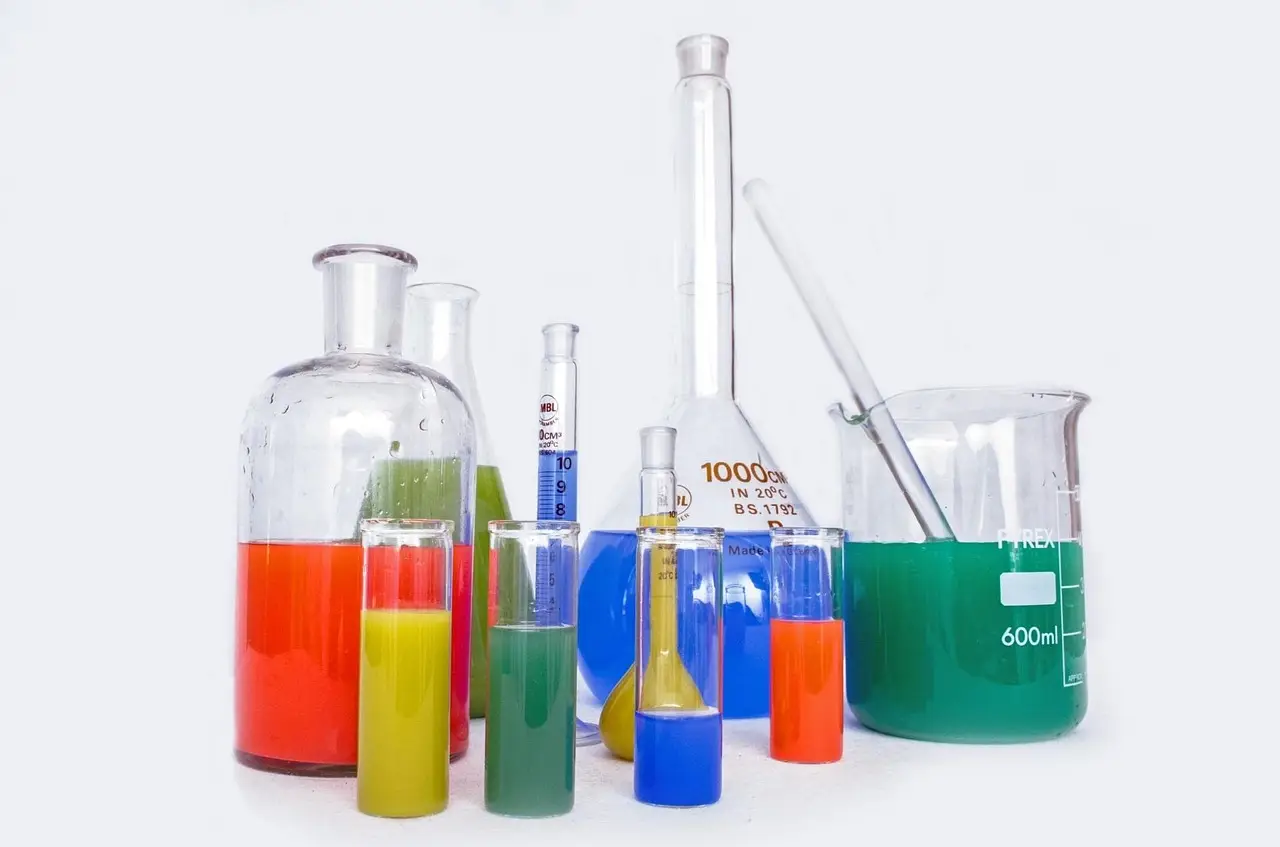
Rice University researchers used visible light to split carbon dioxide without an external furnace, sustaining carbon monoxide output for 238 minutes. At peak performance, the system produced 15,000 micromoles (millionths of a mole) per hour per gram under 475-nanometer blue light.
Conventional carbon dioxide conversion requires 700 to 1,500 degrees Celsius or intense electrical discharges. These routes consume substantial energy and often generate carbon emissions while breaking carbon dioxide’s exceptionally stable bonds.
The laboratory result gives manufacturers a route that avoids external furnace heat, but its commercial performance remains unproven.
Why does carbon monoxide matter?
Carbon monoxide serves as a key raw material for plastics and everyday industrial chemicals. Chemical manufacturers and industrial facilities could use captured carbon dioxide as a direct feed, reducing emissions and moving toward net-zero production.
Naomi Halas, a Rice University professor and the study’s senior author, said: “What makes this advance so important is that it turns carbon dioxide straight into carbon monoxide, a major value-added product for industrial use. That shift could make carbon capture genuinely profitable.”
Takeaway: For plant operators, the prize is a valuable chemical made from captured carbon dioxide with less external heat.
How does the catalyst keep oxygen from reversing the reaction?
Previous direct-splitting attempts struggled because freed oxygen atoms rapidly combined with carbon monoxide or degraded the catalyst. The Rice team paired light-harvesting copper nanoparticles, or tiny copper particles, with cerium oxide, a material similar to components in automotive catalytic converters.
When visible light strikes the copper particles, they act as microscopic antennas and channel high-energy electrons into ruthenium reaction sites, or active spots where the reaction occurs. Those sites split carbon dioxide into carbon monoxide and oxygen.
Cerium oxide then serves as an “oxygen sponge.” Its crystal structure temporarily traps freed oxygen, keeping it from recombining with carbon monoxide and reforming carbon dioxide. Nitrogen gas under light regenerates the catalyst for later cycles.
Halas said light-driven bond breaking alone did not solve the problem; cerium oxide’s oxygen-sponge properties supplied that missing step.
Takeaway: Cerium oxide keeps oxygen away from carbon monoxide, allowing the catalyst to complete more cycles.
How long did the system perform?
The light-driven process held steady output for nearly four hours, specifically 238 minutes. That run lasted almost seven times longer than heat-driven controls, which degraded within 35 minutes. The system yielded nearly three times more carbon monoxide than test materials lacking cerium oxide.
Under laser illumination, the catalyst surface reached 300 to 386 degrees Celsius, or 572 to 726 degrees Fahrenheit. Externally cooling the reaction chamber to 10 degrees Celsius increased production because carbon dioxide molecules attached more effectively to the cooler surface.
Peter Nordlander, Rice’s Wiess Chair in Physics and Astronomy and a professor of electrical and computer engineering, materials science and nanoengineering, framed the energy advantage. He said: “Plasmonic photocatalysis provides a much more energy-efficient approach than conventional thermocatalysis.”
In plain terms, thermocatalysis uses heat to accelerate a reaction on a catalyst, while plasmonic photocatalysis uses light-absorbing metal particles to concentrate energy into electrons. Nordlander added: “While the overall temperature of the catalyst only reaches a few hundred degrees, the electrons driving the reaction, which equal less than 0.05% of the total mass, are heated in excess of 10,000 degrees Fahrenheit.”
Takeaway: External cooling improved output, while the reaction concentrated energy in electrons rather than the whole catalyst.
What has to happen before industrial scale?
Scaling from laser-powered laboratory reactors to commercial manufacturing remains the next major milestone. Rice licensed its antenna-reactor system to Syzygy Plasmonics, a Houston-based clean-technology spinoff co-founded by Rice researchers.
Syzygy is engineering light-driven chemical reactors, including scalable, modular photoreactors designed for industrial lighting arrays. Hossein Robatjazi, the company’s lead scientist and director of catalyst research and a Rice adjunct professor of chemistry, said the process could turn underutilized industrial emissions into valuable chemical feedstocks.
He also said direct conversion could reduce energy demand, complexity and infrastructure costs. Combined with Syzygy’s modular photoreactors, the method could enable cost-effective carbon reuse across diverse industrial operations, Robatjazi said.
Those benefits remain prospective. Commercial-scale output, long-term catalyst durability and industrial operating costs remain unproven.
Takeaway: The chemistry works in the laboratory; reactor scale, durability and economics still need testing.
The paper, “Direct CO2 splitting using light-based catalysis and an oxygen reservoir,” by Shan Z. Deneen et al., appeared in the Proceedings of the National Academy of Sciences in 2026. Its DOI is 10.1073/pnas.2628340123.
The decisive next step is a reactor that preserves the laboratory system’s output and energy savings at industrial scale.
via phys.org/rss-feed/ (Source)
More from Marcus Bennett
Show full bio
News editor covering regulation, policy and their impact on general science news at SciBeat.
604 articles
Nearby plates
- Sulfur-Powered Material Splits Water Into Hydrogen Using Sunlight
- Yale Framework Maps Where and When Ocean Carbon Removal Works Best
- MXene Photocatalyst Hits 200× Methane Yield with Polymer Shield
- Government-Owned Power Plants Emit Most, Respond Least to Climate Policy
- Machine Learning Uncovers 9,389 Hidden Reactions for Turning CO2 Into Fuel