Plate Nº 81 · recorded October 17, 2026
Space & AstronomyReported finding
Roman Space Telescope Beats Predictions by Nearly 30 Percent
NASA's Roman Space Telescope now sees nearly 30 percent sharper than predicted after engineers moved a mirror one-sixteenth the width of a human hair.
By Priya Raman4 min read767 words
In brief
- Roman's Wide Field Instrument achieved image quality nearly 30% better than predicted, measuring 63 nanometers RMS versus the 90-nanometer requirement.
- Engineers moved the secondary mirror by about one-sixteenth the diameter of a human hair.
- The telescope launched on August 30 and activated its Wide Field Instrument in September 2026.
- Both the Wide Field Instrument and the Coronagraph Instrument are meeting or exceeding expected performance.
- In coming weeks, the team will test the coronagraph's ability to block unwanted light for viewing faint objects near bright stars.
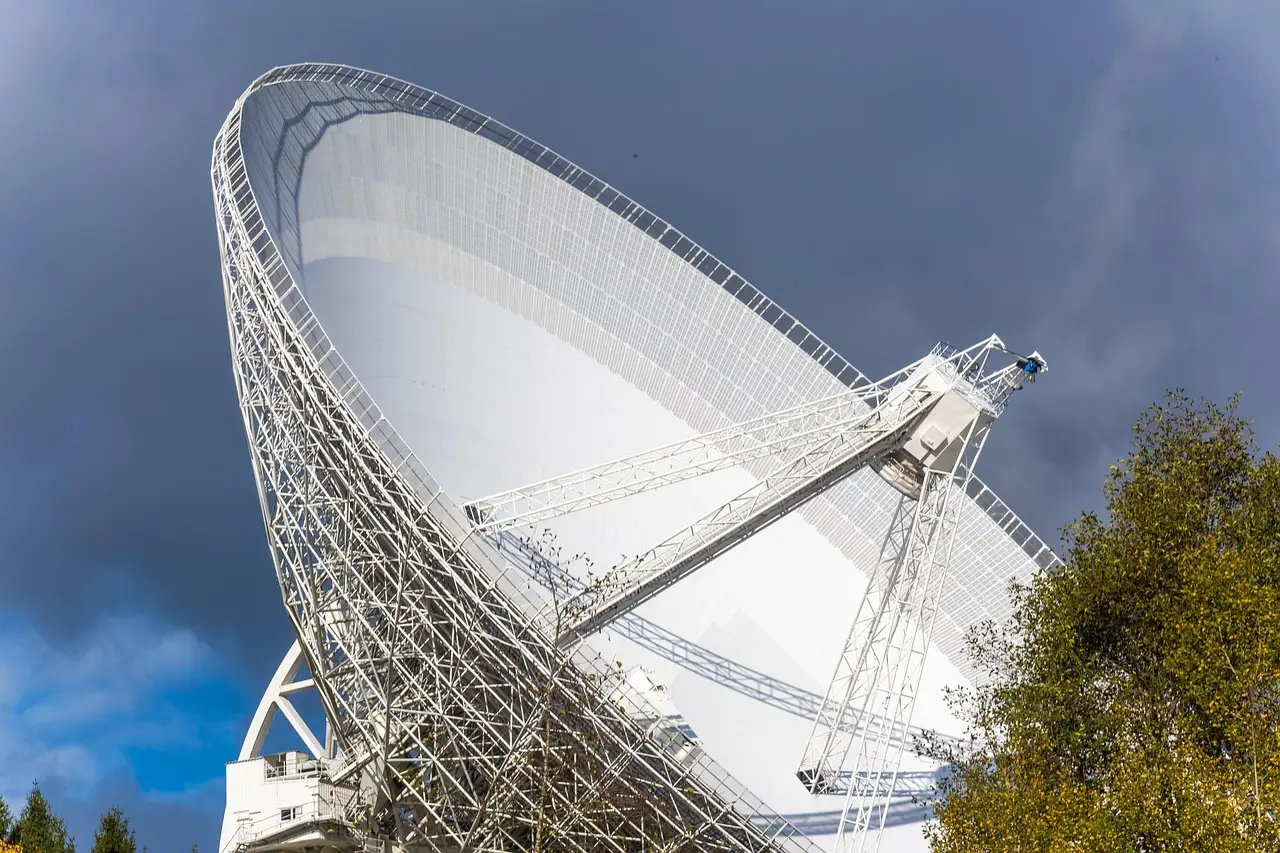
NASA's Nancy Grace Roman Space Telescope now delivers images nearly 30 percent sharper than engineers predicted, after a series of microscopic adjustments in orbit. The observatory's main camera achieved an optical error of just 63 nanometers RMS (a measure of how far incoming light deviates from a perfectly focused wavefront), substantially beating its pre-launch requirement of about 90 nanometers — a scale roughly 1,000 times thinner than a human hair.
Roman launched on August 30 and activated its Wide Field Instrument, the camera system that will carry out the mission's sweeping sky surveys, in September. The result strengthens the telescope's ability to investigate dark matter and dark energy, the invisible components that govern the structure and evolution of the universe.
Why does one camera matter so much?
Every one of Roman's planned surveys depends on the Wide Field Instrument. Dave Hickey, a Wide Field Instrument systems engineer at NASA's Goddard Space Flight Center in Greenbelt, Maryland, said: "Many of the mission's primary goals, like studying dark matter and dark energy, wouldn't be possible without it, so it's both exciting and a huge relief to see that it's working well!"
Following the instrument's activation, engineers ran a comprehensive campaign to verify each component on its own and as part of the whole system. The sequence covered:
- The instrument's 18 detectors, each roughly the size of a sticky note, and the electronics that operate them
- The element wheel, a rotating mechanism whose filters select which wavelengths of light reach the detectors and can separate incoming light into its individual colors
- An internal calibration system built around light-emitting diodes that serve as adjustable light sources, allowing scientists to measure differences in detector sensitivity and correct for them
- The alignment mechanism, moved from its deliberately unfocused launch position to the setting expected to produce the sharpest images
- The thermal control system, which holds components at the temperatures they need to function
Maxime Rizzo, a Wide Field Instrument systems engineer at NASA Goddard, compared the work to preparing a performance: "Calibrating an instrument is like tuning a piano or guitar before a concert. You adjust everything until it's just how you want it and then leave the settings alone so it performs consistently while you use it."
How small were the adjustments?
While one team tuned the instrument, another refined the alignment of the telescope's mirrors and other optics. The optics arrived in space in remarkably good shape. Matthew Bolcar, Roman's optical systems lead at NASA Goddard, credited "exceptional preparatory work done on the ground prior to launch" — testing and modeling at Goddard and by contractors at L3Harris and BAE Space and Mission Systems — for leaving only small corrections to make in orbit.
Launch forces can shift sensitive equipment, and orbital conditions differ from any laboratory. "Our ground testing couldn't exactly reproduce the environment Roman would experience in space, such as the absence of gravity," Bolcar said, noting differences in temperature variations and moisture as well. Even so, both instruments matched or exceeded predicted performance.
The margin of error in the corrections was extraordinary. Alden Jurling, a senior optical engineer on the project, said: "We moved the secondary mirror by about one-sixteenth of the diameter of a human hair." The change nudged the mirror's height above the primary; scaled to the height of the Empire State Building, it equals a little less than one U.S. penny stacked on the tower's tip.
What comes next?
Engineers first focused on Roman's Coronagraph Instrument, an earlier source of slightly blurry images. The problem proved less severe than anticipated and was straightforward to correct. The coronagraph now meets the team's performance expectations, and engineers will keep refining its camera settings and its deformable mirrors, which change shape to apply extremely precise corrections to incoming light.
In the coming weeks, the team will test the coronagraph's ability to block unwanted starlight — an essential capability for observing faint objects orbiting much brighter ones.
The headline result, however, belongs to the Wide Field Instrument. Its measured optical error of 63 nanometers RMS opens the door to crisper images across enormous regions of the sky than designers expected. "All of the images from Roman's cosmic surveys will be even sharper than we expected," Jurling said. "It's a great outcome from years of careful modeling, precision metrology, and testing."
With both instruments at or above their expected performance, Roman has cleared a major milestone on the road to routine observations of the hidden universe.
via ScienceDaily: Space & Time (Source)
More from Priya Raman
Show full bio
Senior reporter covering people, launches and day-to-day practice in general science news at SciBeat.
244 articles