Plate Nº 95 · recorded November 12, 2026
Space & AstronomyReported finding
Ryugu may date to the solar system’s first rocky generation
One Ryugu grain formed at about 92°C 4.565 billion years ago. Simulations suggest the asteroid assembled less than 2 million years after the solar system’s first solids.
By Nathan Brooks3 min read657 words
In brief
- One Ryugu grain formed at about 92°C 4.565 billion years ago.
- Simulations place Ryugu’s assembly less than 2 million years after the solar system’s first solids.
- Producing the grain’s dolomite required heat that took at least 1 million years to build.
- Ryugu’s samples contain almost no chondrules, unlike most carbon-rich meteorites.
- Ann Nguyen and her colleagues will apply the methods to Bennu, sampled by NASA’s OSIRIS-REx mission.
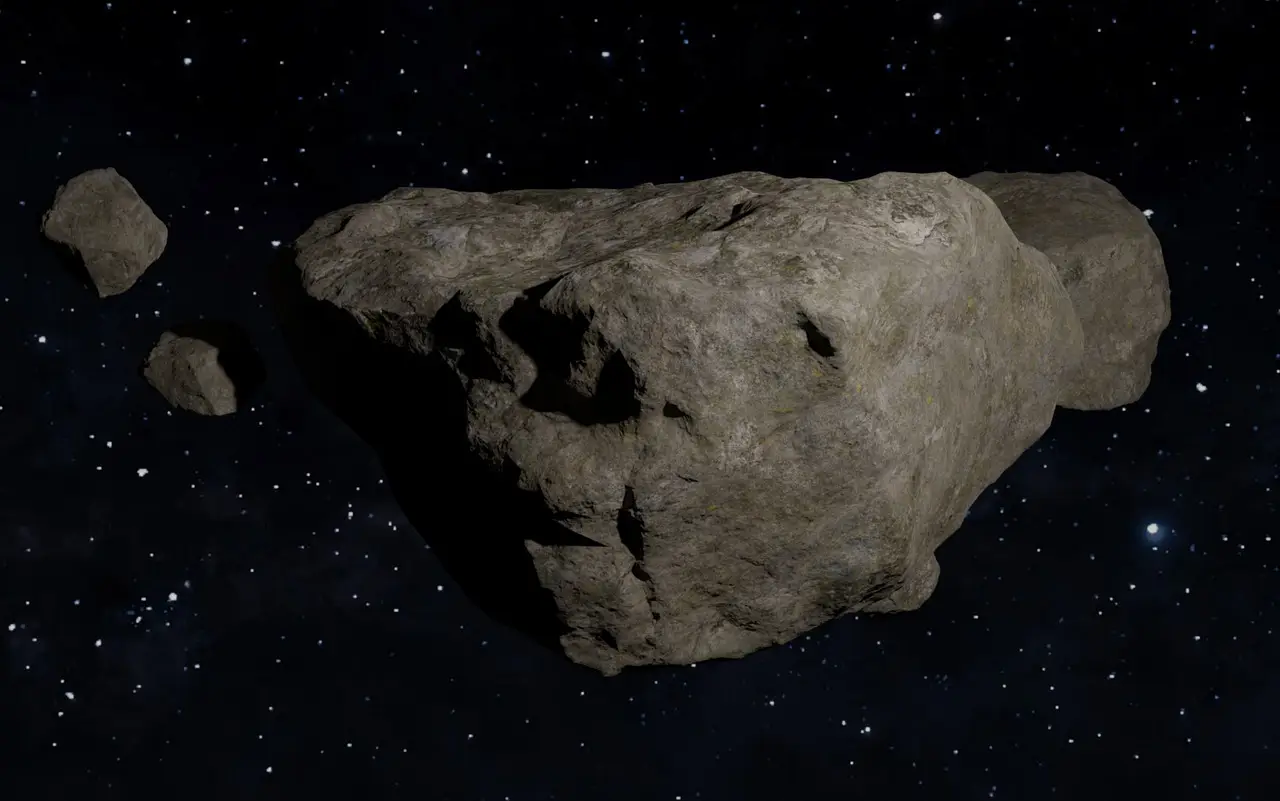
By Nathan Brooks
One Ryugu grain formed at about 92°C 4.565 billion years ago, and simulations suggest Ryugu assembled less than 2 million years after the solar system’s first solids.
That timing makes the asteroid a possible survivor from the opening phase of planet formation, according to a study recently published in Science. The result points to an early origin, though it leaves Ryugu’s membership in the first wave of planetary building blocks provisional.
What makes Ryugu different from most meteorites?
Most carbon-rich meteorites contain chondrules, millimeter-sized beads of rock that froze from molten droplets. These ubiquitous grains formed in the disk of material around the newborn sun 4.6 billion years ago.
Ryugu itself, or at least the parts sampled by Japan’s Hayabusa2 spacecraft, contains almost no chondrules. If the new dating holds, Ryugu formed before chondrules became widespread and may preserve some of the solar system’s raw ingredients.
How did researchers date a grain from Ryugu?
The team searched the samples for dolomite, a mineral that can carry radioactive manganese. Manganese slowly turns into chromium, and the proportions of related elements let researchers calculate when the dolomite formed in the early solar system.
The researchers also measured the balance of heavy and light oxygen atoms in minerals that had crystallized in the samples. Cool water favors more heavy oxygen in a growing crystal, while warming water weakens that preference. The contrast between neighboring minerals therefore records how hot the water was.
Together, these two metrics identified one Ryugu grain containing dolomite that formed at about 92°C some 4.565 billion years ago. Researchers used the manganese-chromium system to estimate its age and the oxygen measurements to constrain its formation temperature.
How much heating did the asteroid need?
The heat required to make the dolomite came from inside Ryugu’s parent body. Study co-author Ann Nguyen, a planetary scientist at NASA’s Johnson Space Center in Houston, says building that heat would take at least 1 million years.
Accounting for that necessary heating period, the researchers’ simulations suggest Ryugu came together less than 2 million years after the solar system’s first solids. The estimate also places its assembly before most chondrules formed.
What does the first-wave theory predict?
The finding fits theories that planets and other solar system bodies grew in waves. Fine dust, ice, organic matter and specks of stardust circled the newborn sun, then clumped into ever-larger objects.
The first generation of planetesimals — small bodies that act as planetary precursors — appeared within about 1 million years of the first solid grains. Later generations arrived a few million years afterward, when chondrules were ubiquitous. If the results hold, Ryugu could be a leftover of that first wave.
Myriam Telus, a planetary scientist at the University of California, Santa Cruz, who did not take part in the study, said: “This study is really interesting and has a high impact for the field.” She also noted two cautions: other dating methods have placed the first chondrules earlier in solar system history, and the manganese-chromium system still needs refinement.
Those uncertainties limit how firmly researchers can label Ryugu a first-generation planetesimal. Even so, the scientists agree that Ryugu formed very early in the system’s history. The result suggests planet building began almost as soon as the solar system did. Some asteroids may preserve raw ingredients from that opening phase.
What could the Bennu comparison reveal?
Nguyen and her colleagues will next apply their methods to asteroid Bennu, sampled by NASA’s OSIRIS-REx mission, and Nguyen hopes to report results soon. Nguyen added: “Comparing Bennu with Ryugu will help us constrain whether they could have come from the same parent asteroid.”
The comparison could narrow whether Bennu and Ryugu trace their origins to the same parent asteroid. If they do, the two could be siblings from the solar system’s dawn.
via scientificamerican.com (Source)
More from Nathan Brooks
Show full bio
Market editor covering companies, deals and strategy in general science news at SciBeat.
326 articles
Nearby plates
- Bennu Samples Rewrite the Asteroid's Birthplace — and Jupiter's Role
- First Solar System Planetesimals Were 83–92% Chondrules, Study Finds
- First Million Years of Solar System Were Fire, Not Ice, Study Finds
- Shock Tests Show Why Ancient Grains Do Not Tell Simple Tales
- All Five Genetic Letters of Life Found in 4.5-Billion-Year-Old Asteroid