Plate Nº 97 · recorded October 10, 2026
Neuroscience & MindReported finding
Scientists reconstruct 10-second videos from mouse brain signals
UCL scientists rebuilt 10-second video clips from mouse visual cortex activity, publishing the work in eLife on September 16, 2026. The technique could expose how the brain reshapes reality before we perceive it.
By Elena Vasquez4 min read721 words
In brief
- Researchers reconstructed 10-second video clips from mouse brain activity alone.
- The study was published in eLife on September 16, 2026, DOI: 10.7554/eLife.105081.3.
- Lead author Dr. Joel Bauer works at the Sainsbury Wellcome Centre at UCL.
- The team adapted a model originally built for the 2023 Sensorium Competition.
- Accuracy improved as recordings covered more individual neurons in the visual cortex.
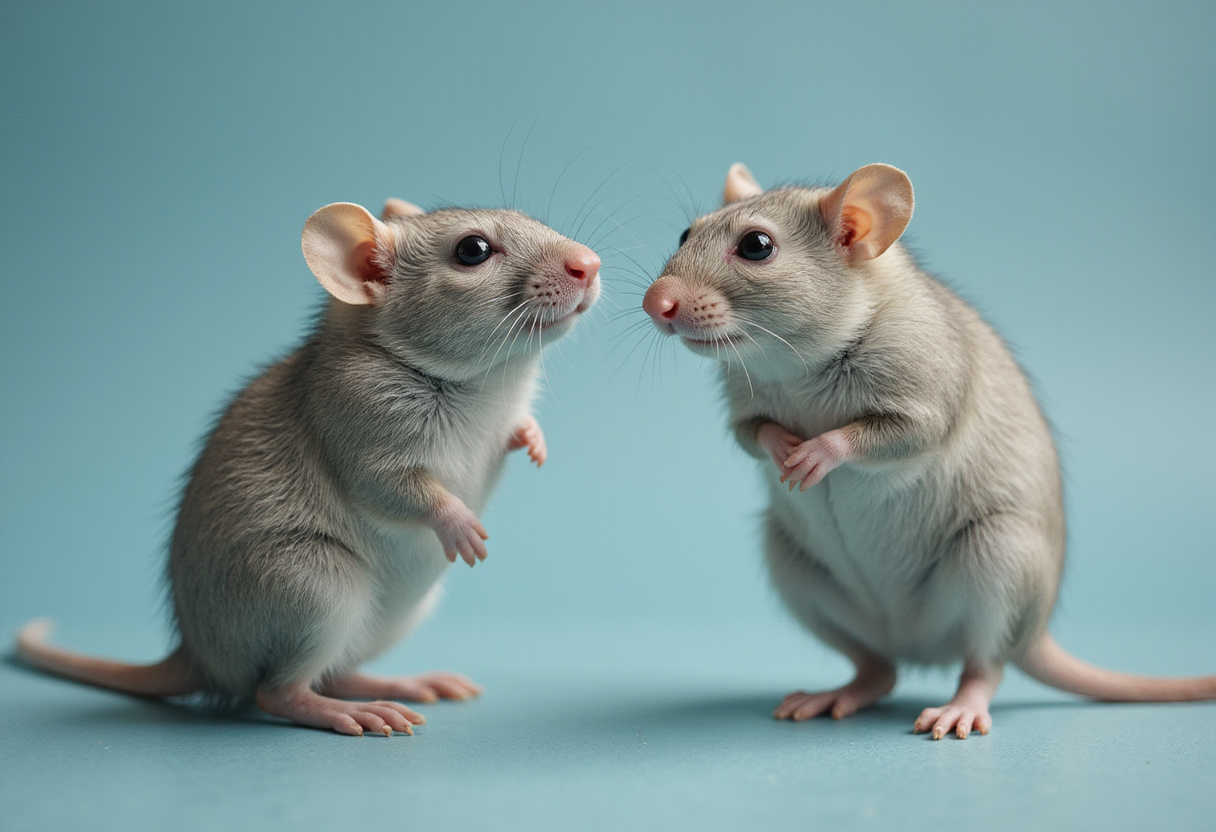
Researchers at University College London have reconstructed 10-second video clips using only brain activity recorded from mice, effectively recreating what the animals were watching. The study, published on September 16, 2026 in the journal eLife, marks one of the first times scientists have rebuilt continuous video from single-cell brain recordings rather than broader imaging signals.
How did the team read the brain's movie?
The researchers recorded activity from neurons (individual brain cells) in the visual cortex, the brain region that processes what the eyes see. They used a microscopic imaging method that detects which cells are active by measuring localized increases in calcium levels inside them.
From those signals, they generated high-quality reconstructions of videos that the mice had previously been shown. When tested on a video the model had never seen, the system still produced a recognizable 10-second clip.
Lead author Dr. Joel Bauer, of the Sainsbury Wellcome Centre at UCL, said: "We wanted to have a better way of investigating how the brain interprets what we see. The current methods of understanding what specific groups of neurons are representing are not very generalizable to situations which haven't been specifically tested for. And so, we wanted to develop a method that can capture what is being represented in the brain and compare that to reality."
What did the algorithm actually change in the video?
The team adapted a dynamic neural encoding model first built for the 2023 Sensorium Competition, a public contest on predicting neuron responses.
- They first predicted how each neuron would respond if the mouse looked at a blank screen.
- They compared that prediction to the neuron's real response while the mouse watched a real movie.
- An algorithm then adjusted a starting blank video frame by frame, changing pixels until the difference between predicted and measured activity shrank. Each step pulled the reconstruction closer to the original.
The model also factored in the mouse's body movements and changes in pupil diameter, both of which influence how visual neurons fire.
How close did the reconstructions get?
The team evaluated accuracy using pixel correlation, a measure that compares matching pixels in the original and reconstructed videos.
The reconstructions matched the timing of the original clips closely. Image resolution and the portion of the visual field that could be rebuilt, however, remained limited. Dr. Bauer added: "Using this approach, we were able to achieve high-quality reconstructions of 10-second video clips. The accuracy of the reconstructions improved with the inclusion of data from more individual neurons, demonstrating the importance of comprehensive neural data."
In other words, more neurons recorded meant a clearer video. The result also suggests the system was not simply memorizing training footage but generalizing to new scenes.
Why would scientists want to replay a mouse's vision?
Vision is not a camera. The brain actively reshapes incoming light before it reaches conscious awareness, filtering and warping the signal in ways scientists still do not fully understand.
Dr. Bauer explained: "We don't have a perfect representation of the world in our heads. The visual processing pipeline skews and warps our representation in a way that modifies information. This deviation between reality and representations in the brain is not necessarily an error but a feature, reflecting how our minds interpret and augment sensory information. We want to explore how this happens in the brain."
By comparing the reconstructed video with the video actually shown to the mouse, researchers can pinpoint where the brain's internal movie diverges from physical reality.
What's next for the work?
The UCL group plans to collect denser neural recordings that can support sharper reconstructions and cover a wider portion of the mouse's visual field. They also intend to apply the technique across species, which could eventually let scientists compare how a mouse, a monkey, or a human represents the same scene.
The findings remain preliminary and apply so far only to mice in a laboratory setting. Human vision involves far more brain regions, including those tied to memory, attention, and language, so any extension to people will require new methods and much larger datasets.
Still, the work offers a concrete tool for testing long-standing questions about perception: not what the eyes send to the brain, but what the brain chooses to keep.
via dx.doi.org (Original)
More from Elena Vasquez
Nearby plates
- Brain 'Prediction' Signals Are Clocks, Not Anticipation, Mouse Study Finds
- Brain Cells Vote: How Conflicting Visual Signals Fade in a Fraction of a Second
- One Brain Cell Type Controls How We Learn Movement Timing
- Brain Wiring Starts Precise, Not Random, Mouse Study Finds
- Scientists Create Mice with Part-Human Brains