Recorded November 25, 2026
Biology & EvolutionReported finding
Seabirds With Recorders Expose Fishing Boats That Vanish From Tracking
Oxford researchers strapped audio recorders to gannets and Balearic shearwaters, finding up to 57% of vessel sounds came from boats absent from public tracking systems, suggesting bycatch risk is underestimated.
By James Calloway4 min read714 words
In brief
- Study published Nov. 25 in Science Advances by University of Oxford researchers.
- An estimated 57% of vessel sounds recorded by northern gannets came from untracked vessels; 20% for Balearic shearwaters.
- At least a third of gannet audio detections matched no public tracking signal.
- Lead author Dr. Jonathan Rutter said the number of interactions missing from tracking records was a surprise.
- The Balearic shearwater, the study's other focus species, is critically endangered.
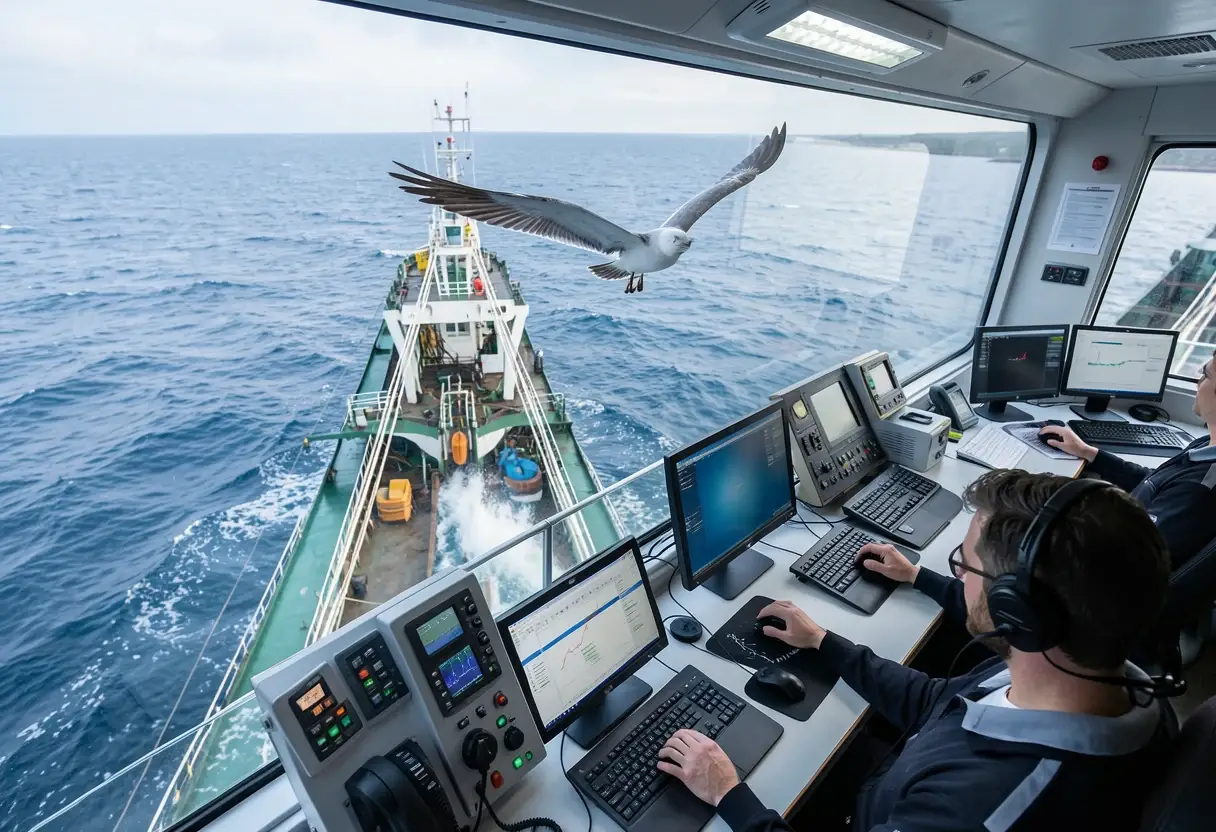
Around 57% of the vessel sounds recorded by northern gannets at sea may have come from boats that no public tracking system accounted for. That figure, published Nov. 25 in Science Advances, comes from an unusual source: the birds themselves, fitted with miniature audio recorders and GPS trackers by University of Oxford researchers.
The team wanted to understand how fishing boats affect wildlife, and the birds delivered an uncomfortable answer. Seabirds appear to interact with human vessels far more than official data suggest — which means bycatch risk, the accidental capture of birds in fishing gear, is likely underestimated.
Bycatch matters here. Birds get lured in by discarded fish or bait, then snagged in nets and hooks. It's a major conservation concern, and the Balearic shearwater, critically endangered, sits squarely in the danger zone.
What did the birds actually record?
The devices captured days of ambient ocean sound as the birds traveled, including the distinctive low-frequency hum of vessel engines. Researchers built a computer method to pick those sounds out of the recordings, then cross-checked each detection against vessel positions reported by automatic identification systems (AIS) and, where available, vessel monitoring systems (VMS).
The mismatch was striking. At least a third of the northern gannets' audio detections matched no public tracking signal. For Balearic shearwaters, more than one in ten detections had no match.
The team went a step further. They estimated the distance from each bird to the nearest tracked vessel at the moment of each sound, asking whether a known ship could plausibly have produced it. Sound carries far, so this mattered. Even with that filtering, roughly 57% of gannet recordings and 20% of shearwater recordings pointed to vessels nobody was tracking.
Dr. Jonathan Rutter, lead author from Oxford's Department of Biology, said: "We know that seabirds regularly interact with fishing vessels at sea, but what surprised us was just how many of these interactions were missing from conventional tracking records."
Why are boats invisible?
Several reasons, and the study can't untangle them for individual vessels. Not every vessel is required to broadcast its location. Some drop off tracking because of technical failures. Others switch off deliberately. The researchers can't say which explanation applies to any given detection, and they don't claim to.
What the findings do expose is a methodological problem. If you assess seabirds' exposure to fishing using tracking data alone, you're missing a large slice of the picture. That's the caveat for anyone relying on AIS-based risk estimates.
Rutter put it plainly: "For threatened seabirds like the Balearic shearwater, understanding where they encounter fishing vessels is crucial to protecting them. If we only consider boats that appear on tracking systems, we risk overlooking areas where birds may be exposed to dangerous fishing activity."
What does this change for conservation?
The aim is not vessel surveillance. The researchers aren't chasing individual boats in real time; they want a clearer map of where seabirds meet fishing activity, and how often birds approach vessels for food.
Better monitoring could identify the priority areas, fisheries, and ports most in need of bycatch mitigation. It could also reveal how feeding behavior varies among individual birds — a detail blunt tracking data can't capture.
There's a wrinkle, though. Boats aren't purely a threat. Co-author Professor Stephen Votier of Heriot-Watt University said: "While fisheries bycatch is a global threat to seabirds, some species, like gannets, actually benefit from fishing vessels as a source of food. For these birds, boats may be more of a dinner bell than a warning signal. Listening to the sounds around seabirds helps us to better understand these risks and benefits, and target conservation efforts where they are needed most."
Limits worth noting
The recordings can't tell whether any individual interaction ended in bycatch. They register proximity, not harm. And the method currently detects only that a vessel is present; future work might distinguish engine sounds well enough to separate smaller fishing boats from large trawlers, but that's a goal, not a result.
Even so, the approach gives conservation scientists an independent check on tracking systems that demonstrably miss vessels. For a critically endangered shearwater, the unseen boats may matter as much as the tracked ones.
via phys.org/rss-feed/ (Source)
More from James Calloway
Show full bio
Staff writer covering regulation, policy and their impact on general science news at SciBeat.
606 articles
Nearby plates
- Thermal cameras log 22 possible bird collisions at offshore turbine
- Floating Scarecrow Cuts Seabird Deaths in Fishing Nets by Two-Thirds
- Birds in Biodiverse Habitats React Faster to Predators
- Outside forests may matter more to birds than habitat within parks
- Two Finland eagle populations grew 9% a year — but differently