Recorded November 25, 2026
Space & AstronomyReported finding
Shenzhou 24 sends first foreign astronaut to China’s space station
Shenzhou 24 carried Muhammad Zeeshan Ali and two Chinese astronauts to China’s Tiangong station, opening a new era of joint missions and more than 90 planned tests.
By Marcus Bennett4 min read844 words
In brief
- Shenzhou 24 launched three astronauts on Wednesday from Jiuquan.
- Muhammad Zeeshan Ali, 40, became the first foreign astronaut on a Chinese crewed mission.
- The crew entered Tiangong and met three astronauts from Shenzhou 23.
- More than 90 scientific experiments and technology tests are planned.
- The mission follows a China-Pakistan agreement signed in February 2025.
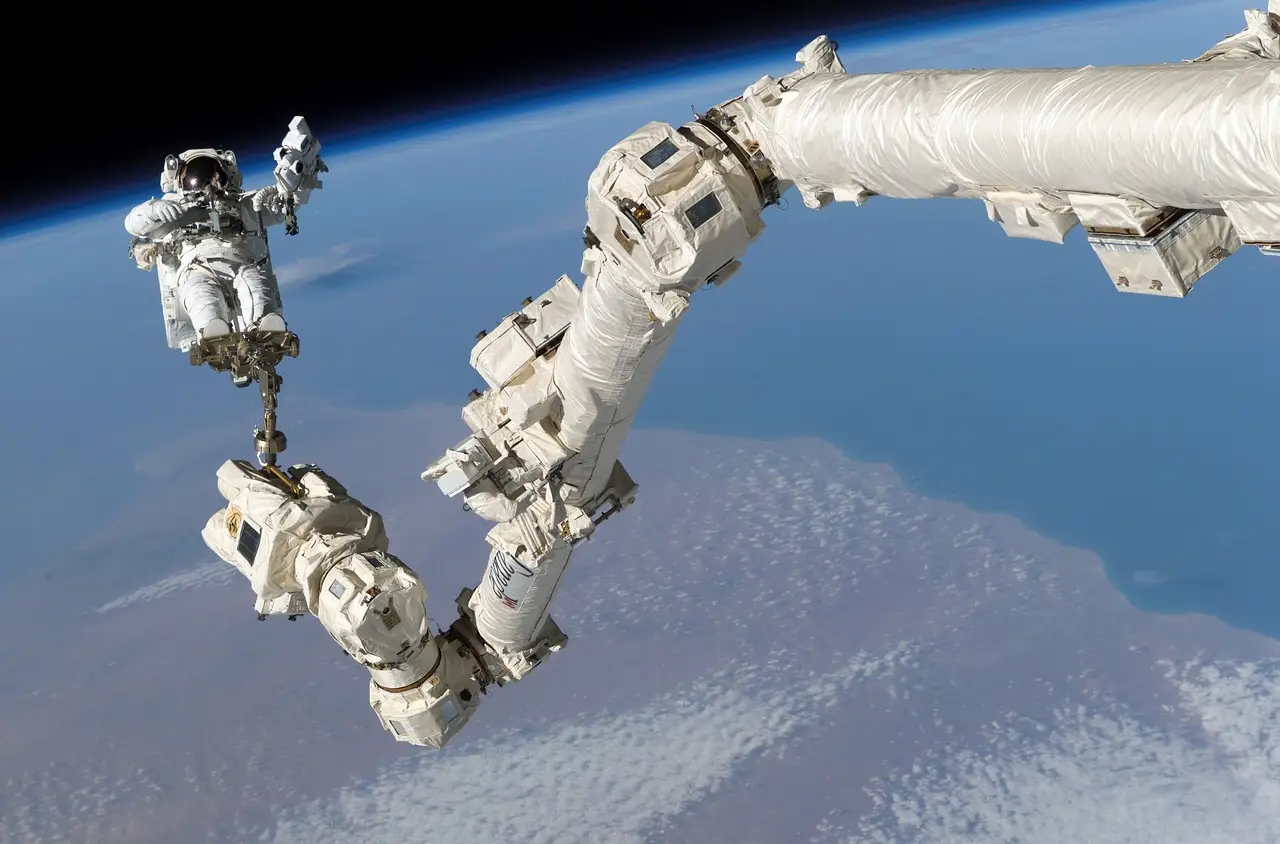
Three astronauts reached China’s Tiangong space station on Wednesday aboard Shenzhou 24, carrying the first foreign astronaut ever to fly on a Chinese crewed mission.
Pakistani astronaut Muhammad Zeeshan Ali, 40, launched with Chinese astronauts Tang Hongbo, 51, and Wu Yi, 39. The spacecraft lifted off from the Jiuquan Satellite Launch Center in northwestern China on Wednesday morning, separated from its rocket, and entered the orbit selected before flight.
The crew later entered the station and took group photographs with three astronauts from the Shenzhou 23 mission.
The flight marked the first joint mission involving Chinese and foreign astronauts in the history of China’s crewed space program. Pakistani President Asif Ali Zardari and Chinese President Xi Jinping exchanged congratulatory letters, describing Ali’s inclusion as a milestone in bilateral ties.
What did the launch change for China and Pakistan?
Hours before launch, crowds attended a send-off ceremony, and many held up phones to capture the moment. In Pakistan, cheers echoed through restaurants and homes thousands of kilometers from the launch site. Shouts praised God and expressed support for China-Pakistan friendship. Families followed television broadcasts, while scientists at the headquarters of Pakistan’s space agency also watched.
According to Zardari’s office, the two presidents congratulated each other and called the Pakistani astronaut’s inclusion a milestone in bilateral ties. Chinese state broadcaster CCTV reported that Xi described China’s space station as a boat for peace, friendship and cooperation. He said China would uphold the peaceful use of outer space and deepen cooperation with other countries.
Pakistan’s Prime Minister Shehbaz Sharif called the mission a source of national pride and inspiration for Pakistani youth. In a post on X, he wrote: “This is not just one astronaut’s journey, but the journey of 240 million Pakistanis.” He thanked China for including Ali and said the flight reflected close ties while extending cooperation into space.
Pakistan’s minister for planning, development and special initiatives, Ahsan Iqbal, told reporters at the launch center that he hoped the mission would begin greater cooperation. He thanked Xi, China’s leadership, scientists and engineers. He also expressed confidence that Pakistan would eventually send astronauts independently.
Iqbal described Ali as carrying more than his name, with the Pakistani flag on his shoulders and uniform. He said the flight lifted the hopes, prayers and technological aspirations of Pakistanis into orbit, and described the sky as no longer a limit but a launching pad for young people pursuing science and technology careers.
For Pakistan, the launch brought national celebration and a first direct step into Chinese-led crewed spaceflight.
What work waits in orbit?
More than 90 scientific experiments and technology tests are planned during the mission, China’s official Xinhua News Agency reported. Ali will conduct an experiment involving photosynthetic cyanobacteria in orbit, organisms that use light to produce energy, during his short-term assignment. He will return to Earth aboard the Shenzhou 23 spacecraft.
Ali and Wu made their first spaceflight aboard Shenzhou 24. Tang had flown on two earlier missions and became the first astronaut to board Tiangong three times, CCTV said. The group photographs with Shenzhou 23 brought the two crews together inside the station.
The announcement did not specify Ali’s return date or itemize the 90-plus experiments beyond the cyanobacteria study, so the public still lacks a full schedule for the mission’s scientific output.
Shenzhou 24 has a large research workload, but the public announcement leaves much of it undisclosed.
How did the crew prepare to work together?
At a news conference on Tuesday, Tang said differences in language, culture and psychology had made learning to work together more challenging. Tang said the efforts from both sides were paying off. Those comments made the central issue explicit: the astronauts had to learn to work together, not merely share a spacecraft.
Ali showed his Mandarin proficiency by citing a Chinese poem about climbing one story higher to see farther. In Mandarin, he described that preparation as a daily routine and said, “It’s like my daily training. Day after day, reaching new heights.”
Speaking in English, Ali said he hoped space cooperation would grow from one astronaut on one flight to multiple joint flights, then to missions to the moon, Mars and beyond. The flight forms part of a China-Pakistan agreement signed in February 2025.
The practical test was daily cooperation across language and culture, and Ali said daily training was helping the crew meet it.
What lies ahead?
China is preparing for its first crewed lunar landing by 2030. The United States is widely seen as China’s main space rival, and NASA aims to land astronauts on the lunar surface in 2028. Those dates place the joint mission within a widening contest over crewed space travel.
The announcement did not announce additional flights, so Shenzhou 24 offers a first joint mission rather than a guaranteed sequence. China and Pakistan have moved a signed cooperation agreement into orbit; the next measure will be whether they repeat the flight.
via phys.org/rss-feed/ (Source)
More from Marcus Bennett
Show full bio
News editor covering regulation, policy and their impact on general science news at SciBeat.
609 articles
Nearby plates
- Pakistani astronaut to become Tiangong’s first international visitor
- Pakistani astronaut to become first foreigner aboard China's space station
- China to launch its first foreign astronaut to Tiangong on Nov. 24
- First Foreign Astronaut Set to Visit China's Tiangong Station
- China Readies Shenzhou-24 for First Foreign Astronaut to Tiangong