Recorded November 25, 2026
Space & AstronomyReported finding
Japan Unveils Four-Legged Rover Built to Hunt Moon Water
JAXA has unveiled a four-legged rover test model for the 2028 LUPEX mission with India, aimed at finding lunar polar water that could be turned into rocket fuel for trips to Mars.
By Elena Vasquez3 min read544 words
In brief
- JAXA unveiled a four-legged LUPEX rover test model in Tokyo on Wednesday
- The joint Japan-India mission targets the moon's south pole in 2028
- Project manager Takeshi Hoshino wants lunar water used as rocket fuel
- Over 90% of water is recycled on the International Space Station
- Japan became the fifth country to achieve a moon soft landing in 2024
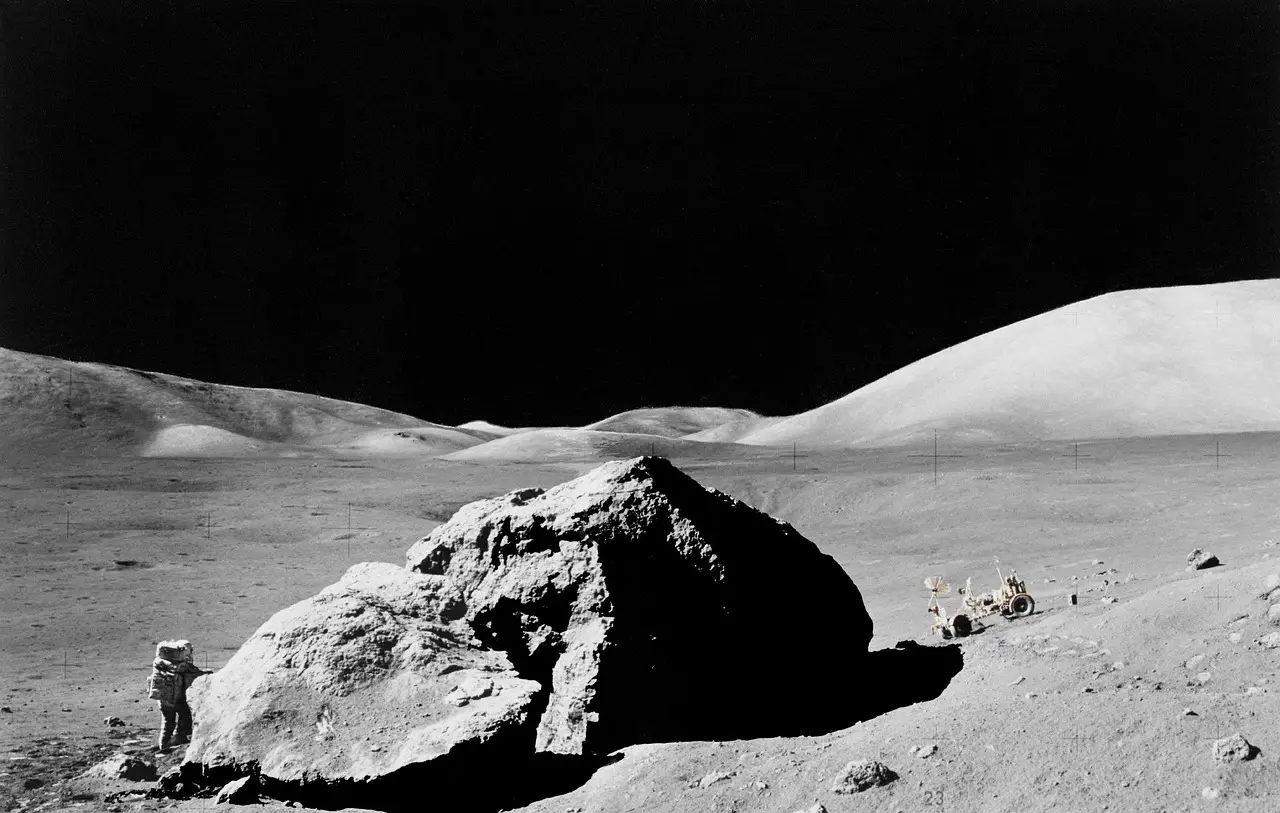
Japan's space agency showed reporters a test model of a four-legged rover on Wednesday, a machine designed to land at the moon's south pole in 2028 and search for water that could one day fuel rockets.
The mission, called LUPEX—short for Lunar Polar Exploration—is a joint project between Japan and India. India, which successfully landed a spacecraft near the lunar south pole last year, will build the lander. Japan supplies the rover.
The target matters because the moon's polar regions contain permanently shadowed areas that never see sunlight. Scientists say water very likely exists near the lunar surface in those dark zones.
Why chase water on the moon?
The LUPEX team wants the rover to measure how much water is there and what quality it is. That data would help determine whether lunar water could make space exploration more sustainable.
"We ultimately want to use lunar water for rocket fuel," project manager Takeshi Hoshino told reporters in Tokyo, where the Japan Aerospace Exploration Agency (JAXA) unveiled the test model.
Rockets burn oxygen and hydrogen, and the water that produces cannot be recovered for reuse, Hoshino explained. By contrast, more than 90% of water gets recycled on the International Space Station.
"That's why a key objective is to produce fuel on the moon for future missions, whether returning to Earth or heading onward to Mars," he said.
In short: fuel made on the moon would mean rockets wouldn't have to carry everything they need from Earth.
What can the test model do?
The prototype on display in Tokyo is a four-legged machine that will form part of the final LUPEX rover. It is already working through a demanding test program.
Scientists have been checking its performance under a range of conditions, Hoshino said, including:
- climbing slopes using a single leg
- continuous driving using two legs
- mobility trials under vacuum conditions
Once the real rover lands, JAXA expects it to identify potential water sources and drill into the site to collect samples.
The takeaway: engineers are stress-testing the hardware now so the 2028 rover can walk, climb and drill in conditions closer to the moon's than any test lab on Earth.
Where does this fit in the space race?
LUPEX lands amid an intensifying global space race, and Japan's record there is mixed but notable.
In 2024, JAXA landed an unmanned probe on the moon—albeit at a crooked angle—becoming only the fifth country to achieve a so-called "soft landing."
Not everything has gone to plan. Tokyo-based company ispace failed last year in its attempt to become the first private firm outside the United States to achieve a controlled arrival on the moon.
Just last month, JAXA notched another first: it successfully launched a spacecraft toward one of Mars's moons on a world-first sample-retrieval mission. Scientists hope those samples could help unlock the origins of the solar system and of life on Earth.
The water hunt, though, is the long game. If LUPEX confirms usable ice in the moon's permanently shadowed craters, future missions could refill their tanks without hauling fuel up from Earth—an outcome that would change the economics of flying to Mars and back.
via phys.org/rss-feed/ (Source)
More from Elena Vasquez
Show full bio
Correspondent covering money, funding and market shifts around general science news at SciBeat.
624 articles
Nearby plates
- Why Watering Plants on the Moon Won't Work Like on Earth
- Scientists Call for Moratorium on Moon Mining Before It Becomes the Wild West
- NASA Books a Ride for Its $400 Million Moon Rover PROMISE
- NASA Picks PSI-Led Team to Probe Possible Cave Beneath Lunar Pit
- Asian Water Tower Loses 24 Billion Tonnes of Groundwater a Year