Plate Nº 85 · recorded November 13, 2026
Earth & ClimateReported finding
Six Sensor-Fitted Buses Could Cover 17.6% of Amsterdam in a Day
Sensors on just six Amsterdam buses or trams would cover 17.6% of residents within a day, a new MIT, TU Delft and AMS Institute study finds, rising to 26.2% over a week.
By Priya Raman4 min read705 words
In brief
- Six sensor-equipped vehicles cover 17.6% of Amsterdam residents within 24 hours; 26.2% over a week, per the study.
- 20 equipped vehicles would monitor virtually the entire accessible city in a demographically sound manner.
- Study published in Scientific Reports (2026) by MIT Senseable City Lab, TU Delft and AMS Institute.
- An interactive dashboard lets cities simulate how many vehicles and routes fair monitoring requires.
- A follow-up study with sensors on Rotterdam public transit expects results in two months.
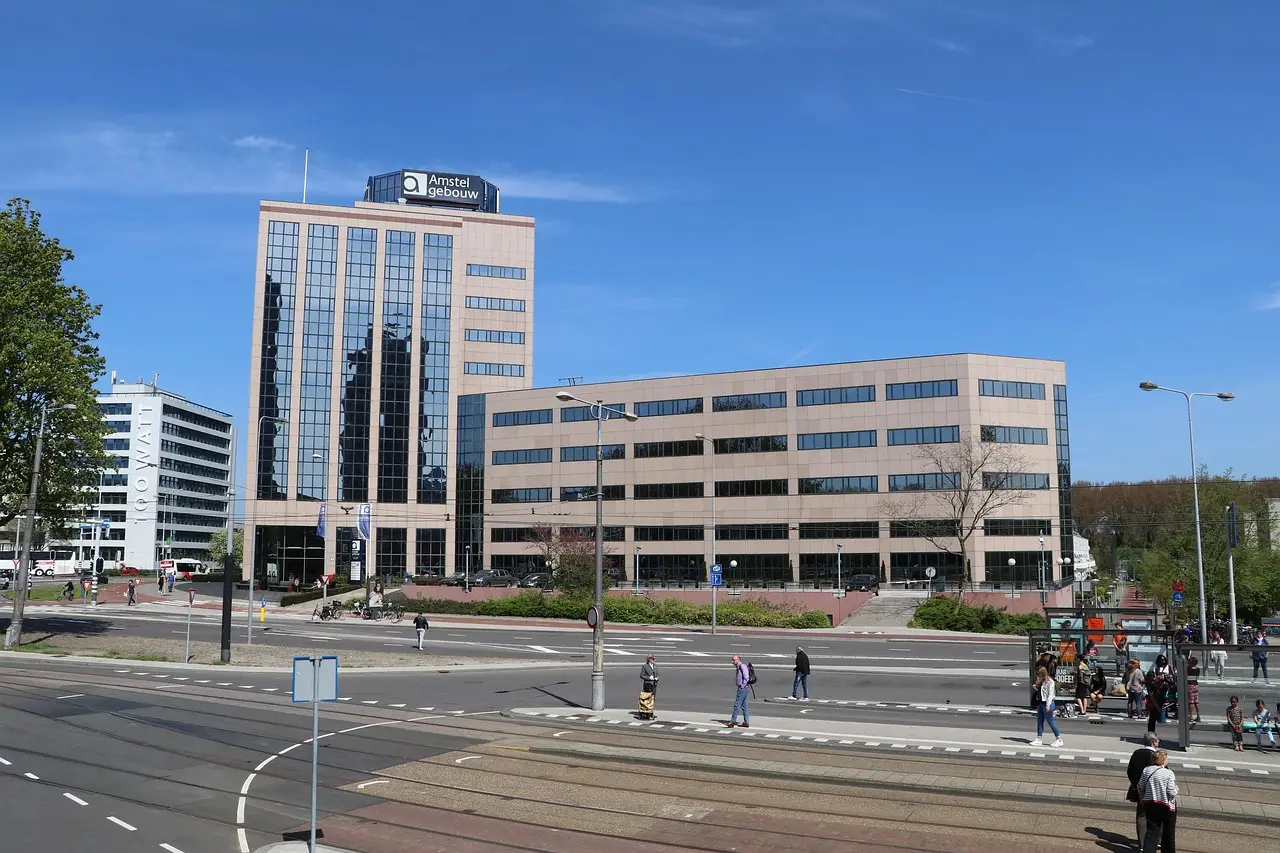
Six vehicles equipped with air quality sensors would, within 24 hours, capture measurements representative of 17.6 percent of all Amsterdam residents. Over a full week, that coverage rises to 26.2 percent. Those figures come from a study published in the journal Scientific Reports by researchers from the MIT Senseable City Lab, TU Delft and the AMS Institute, who argue that putting sensors on buses and trams can make urban environmental monitoring both more effective and more equitable.
Dutch cities have traditionally measured air pollution using fixed monitoring stations, installed in accordance with statutory guidelines. These static sensors detect pollutants such as particulate matter (tiny airborne particles small enough to be inhaled) and nitrogen dioxide (a gas produced mainly by traffic and combustion). They deliver valuable data, but they are highly localized. Given the demographic differences within a city, a small number of fixed stations covers only a fraction of the population and leaves blind spots in entire neighborhoods.
The research team set out to test whether mobile sensors mounted on public transit could close that gap. Their approach combined GPS route data from buses and trams with detailed demographic information from CBS, the Dutch national statistics office, mapped on a 100-by-100-meter grid. With this data, the researchers analyzed how well different monitoring strategies cover population groups categorized by age, migration background and property value (WOZ, the Dutch municipal valuation system for homes).
The results point to a demographic dividend as well as a geographic one. The sensors mounted on transit vehicles did not simply reach more streets; the demographic profile of the areas measured came closer to reflecting the citywide average than the profile captured by fixed stations alone.
What difference does a handful of sensors make?
Co-author Titus Venverloo, a program developer at the AMS Institute and researcher at the MIT Senseable City Lab, said cities still have considerable room for improvement on social inclusion in how they design monitoring networks.
"Many cities could do better at ensuring that their monitoring systems properly account for all population groups," Vennerloo said. "When placing sensors, there is a risk that air pollution affecting specific groups may be overlooked."
He added: "By expanding the monitoring network to include sensors on public transit, in addition to fixed sensors, we are taking a further step toward a fair and comprehensive environmental monitoring network."
Lead author Petar Koljenšić, a researcher at TU Delft, MIT and the AMS Institute, emphasized that even cities with limited fleets can achieve large gains.
"With a selection of 20 equipped vehicles, virtually the entire accessible city can be monitored in a demographically sound manner," Koljenšić said. "It's not about installing thousands of expensive sensors, but about strategically deploying the mobile sensors on the right routes."
Can other cities copy the approach?
The method scales readily, according to the researchers. To help planners elsewhere apply it, the team built an interactive online dashboard that lets local authorities simulate their own scenarios and calculate how many vehicles, and which specific routes, they would need to achieve fair environmental monitoring in their city.
While the current analysis focuses on air quality, the same sensors could measure temperature and noise levels, extending the tool to heat and noise pollution — two growing concerns for dense urban populations.
The central message of the study is one of efficiency rather than expense: effective environmental monitoring does not necessarily require more fixed sensors, but a smarter use of the existing network and public transit. A city bus, in other words, can double as a moving measurement station without any new infrastructure beyond the device itself.
The findings carry caveats. The study models coverage and representativeness rather than reporting long-term pollution measurements, and the analysis concerns Amsterdam, a city with an extensive tram and bus network. A follow-up study now underway should test the concept further: sensors are being installed on public transit in Rotterdam, with results expected within two months.
The paper is published as Petar Koljenšić et al., "Optimizing environmental sensing on public transport to cover broader demographics in Amsterdam," Scientific Reports (2026), DOI: 10.1038/s41598-026-77183-4.
Fair monitoring, the researchers suggest, may be as close as the next bus.
via phys.org/rss-feed/ (Source)
More from Priya Raman
Show full bio
Senior reporter covering people, launches and day-to-day practice in general science news at SciBeat.
353 articles
Nearby plates
- Delhi's Pollution Monitors Maxed Out as Diwali Smog Hit 66 Times WHO Limit
- Small Air Pollution Spikes Tied to Asthma Emergencies in Singapore
- Traffic Noise Tied to Higher Heart Risk Even With Good Sleep
- Each extra degree in the bedroom cost sleepers half a sleep point
- NASA Will Fly Low Over Texas Farmland to Sniff Livestock Emissions