Plate Nº 46 · recorded November 13, 2026
Earth & ClimateReported finding
Dry climates amplify river nitrate beyond human inputs
A global machine-learning analysis of more than 7,000 river sites links elevated nitrate to long-term aridity, even far from farms and cities, while exposing major gaps in monitoring.
By James Calloway5 min read976 words
In brief
- About half a billion people live near rivers where nitrate exceeds potentially harmful levels.
- The model used millions of readings from more than 7,000 river sites and mapped about 2.9 million segments.
- About 18% of the U.S. population was exposed to elevated nitrate in drinking water from 2021 through 2023.
- The cited regulatory standard is 10 mg/L, while links to cancer and reproductive issues have been observed at levels as low as 2.5 mg/L.
- The paper was published Nov. 12 in Science and cited as a 2026 study.
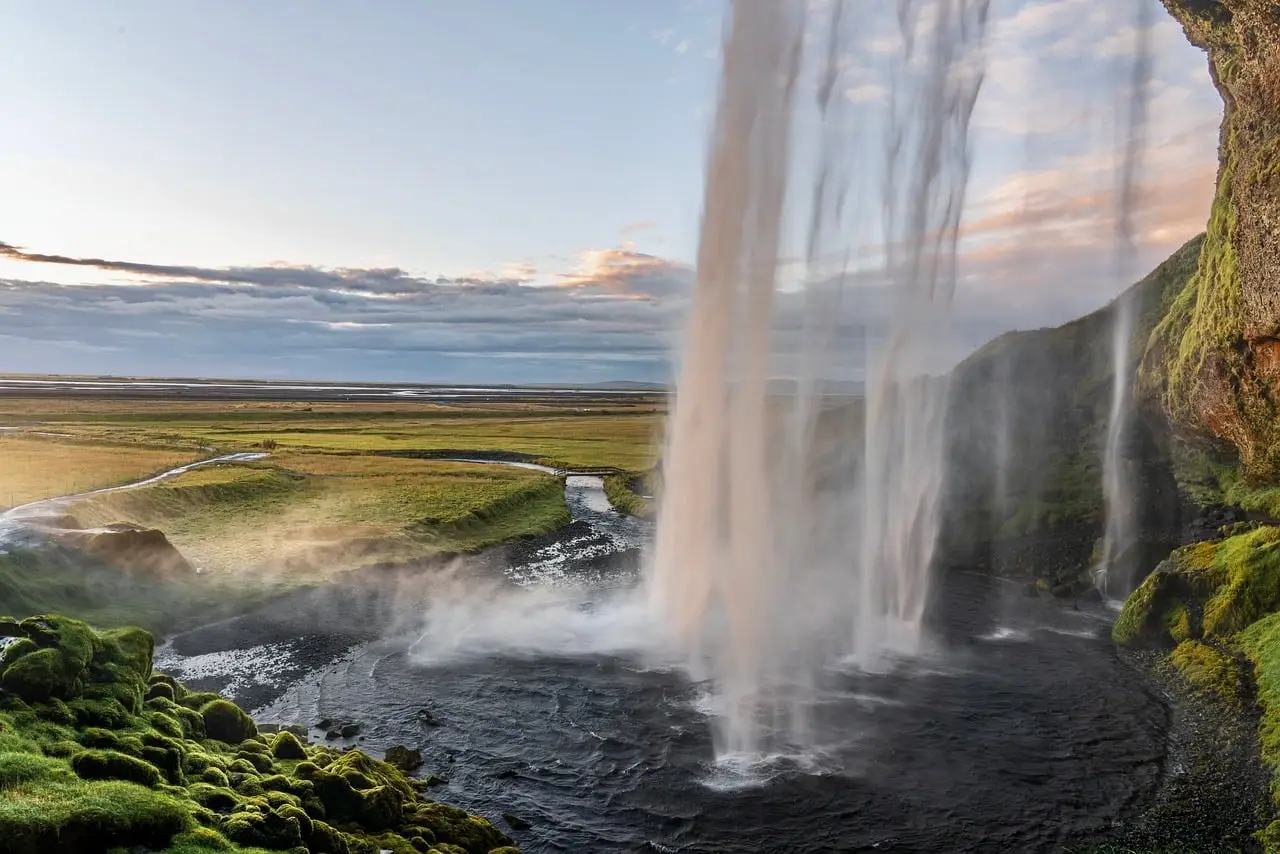
About half a billion people live near rivers with potentially harmful nitrate levels, according to a Penn State-led analysis published Nov. 12 in Science. The study links long-term heat and aridity to elevated river nitrate even far from farms and cities, broadening the explanation beyond local management of fertilizer and wastewater.
Li Li, Penn State’s Barry and Shirley Isett professor of environmental engineering and corresponding author, said: “Right now, roughly a half-billion people are living in proximity to rivers where nitrate concentrations exceed levels that can potentially lead to negative health effects.” Li also holds another affiliation with Penn State’s Institute of Energy and the Environment.
Li said the finding implies that nitrate pollution reaches beyond local management and is tied to a climate becoming hotter and drier. The population estimate concerns residence near affected rivers; it is not a tally of diagnosed disease or individual exposure doses. That distinction matters.
Nitrate, a compound of oxygen and nitrogen used in farm fertilizers, is one of the world’s most common chemical pollutants in rivers, streams, lakes and groundwater. High levels can harm ecosystems and drinking-water quality. About 18% of the U.S. population was exposed to drinking water with elevated nitrate from 2021 through 2023.
The current regulatory standard is 10 milligrams of nitrate per liter of water, set since the 1970s mainly to prevent acute, or sudden, illnesses such as methemoglobinemia, also called blue baby syndrome. In that condition, an infant’s blood cannot carry oxygen effectively, and the illness can be fatal.
Scientists are also observing links between nitrate exposure and chronic, or long-lasting, conditions including cancers and reproductive problems at concentrations as low as 2.5 milligrams per liter. These associations warrant scrutiny of lower exposures, but they do not erase the distinction between an acute standard and emerging evidence.
Human inputs still dominate many hotspots. The researchers generally point to fertilizer from agriculture and wastewater from cities. The heavily farmed Corn Belt, a section of the U.S. Midwest running from Nebraska to Ohio, displays some of the highest nitrate concentrations on Earth.
How the global map was built
The team used artificial-intelligence algorithms, specifically machine learning—software that learns patterns from examples and applies them to unseen cases—to combine millions of nitrate readings from more than 7,000 river sites. The team called it the first global-scale study of its kind. That is a characterization, not proof that every cause has been resolved.
The model used several safeguards:
- Researchers withheld part of the readings from training, then compared predictions with data the model had not processed.
- They trained approximately 1,000 models on selected subsets of monitoring sites to estimate uncertainty, or how much the result might vary.
- The trained system reconstructed concentrations for about 2.9 million river segments worldwide.
- It drew on 26 variables for each segment, including average annual temperature, average annual rainfall, land use and soil properties.
The team said the model could reliably map concentrations across regions where monitoring data were scarce.
Most measurements come from temperate North America and Europe, where monitoring is extensive. Arid North Africa has far fewer points. The model estimates concentrations where readings are scarce, but it cannot replace direct sampling, so poorly monitored regions remain more uncertain.
Why dry climates can concentrate nitrate
The model reported consistently elevated nitrate in rivers across arid areas with little or no agricultural or urban activity. The Sahara Desert in northern Africa showed concentrations comparable to, or higher than, humid Southeast Asia, even when the Asian locations had extensive development.
Nitrate occurs naturally at low concentrations. In arid climates, the team’s best explanation is that limited water movement lets it build over years instead of being washed out. That mechanism offers a plausible reason for the pattern; it does not reconstruct the chemical history of every river segment.
First author Kayalvizhi Sadayappan, a Penn State postdoctoral scholar in civil and environmental engineering, said: “Honestly, the finding surprised us a bit. Human inputs still have the biggest impact, but nitrate levels are elevated even in some of the world’s most remote regions, particularly in small headwater streams that flow only seasonally.”
Headwater streams are small source streams that begin a river system. Seasonal flow leaves long periods with little water to carry nitrate away, consistent with the proposed mechanism. The result does not make agriculture or wastewater unimportant; those inputs simply do not fully explain the global pattern. If climates grow hotter and drier, the authors say, nitrate pollution could worsen worldwide.
What does this change for water managers?
It changes the frame: managers cannot treat every nitrate hotspot as only a fertilizer or sewer problem. They also need to consider long-term temperature, rainfall and water movement, while checking local sources rather than assuming aridity explains everything.
The immediate need is better monitoring, especially in dry regions and seasonal headwater streams. Li said floods and droughts receive more attention because their effects are easier to see, while water-quality problems can remain invisible until conditions become very bad. She called for more data collection in data-sparse areas.
Li called the finding transformative and said clearer links between climate, nitrate accumulation and long-term health effects could influence future decisions about acceptable exposure. The model itself does not set a safe limit, calculate a person’s dose or prove climate alone caused any measured concentration.
It offers a global screening picture, not a direct census, and a warning about where monitoring may be too thin.
The paper, “Climate aridity amplifies global riverine nitrate beyond human inputs,” appeared in Science (2026), DOI 10.1126/science.aeg2366. Its claim is narrower than some headlines suggest: hotter, drier conditions can amplify nitrate beyond human inputs, while human activity remains the largest influence in many places.
via phys.org/rss-feed/ (Source)
More from James Calloway
Show full bio
Staff writer covering regulation, policy and their impact on general science news at SciBeat.
352 articles
Nearby plates
- Light-Powered Iron Complex Turns Nitrate Pollution into Usable Fuel
- 180 Million Water Tests Show Pollutants Hit Even Protected Rivers
- MIT-led team gets up to $53 million to seek AI-designed weed killers
- A water budget reveals Rayalaseema's groundwater inequality
- Wastewater Bacteria Linked to Chronic Disease Rates in Ohio Study