Plate Nº 30 · recorded November 12, 2026
Earth & ClimateReported finding
2026 Study Links Local School Lessons to Disaster Resilience
A 2026 Monash-led study finds that disaster-resilience lessons work best when schools connect safety knowledge with local culture, empathy, collaboration and community-led goals.
By Nathan Brooks4 min read876 words
In brief
- The Monash University-led paper appeared in Review of Education in 2026.
- The 2026 study examined school-based disaster-resilience education in Japan, Indonesia and the United States.
- Community mapping followed the 2011 Great East Japan Earthquake.
- On Nias Island, Maena dance lyrics carried safety messages and supported learning between children and parents.
- COP31 in Turkey was identified as a forum for community adaptation and disaster resilience.
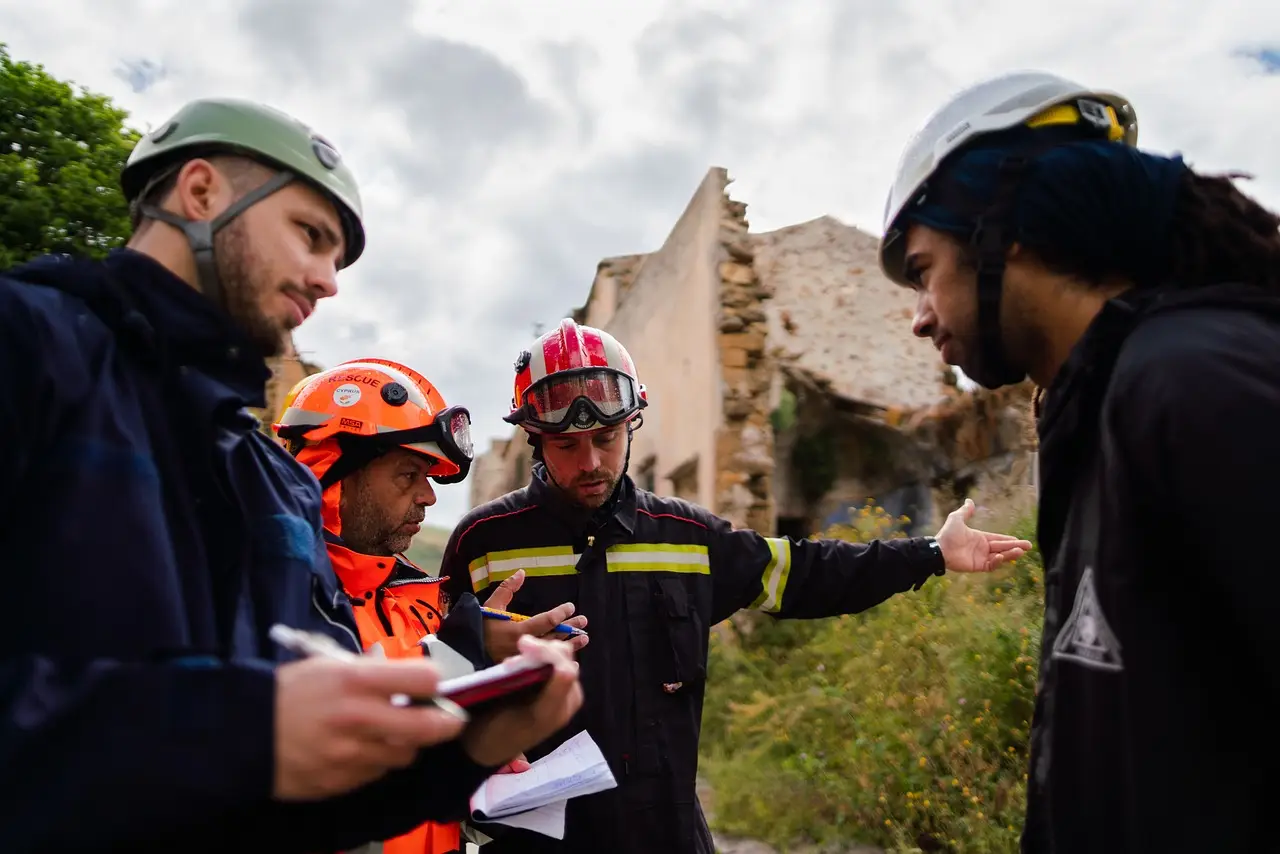
A 2026 international study led by Monash University identified locally grounded school programs as a route to stronger community disaster resilience, drawing on initiatives in Japan, Indonesia and the United States. The paper, published in Review of Education, reported that textbook knowledge and standardized drills alone do not build lasting community capacity.
Here, “resilience” means the capacity of people and institutions to prepare, respond and rebuild before, during and after a disaster. The study asked how schools can teach that capacity while giving students hope and collective agency, or the shared ability to shape and carry out decisions.
What did the study examine?
The international team brought together education experts in disaster resilience and environmental education. It considered disaster contexts in Japan, Indonesia and the United States, including tsunamis and flooding, and assessed what made school programs meaningful to students, teachers and local communities.
The release places the research alongside preparations for COP31 in Turkey, where community adaptation and disaster resilience are expected to be major discussion topics. The study does not assess those negotiations; it contributes an education-focused view of community preparedness.
Why did textbook drills fall short?
The researchers found that traditional methods—transmitting textbook knowledge and running standardized safety drills—were less engaging for learners and teachers because they could lack meaning and relevance. Belinda Davis, a researcher in Monash’s Faculty of Education, said: “Traditional education methods that focus solely on transmitting textbook knowledge or running safety drills don’t build long-term community resilience.”
Programs became more meaningful when they accounted for local conditions and the human effects of disasters. They also reached beyond school boundaries into local communities. Davis argued that schools must foster empathy, collective agency and active social participation, shifting the aim from individual survival toward collective care and stronger social ties.
How did local knowledge reshape lessons?
Every disaster has distinct effects on communities, so local culture, beliefs and other contextual factors matter when educators address the human dimensions of risk and recovery. The cases in the study put those factors at the center of teaching rather than treating safety information as the same everywhere.
- After the 2011 Great East Japan Earthquake, community mapping connected students with the earthquake’s real human impacts. The activity reconnected them with their community, encouraged hope and collective action, and identified opportunities for rebuilding.
- After the earthquake and tsunami on Nias Island, Indonesia, educators embedded safety messages in traditional Maena dance lyrics. The method overcame local taboos against discussing disasters, incorporated local cultural practices and enabled intergenerational learning between children and parents.
Together, the examples illustrate meaning-making: learners connect information to people, practices and rebuilding around them. The approach extends classroom work into relationships and shared local action, rather than stopping at memorized rules or isolated drills.
Why must schools collaborate with communities?
Alan Reid, also a professor in Monash’s Faculty of Education, said every successful initiative relied on collaboration among schools, local community groups, disaster-response experts and teams drawn from different professional fields. Schools adapted their programs dynamically to real community needs, rather than delivering a fixed curriculum.
Reid argued that relationship-based learning can cultivate an ethic of care—shared responsibility for looking after one another. He said: “Relational and socialized forms of education generate an ethic of care in learners in ways that standardized textbook drills simply cannot. We need educational frameworks that empower students to co-create goals with their communities.”
That means students help set community goals with adults and experts, not simply receive goals from them. It also gives local groups and schools a way to revise plans as conditions change.
What can be learned across cultures?
Ilan Kelman, a co-author and professor at University College London and UiT The Arctic University of Norway, said disaster risk is not uniform. Communities interpret risk, memory and recovery differently, whether they face tsunamis in Indonesia and Japan or flooding in the United States.
Kelman said effective resilience education places learners, teachers and local residents on an equivalent footing instead of treating schools as the sole source of expertise. Mutual learning across cultures, he argued, shows that resilience grows from local trust and local knowledge.
What are the authors asking schools to change?
The authors call for more transformative and meaningful education that fosters democratic structures and involves young people and schools in formulating goals, not merely realizing them. Their central recommendation is to build programs around empathy, local meaning, shared decisions and active participation, then allow communities to shape the work.
What does the evidence not show?
The research summary does not report a sample size, numerical effect estimate, follow-up period or controlled comparison. Readers therefore cannot use this release to judge how much resilience any program produced, how long benefits lasted or whether results transfer to every disaster setting.
The findings are best read as evidence for a promising approach and a set of design principles, not a universal guarantee. The cases document hope, collective agency and collaboration, but the release does not quantify a causal effect.
The paper bears the title “Why ethics, relationality and meaning-making matter to resilience education: Initiatives from global disaster contexts.” Review of Education published it in 2026 under DOI 10.1002/rev3.70208.
via phys.org/rss-feed/ (Source)
More from Nathan Brooks
Show full bio
Market editor covering companies, deals and strategy in general science news at SciBeat.
327 articles