Plate Nº 95 · recorded November 12, 2026
Earth & ClimateReported finding
Japanese forests shift toward warmer-climate tree species
Long-term monitoring of 191 Japanese forest plots links warming with greater tree-trunk area and rapid rainfall increases with declines, and records warmer-adapted tree gains in some regions.
By Priya Raman3 min read635 words
In brief
- Researchers monitored 191 forest plots across Japan from the 1950s through 2020.
- Larger annual temperature increases were associated with larger annual increases in total basal area.
- Faster annual precipitation increases were associated with decreases in total basal area.
- Boreal conifers lost relative dominance, while deciduous broadleaved trees gained it in some regions.
- The study appeared in Forest Ecosystems in 2026 with DOI 10.1016/j.fecs.2026.100531.
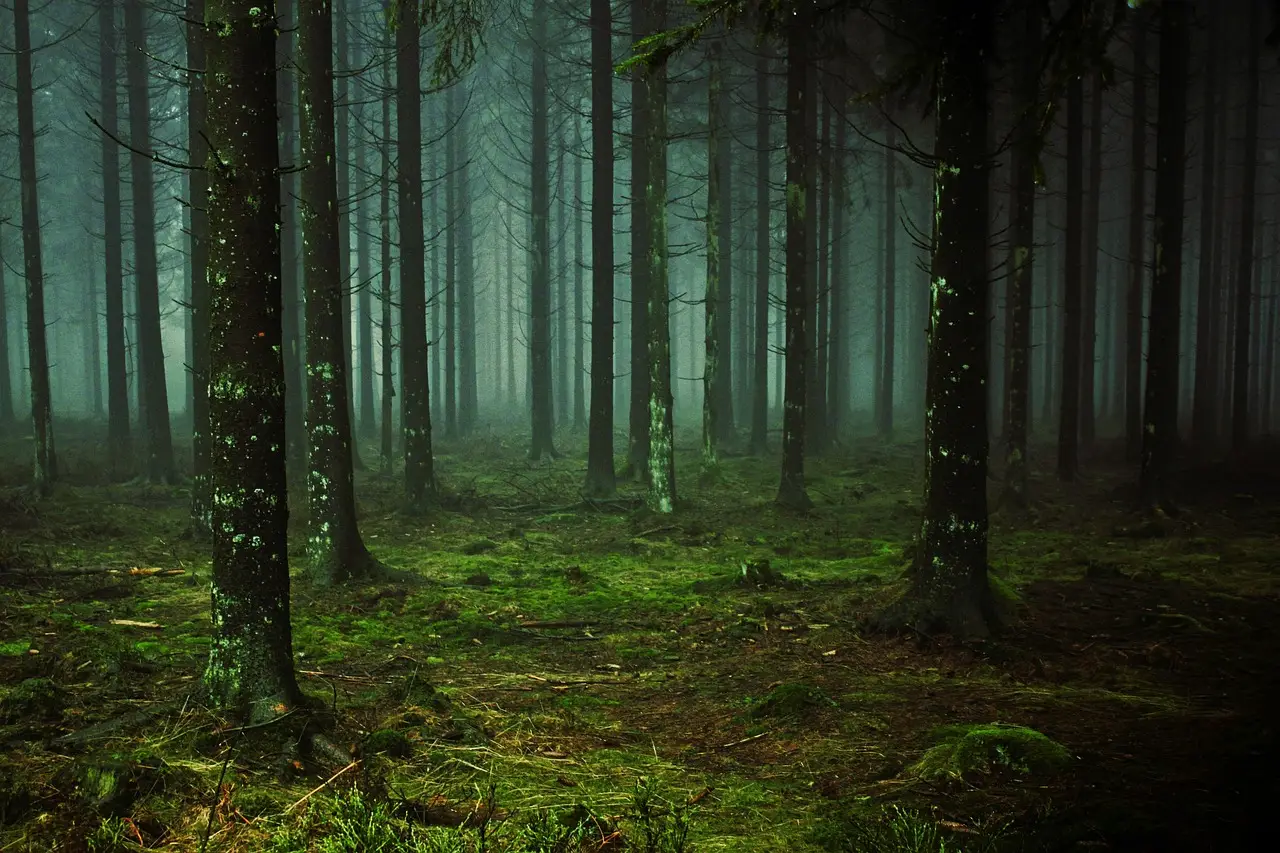
Monitoring at 191 forest plots from the 1950s through 2020 found that rising mean annual temperatures were associated with larger annual gains in total tree-trunk area, while faster increases in annual rainfall were associated with decreases.
The study brought together associate professor Tetsuro Yoshikawa and professor Yayoi Takeuchi of Osaka Metropolitan University (OMU), who led a team in compiling long-term records of forest structure and tree composition. The records followed the same plots across decades, allowing the researchers to examine a national pattern rather than a single location.
Forest biomes (broad forest types distinguished by climate and dominant vegetation) range across Japan’s many climatic zones. Yoshikawa, the first author, said: “Japan spans a wide range of climatic zones and contains diverse forest biomes, making it an ideal setting for investigating forest change.”
What did the researchers measure?
The researchers used total basal area (TBA) as their main structural measure: the sum of tree-trunk cross sections measured at chest height within a plot. TBA reflects both tree size and tree density, and it provides a measure of the forest’s structure.
The team analyzed annual rates of change in TBA and tracked the relative dominance, or prominence, of four major tree groups:
- Boreal conifers (cold-adapted coniferous trees)
- Deciduous broadleaved trees (broadleaved trees that shed their leaves)
- Temperate conifers (coniferous trees suited to temperate climates)
- Evergreen broadleaved trees (broadleaved trees that retain their leaves year-round)
What changed across Japan’s forests?
Cold-adapted boreal conifers lost relative dominance, while warm-adapted deciduous broadleaved trees gained it in some regions. This matches thermophilization (the growing prominence of species adapted to warmer climates within a community).
Takeuchi said: “These changes suggest that warming is affecting not just the growth of individual trees but also the composition of Japan’s forests. Over time, such changes could contribute to shifts in the distribution of forest biomes.”
The Japanese results also match the global description of climate change altering forest ecosystems worldwide through shifts in temperature and precipitation. Taken together, the findings show a complex response: warmer conditions and faster rainfall increases accompanied different structural trends, while tree-group dominance shifted unevenly across regions.
Why might heavier rainfall matter?
One proposed mechanism connects faster rainfall increases to typhoons (severe tropical storms) and the forest disturbance they cause. The researchers note that increased precipitation can accompany more severe typhoons. They propose that such disturbances contributed to declines in TBA in recent years.
The evidence supports this hypothesis; it does not establish typhoons as the sole cause of every decline. The rainfall and temperature patterns also differed. Larger increases in mean annual temperature accompanied larger increases in TBA, and the study did not report a specific biological mechanism for that relationship.
What remains uncertain after 2020?
Because the study draws on observational monitoring, it establishes associations rather than experimental proof of cause and effect. The record ends in 2020, and the regional differences caution against treating the tree-group shift as uniform nationwide.
The researchers compared annual changes in TBA with changes in mean annual temperature and annual precipitation across the long record, rather than testing one storm or heat event in isolation.
Yoshikawa said the findings capture changes only through 2020, while climate impacts are expected to become more pronounced. He argued that continued long-term monitoring remains important for detecting ecological changes and improving predictions of their consequences for forest environments and people’s lives.
Forest Ecosystems published the study in 2026 under the title “Long-term monitoring reveals differential climate and disturbance responses in Japanese forest biome composition.” The paper gives its DOI as 10.1016/j.fecs.2026.100531.
The central question now is how the recorded shifts will develop beyond 2020 and what they will mean for forest environments and people’s lives.
via phys.org/rss-feed/ (Source)
More from Priya Raman
Show full bio
Senior reporter covering people, launches and day-to-day practice in general science news at SciBeat.
348 articles
Nearby plates
- Boreal Forests May Shift Toward Deciduous Species as Climate Warms
- Drought Now Weakens Even Switzerland's High-Altitude Protective Forests
- Denser Forests Do Not Always Mean More Bird Species, Island Study Finds
- Forests Climbing Higher May Release Long-Stored Mountain Carbon
- Protecting Standing Amazon Forests Beats Restoration, Study Finds