Plate Nº 22 · recorded October 15, 2026
Space & AstronomyReported finding
Space Station's Roll-Out Solar Arrays Add Over 160 Kilowatts
NASA has upgraded the International Space Station with eight roll-out solar arrays that together add more than 160 kilowatts of power for research and operations.
By Elena Vasquez2 min read384 words
In brief
- Eight IROSAs will add more than 160 kilowatts of power to the space station.
- NASA installed six roll-out arrays between 2021 and 2023, with two more launched on SpaceX's 35th resupply mission.
- Each array is about half the size of legacy arrays yet produces about 28 kilowatts.
- A 2017 technology demonstration aboard the station first tested the roll-out array design.
By Elena Vasquez
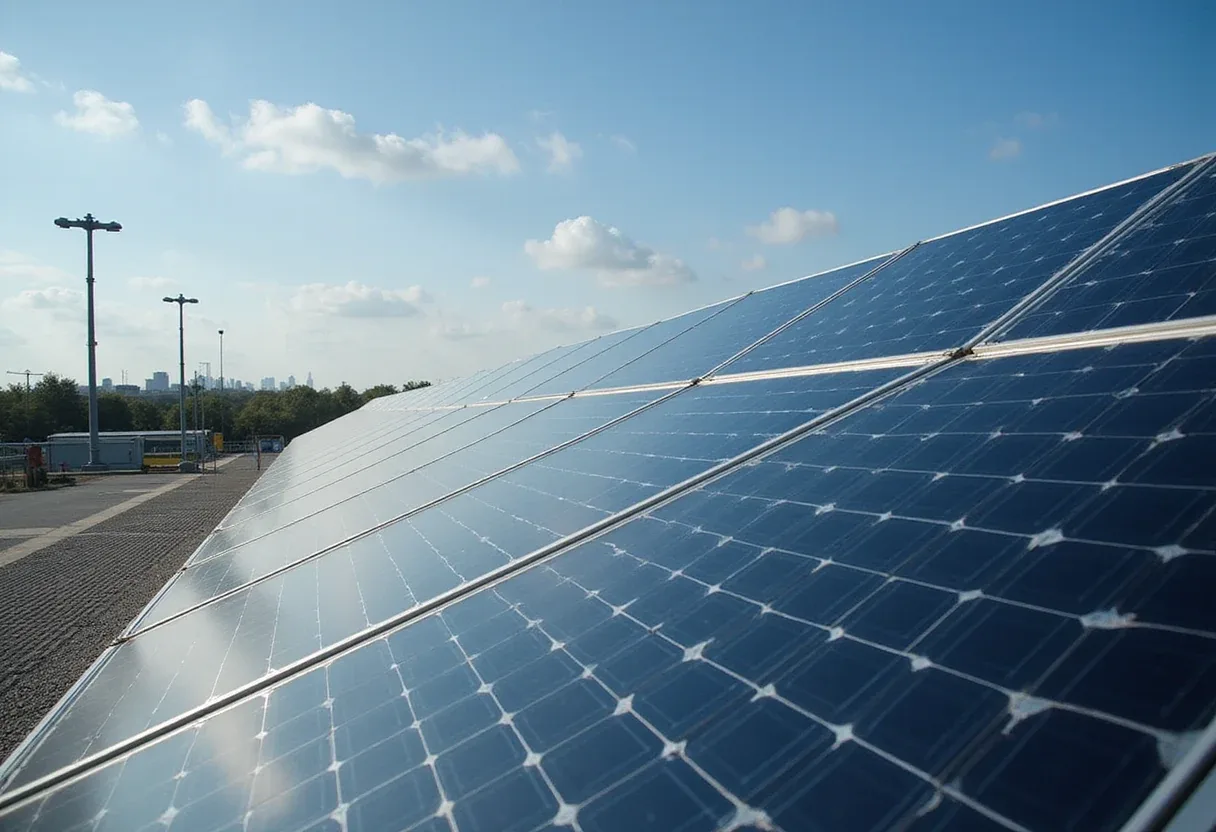
Eight roll-out solar arrays will add more than 160 kilowatts of electricity to the International Space Station, boosting power for research and daily operations on the orbiting laboratory. NASA completed the five-year upgrade with next-generation International Space Station Roll Out Solar Arrays, known as IROSAs.
The station orbits 250 miles above Earth, where sunlight is a vital energy source. That electricity runs life support systems, daily station activities, and hundreds of research investigations aimed at improving life on Earth and preparing humans for deep space exploration.
How do the new arrays work?
Each IROSA launches as a compact cylinder and unfurls like a yoga mat once installed. The lightweight design cuts mass and volume at launch, and an autonomous, self-deploying system minimizes risk during rollout.
A 2017 technology demonstration aboard the station first tested the arrays' effectiveness. That proof-of-concept paved the way for the operational hardware that followed. The design is also scalable to meet different mission requirements.
The takeaway: these arrays pack more power into a smaller, safer package.
How much power do they deliver?
The IROSAs are about half the size of the station's legacy arrays. Despite being smaller, each can produce about 28 kilowatts of additional power.
NASA installed six of the arrays outside the station between 2021 and 2023. The first two launched in the trunk of a SpaceX Dragon cargo spacecraft during the company's 22nd commercial resupply mission for NASA in 2021. Astronauts, assisted by the Canadarm2 robotic arm, installed units during spacewalks in 2022.
In 2023, power projections prompted a request for another set. Those arrays launched in a Dragon trunk during SpaceX's 35th commercial resupply mission to the station.
The bottom line: eight arrays, more than 160 kilowatts of added power.
Why does it matter beyond the station?
The upgraded power system supports NASA's legacy in low Earth orbit and advances technology for missions deeper into the solar system. The station serves as an essential testbed for technologies needed beyond Earth's orbit.
The roll-out array design has already flown elsewhere. NASA's Double Asteroid Redirection Test, a planetary defense demonstration, used the same solar array technology.
In short: what powers the station today could power tomorrow's expeditions into the solar system.
via w3.org (Original)
More from Elena Vasquez
Show full bio
Correspondent covering money, funding and market shifts around general science news at SciBeat.
242 articles
Nearby plates
- NASA's Solid-State Batteries Survive Minus 274°F in Lunar Cold Tests
- NASA Seeks Industry Proposals for Commercial Space Stations
- Magenta Solar Panels Grew Broccoli as Big as Open-Field Crops
- Sunflower antenna layout fails key test for SKA-Low telescope
- NASA Powers Up Roman Telescope's 300-Megapixel Camera