Plate Nº 72 · recorded October 10, 2026
Space & AstronomyReported finding
SpaceX Launches Crew-13: Fast Track to Space Station Begins
Four astronauts blasted off Thursday on an eight-hour transit to the space station — SpaceX's fastest yet — with Jessica Watkins becoming the first Black woman to command an orbital crew.
By Nathan Brooks3 min read688 words
In brief
- SpaceX launched 4 astronauts Thursday on an eight-hour transit to the ISS, the company's fastest crew flight yet.
- Jessica Watkins became the first Black woman to command a crew to orbit.
- The launch was delayed three weeks to fix a leaking fuel system on the capsule.
- The crew will stay about six months, until spring, replacing four astronauts aboard since February.
- Joshua Kutryk will become the fourth man to become a father while in orbit; his third child is due in late November.
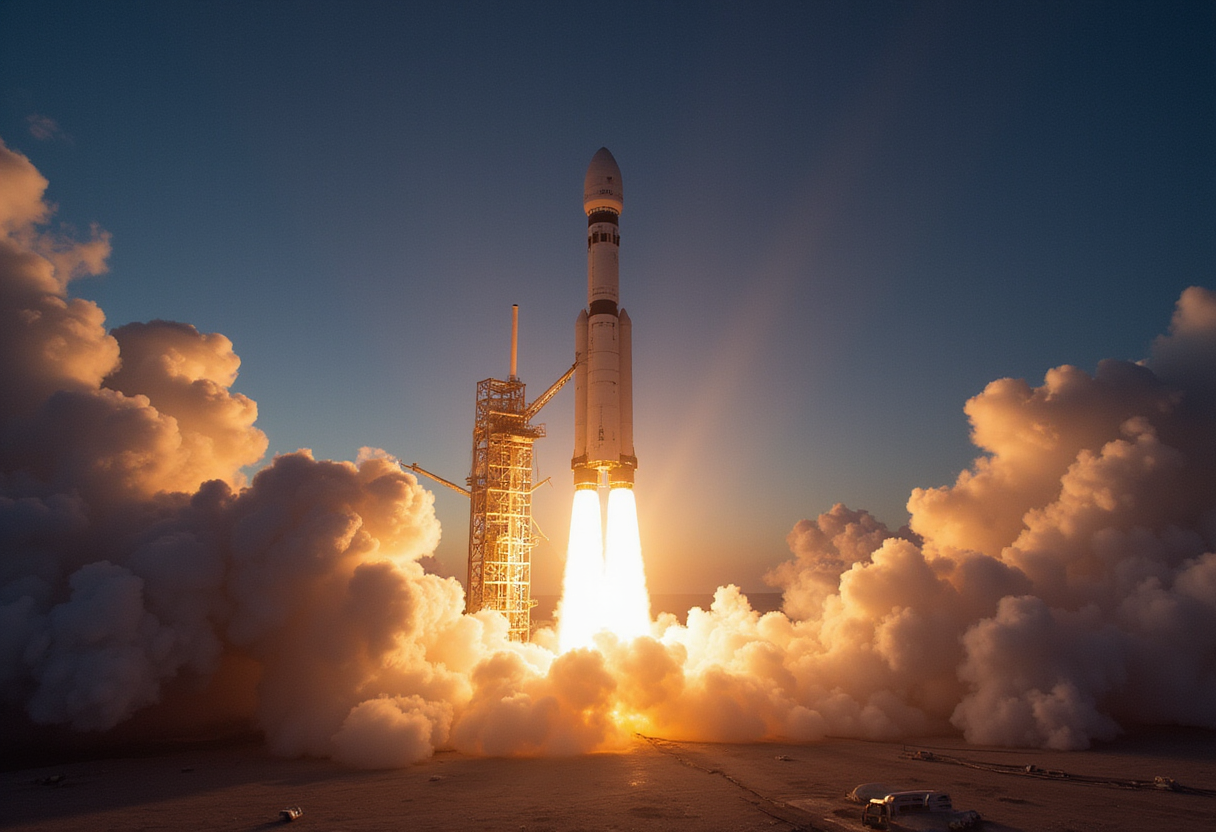
A SpaceX capsule carrying four astronauts reached orbit Thursday after an eight-hour sprint toward the International Space Station — the fastest crew transit the company has achieved — despite thick clouds that threatened the launch all morning and a three-week delay caused by a leaking fuel system.
Commander Jessica Watkins and her three crewmates blasted off from Cape Canaveral Space Force Station in a late morning liftoff, beginning a mission that will keep them in orbit until spring. The eight-hour flight put them on course to arrive at the station well before bedtime.
With this launch, Watkins became the first Black woman to lead a crew to orbit. A geologist who worked with NASA's Mars rover Curiosity a decade ago, she is making her second trip to the space station after a lengthy stay in 2022.
"Thanks for an amazing ride," Watkins radioed after reaching orbit.
Who is flying on Crew-13?
The mission, designated Crew-13, carries Watkins and three newcomers to space:
- Luke Delaney (NASA) — a retired Marine
- Joshua Kutryk (Canada) — a colonel in the Royal Canadian Air Force
- Sergey Teteryatnikov (Russia) — a former submariner
They will replace four astronauts who have lived aboard the orbiting laboratory since February. Their own stay will stretch a long six months, lasting until spring.
"We feel like some of the luckiest people in the world," Kutryk said ahead of the launch.
This was the 13th crew launched by SpaceX for NASA, not counting the company's 2020 test flight.
Why "Lucky 13"?
The number 13 carries a special meaning for this crew. Their mission patch pays homage to Apollo 13, the harrowing 1970 moonshot that ended with the astronauts' safe return after an in-flight emergency.
"We really wanted to honor their legacy, honor their resilience and their grit, and bring a little bit of that with us," Watkins said.
She and her crewmates embraced the designation fully, riding to the launch pad in black Teslas bearing license plates that read "Lucky 13."
What about the launch delays?
The mission did not get off the ground on its first attempt. SpaceX delayed the flight for three weeks to fix a leaking fuel system on the capsule. On launch day itself, thick clouds threatened to halt the countdown throughout the morning.
In the end, the skies cleared enough for a safe liftoff.
How will one astronaut become a father from orbit?
Kutryk will become the fourth man to become a father while orbiting Earth. His wife, Heather, is due to give birth to their third child in late November, several months into his six-month mission.
"A lot of life-changing things can happen over six months," NASA manager Dana Weigel said on the eve of liftoff. She noted that the space agency will do its best to keep Kutryk looped in with his family. The Canadian Space Agency has promised plenty of support for the entire family when the baby arrives.
There is precedent for sharing such moments across the space-to-ground divide. In 2004, NASA provided a radio link between space station astronaut Mike Fincke and his wife's delivery room during the birth of their daughter. Five years later, Randy Bresnik — who will command next year's Artemis III lunar mission — dialed in to his wife's hospital from orbit.
Communication has not always been this swift. When Austrian astronaut Franz Viehbock launched to the Soviet Union's Mir space station in 1991, his daughter was born a few hours after liftoff. He did not learn of the birth until the next day.
Kutryk can expect far faster news, with modern station communications allowing near-continuous contact with ground teams and family support staffed by two space agencies.
What happens next?
The crew will dock with the International Space Station and settle into a routine of science and maintenance work lasting until spring, when a replacement crew is expected to take over. For Watkins, it marks a return to a familiar workplace; for her three crewmates, it is a first voyage to orbit aboard the 13th operational crew rotation SpaceX has flown for NASA.
via Phys.org Space & Astronomy (Source)
More from Nathan Brooks
Nearby plates
- Crew-13 Launches: Four Astronauts Head to Space Station
- NASA's SpaceX Crew-13 Set for Oct. 1 Launch to Space Station
- Crew-13 Reaches Orbit: Fastest ISS Docking by a US Spacecraft
- Crew-12 Astronauts Return After 237 Days and 100 Million Miles in Orbit
- Four astronauts splash down in Pacific after eight-month ISS mission