Plate Nº 51 · recorded October 10, 2026
Biology & EvolutionReported finding
Starving E. coli Swap DNA 100 Times Faster Than They Mutate
ISTA researchers found that starving E. coli exchange DNA via phages and CRISPR-Cas over 100 times more often than spontaneous mutation, in a study published in Molecular Biology and Evolution.
By Marcus Bennett4 min read766 words
In brief
- Starving E. coli exchange DNA at a rate more than 100 times that of spontaneous mutations.
- The study by Pavel Payne and Călin Guet was published in Molecular Biology and Evolution (2026), DOI 10.1093/molbev/msag238.
- Bacteria use CRISPR-Cas anti-phage immunity and bacteriophages to shuttle DNA between cells and pass it to offspring.
- Evidence of primitive bacterial sexual reproduction first emerged in the 1990s; horizontal gene transfer mechanisms were discovered from the 1920s to the 1940s.
- The sex-like DNA transfer occurs when bacteria are near starvation and is linked to a specific gene in the starvation response.
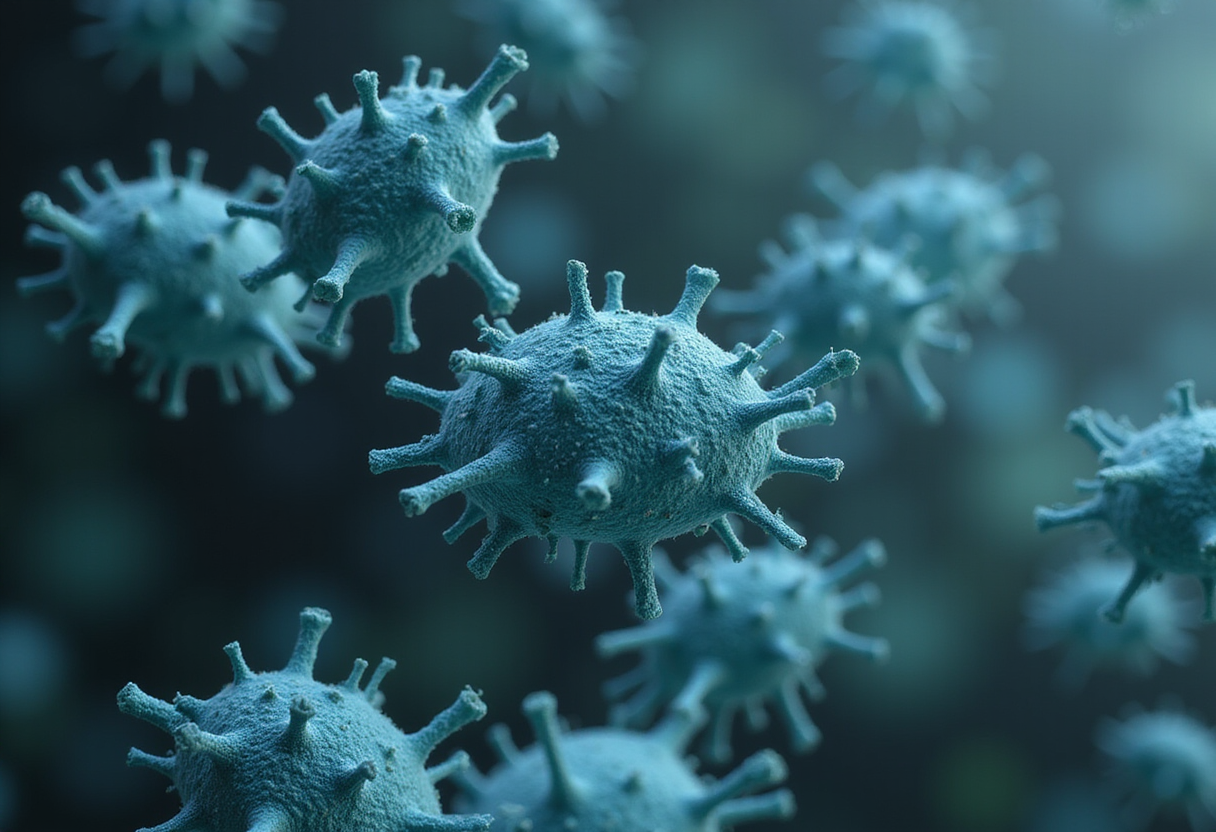
Under starvation stress, E. coli bacteria exchange DNA with one another at a rate more than 100 times higher than that of spontaneous mutations. That is the central finding of a new study by researchers at the Institute of Science and Technology Austria (ISTA), published in the journal Molecular Biology and Evolution in 2026.
Postdoc Pavel Payne and Professor Călin Guet demonstrated that the gut bacterium Escherichia coli can use viruses and its own immune system to shuttle genetic material between cells and incorporate it into the genome — a process the authors describe as a primitive form of sexual reproduction.
"The twist is that the bacteria make use of CRISPR-Cas, a defense system against bacterial viruses that later became the basis for gene-editing technologies," Guet said. "It turns out that bacteria use these viruses to shuttle DNA between themselves. Furthermore, recipient cells can incorporate this DNA into their own genomes and transmit it vertically to their offspring, which is de facto sex."
What did the researchers actually observe?
Bacteria typically reproduce asexually through binary fission — one cell simply splits into two identical daughters. But scientists have known for decades that microbes can also acquire genes "horizontally," from cell to cell, rather than only vertically, from parent to offspring. Evidence for a primitive form of bacterial sex first emerged in the 1990s.
Three mechanisms of horizontal gene transfer are already established:
- Natural competence, discovered almost 100 years ago: a genetically encoded state that lets bacteria take up free DNA from their environment and integrate it into their genomes. Only a small minority of bacteria can do this.
- Conjugation, discovered in the 1940s: bacteria transfer genetic material, including antibiotic-resistance genes, through direct cell-to-cell contact via a tubelike structure called a sex pilus.
- Transduction, discovered a few years later: viruses called bacteriophages accidentally package fragments of bacterial DNA while replicating inside a cell and carry that DNA to another cell.
"This is where things got more interesting," Payne said of transduction.
How does CRISPR-Cas turn viruses into couriers?
Ordinary transduction has a built-in problem. The viruses that ferry DNA between cells also kill susceptible bacteria, so frequent virus-mediated exchange would ultimately wipe out the population. Bacteria solved this with CRISPR-Cas, an immune system that targets phage genomes and protects cells against reinfection by the same phage.
Payne found evidence during his Ph.D., completed at ISTA in 2016, that this bacterial immune system can produce herd immunity — protection that extends not only to cells carrying the immune system, but also to those that don't. He returned to ISTA in 2025 as a postdoctoral researcher in the Guet group.
"Herd immunity not only protects the bacteria that directly carry the immune system, but also those that don't," Payne said. The open question was whether bacteria could use this mechanism to reshuffle their DNA, and if so, how often.
The new study answers both questions. By evolving immunity to phages, bacteria protect themselves while simultaneously enabling frequent gene exchange. The phages remain deadly predators of susceptible cells, but for immune populations they become, in the authors' words, de facto pollinators — carrying bacterial DNA between cells much like insects carry pollen between flowers.
Why does DNA exchange matter for evolution?
Genetic innovation through mutation alone is slow. Beneficial mutations arise considerably less often than harmful ones, and they typically appear in different individuals. DNA exchange can bring beneficial variants together in a single organism, accelerating adaptation.
"Sex is widespread in nature because it can speed up adaptation," Payne said. "In addition, this same mechanism might allow the bacteria to purge deleterious mutations from the population."
Does starvation trigger the exchange?
The numbers remain modest in absolute terms: the researchers emphasize that this form of horizontal gene transfer is still quite rare within bacterial populations. But it occurs at a rate more than 100 times that of spontaneous mutations.
Timing matters, too. E. coli reproduces asexually under favorable growth conditions. The sex-like DNA transfer kicks in when cells approach starvation — the team linked the mechanism to the starvation response through the requirement for a specific gene.
"From an evolutionary perspective, sexual reproduction can be especially advantageous under stressful conditions," Payne said. "Our findings suggest that E. coli can use a comparable DNA reshuffling strategy under starvation stress."
The study, titled "Herd immunity underlies homologous recombination in stationary phase bacteria" (DOI: 10.1093/molbev/msag238), suggests that phage immunity makes a substantial contribution to genetic variation in bacterial populations — and, by extension, to how bacteria adapt, survive, and evolve in changing environments.
via Phys.org Biology (Source)
More from Marcus Bennett
Nearby plates
- Gut Bacteria Can Spread Across Continents Within Decades
- MIT Engineers Bacteria Into Living Transistors for Biological Circuits
- 160-Million-Year-Old Peptides Outperform Modern Human Versions
- MIT team builds method that lets living cells mail out their own RNA
- Bacillus Spores Survived Six Years Bolted to a NASA Satellite