Recorded November 22, 2026
Neuroscience & MindReported finding
Study proposes brain’s crossed wiring began with ancient fish vision
University of Minnesota neuroscientists say vision in jawless fish more than 500 million years ago may have seeded the brain’s left-right wiring; fossils and unmapped species could test the claim.
By Elena Vasquez3 min read687 words
In brief
- A 2026 Frontiers in Neuroanatomy paper proposes a vision-based origin for crossed brain wiring.
- The proposed origin lies in jawless fish from more than 500 million years ago.
- In the proposed timeline, true mammals appeared about 165 million years ago, after crossed systems had existed for almost 200 million years.
- The authors synthesized 50 years of lateralization research without new experiments or fossil discoveries.
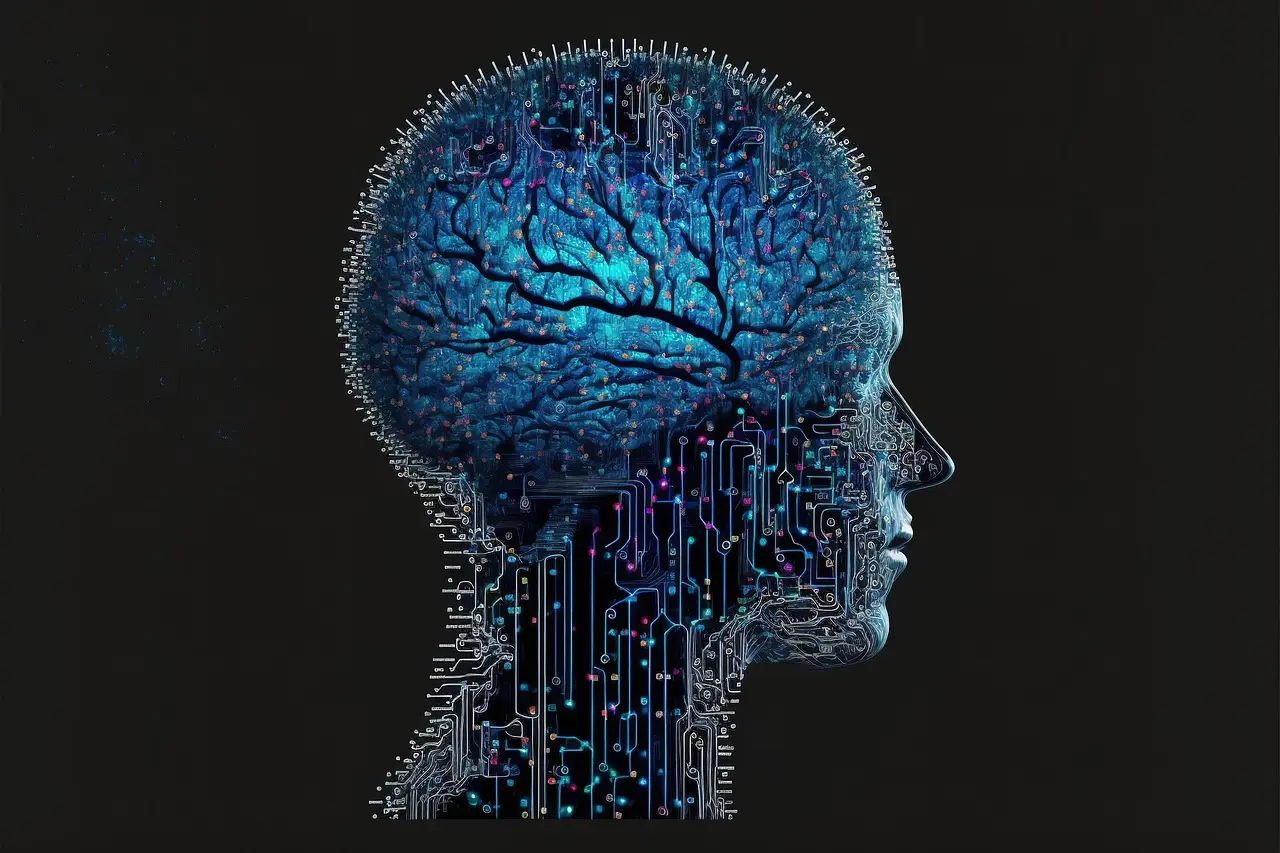
A 2026 study proposes that the brain’s crossed wiring most likely began with vision in jawless fish more than 500 million years ago. The paper offers an evolutionary explanation for a basic human feature, but it rests on existing evidence rather than new experiments or fossil discoveries.
University of Minnesota neuroscientists Martin Wessendorf and Daniel Wang published the proposal in Frontiers in Neuroanatomy. They use “contralateral” for the arrangement, meaning that opposite sides of the brain handle opposite sides of the body. The left hemisphere controls the right side; the right controls the left.
Sensory input follows the same crossover, with signals from the right processed on the left and vice versa. That pattern is not unique to people. Most vertebrate brains show it.
What did the paper actually find?
Lateralization means the division of labor between the brain’s two sides. Wessendorf and Wang wrote: “Many studies of lateralization have been published over the past 50 years. To date, though, there appears to have been no attempt to synthesize these studies into an evolutionary history of contralaterally organized brain circuits.”
They reviewed existing studies covering major vertebrate groups, from amphibians to mammals, and compared where crossed pathways appeared across species. Their synthesis looks back across hundreds of millions of years for the first evidence of crossed organization in animals.
No new experiments. No new fossils. Instead, the authors synthesized studies already available into an evolutionary history of the arrangement.
Takeaway: The paper offers a testable history of crossed wiring, not a final answer.
How could vision establish the left-right pattern?
The researchers identify vision as the most likely site of the first crossing. Their account starts with jawless fish, vertebrates without jaws, more than 500 million years ago.
Those fish eyes naturally flipped incoming light, and signals from each eye crossed to the opposite side of the optic tectum, a visual region of the brain. In mammals, the corresponding structure is the superior colliculus.
Wessendorf and Wang wrote: “We propose that the contralateral organization of the optic tectum biased the subsequent evolution of sensory and motor systems toward contralateral organization.”
As sensory systems for touch, vibration and pain developed, they followed the visual template, the researchers argue. Later systems reused a crossing arrangement that vision had established.
By the researchers’ timeline, what they call true mammals appeared about 165 million years ago. By then, the crossed somatosensory system for body sensation and two motor pathways linking the brain and spinal cord, the rubrospinal and tectospinal systems, had existed for almost 200 million years.
Takeaway: Vision may have supplied the first crossed template that later sensory and motor systems reused.
Why would later brains keep the crossed design?
When the neocortex—the cerebral cortex that expanded in mammals—evolved, the authors argue, the economical route was to connect it with inherited opposite-side pathways rather than reverse the entire system. That arrangement leaves the right side of the brain responsible for the left side of the body, and vice versa.
Evolution, in this account, favors adapting what already works over inventing something completely new.
Earlier explanations proposed that crossed wiring was simply more efficient, or that the body of an ancient vertebrate ancestor twisted. Wessendorf and Wang say those accounts do not capture the full evolutionary picture.
Takeaway: Once established, crossed wiring could persist because replacing it would cost more than adapting it.
What could test the theory?
The authors do not treat the matter as settled. Their theory now offers concrete ways to test it:
- Fossils from jawless fish more than 500 million years old could show whether their nervous systems contained crossed pathways.
- Scientists have not fully mapped the neural wiring of crocodiles and birds. Comparing those animals could reveal where similarities and differences arose.
Those comparisons could show where contralateral organization appeared and how it changed.
The researchers believe the model will hold up. They predict that in most or all vertebrate brains, the inherited crossed design will prove more efficient than any plausible same-side, or ipsilateral, alternative.
Takeaway: Fossils and better neural maps can test the fish-vision origin story.
via sciencealert.com (Source)
More from Elena Vasquez
Show full bio
Correspondent covering money, funding and market shifts around general science news at SciBeat.
592 articles
Nearby plates
- Why the Brain’s Right Side Controls the Left Side of the Body
- Brain Cells Vote: How Conflicting Visual Signals Fade in a Fraction of a Second
- Human Brain Grows From Two Separate Cell Lineages, Study Finds
- No 'Lizard Brain': Evolution Trades Brain Wiring Styles, Study Finds
- Stanford Study Suggests the Brain May Function as Two Organs