Recorded November 19, 2026
Neuroscience & MindReported finding
Ten Minutes of Sound Waves Eased Delusions in Small Brain Trial
A 10-patient NYU pilot found one 10-minute session of low-intensity ultrasound on a deep brain hub cut delusion scores moderately, with effects seemingly building over days. Researchers call it encouraging — not a treatment.
By James Calloway4 min read725 words
In brief
- 10 outpatients received 10 minutes of low-intensity focused ultrasound targeting the right globus pallidus interna, published in npj Acoustics.
- Delusion scores dropped 1.56 points more than sham, a moderate effect (Cohen's d = 0.68).
- The estimated active-sham gap grew to 2.70 points seven days after stimulation, though single-day results did not survive statistical adjustment.
- No serious adverse events occurred; skull bone absorbed 83–88 percent of acoustic intensity while staying within safety limits.
- Six of 10 participants guessed the real session correctly, so the authors do not consider the trial fully double-blinded.
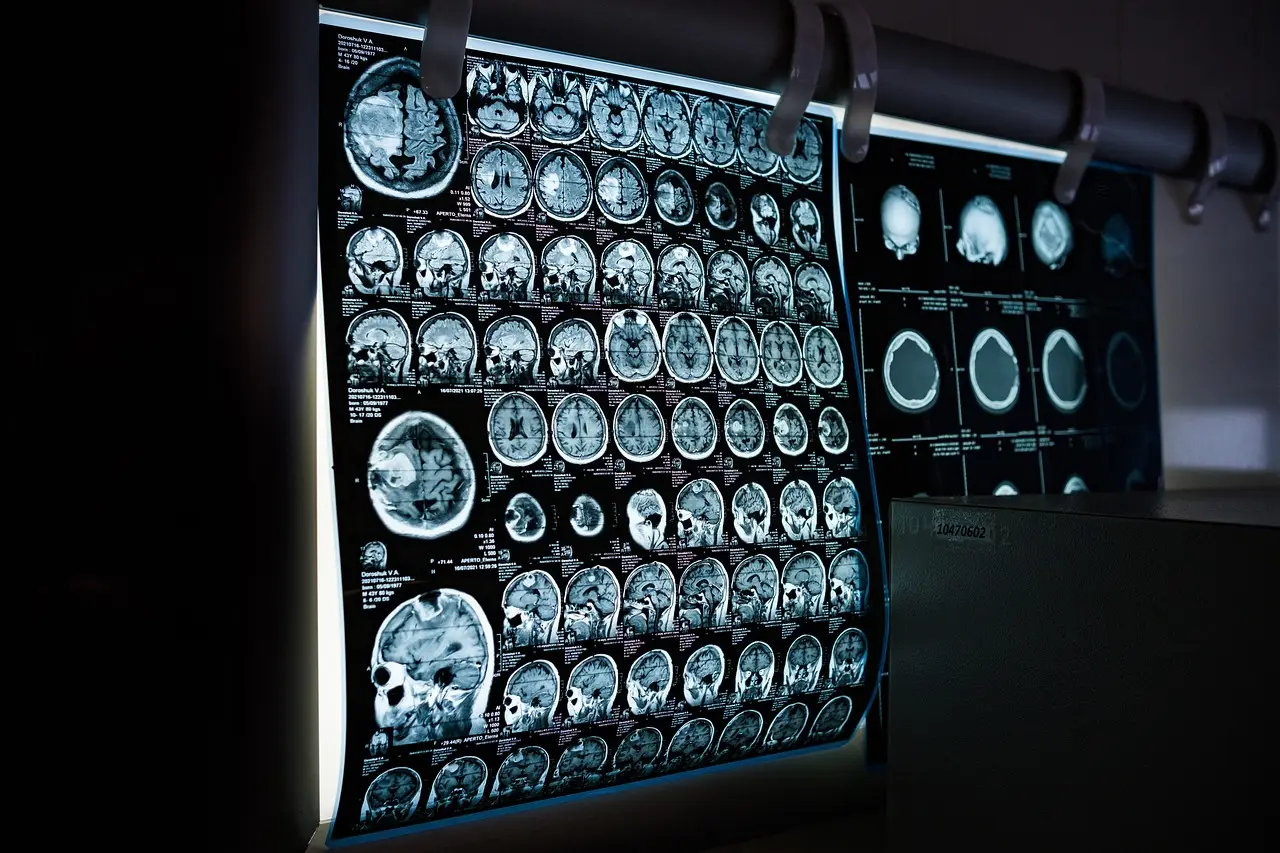
Ten outpatients with schizophrenia or schizoaffective disorder showed a moderate drop in delusion severity after a single 10-minute session of low-intensity focused ultrasound aimed at a deep brain structure — with no serious side effects. That is the headline result of a small randomized, sham-controlled pilot study from NYU Grossman School of Medicine, published in npj Acoustics. It is promising. It is also, by the researchers' own description, a proof of concept.
What exactly did the researchers do?
The trial, registered on ClinicalTrials.gov in November 2022, screened 15 adults and enrolled 11 outpatients aged 18 to 55 between May 2023 and January 2024. One withdrew after an initial brain scan, leaving 10 completers with an average age of 37.5, split evenly between men and women. Six were on stable antipsychotic medication; four had been off such drugs for at least four weeks.
Each volunteer attended two sessions one week apart — one active, one sham, in random order. Nobody, neither participants nor clinical raters, knew which was which. A structural MRI mapped each brain, optical cameras tracked head position, and a custom 350-kilohertz ultrasound device, coupled to the scalp with gel and a water-filled membrane, targeted the right globus pallidus interna — a paired cluster of nerve cells sitting roughly six centimeters beneath the brain's outer membrane.
The target matters. This hub acts as an output gate sending dopamine-influenced signals to the thalamus and helps filter which everyday events deserve attention. A 2023 imaging study by the same group found unmedicated first-episode schizophrenia patients showed heightened communication between this hub and the dorsal anterior cingulate gyrus — and that stronger signaling tracked with worse symptoms.
What were the results?
Across all post-baseline assessments, delusion scores fell by an average of 1.2 points after real ultrasound, while they rose 0.4 points after sham, against baselines of roughly 12 to 16 points. The primary statistical model put the active-versus-sham difference at 1.56 points, a moderate effect size (Cohen's d = 0.68). Notably, hallucination ratings showed no significant difference, and cognitive test differences fell just short of significance.
Then came the surprise. The improvement did not peak during stimulation and fade, as expected. The estimated gap stood at 1.90 points one day later and 2.70 points seven days later — though none of the single-day comparisons survived statistical adjustment.
"Instead, the improvement seemed to build over the following days," said Wei Qi, clinical assistant professor of psychiatry at NYU Grossman and the study's lead author. "That suggests ultrasound may trigger lasting changes in how the circuit adapts, rather than acting like an on/off switch."
How safe was it?
Before human testing, engineers calibrated the device in a water tank and two human skull specimens. Skull bone absorbed 83 to 88 percent of acoustic intensity, but pressure and heating stayed within international safety limits. No serious adverse events occurred. Seven of 10 reported mild temporary symptoms after active ultrasound; all 10 reported at least one after sham. Complaints included brief fatigue, headache, and minor upticks in symptoms.
What are the caveats?
Plenty, and Qi flagged them himself. "With only 10 participants, the estimate is imprecise, and the benefit beyond the first days is unknown," he said. "Larger, longer trials are needed to know how big and how lasting the effect really is."
- The questionnaire tracked moment-to-moment fluctuations, not clinical recovery, so real-world impact is unclear.
- Technical problems made the brain scans uninterpretable, so researchers could not confirm the beam actually altered the target's activity.
- Six of 10 participants guessed the real session correctly — not statistically above chance, but the authors say the trial should not be considered fully double-blinded.
- Acoustic dosing used skull specimens rather than each volunteer's skull thickness.
What does this change for patients?
Nothing yet, and Qi was blunt about it: "It's an encouraging first step, but it is not yet a treatment." He also distinguished it from high-intensity focused ultrasound approved for tremor, which destroys tissue — this approach uses low energy to shift nerve cell excitability temporarily. Next up: a larger trial with repeated sessions, longer follow-up, and functional MRI to measure circuit changes. The study was funded by the Doris Duke Fund and the Brain & Behavior Research Foundation.
via psypost.org (Source)
More from James Calloway
Show full bio
Staff writer covering regulation, policy and their impact on general science news at SciBeat.
570 articles
Nearby plates
- Brain scans reveal shrinkage in treatment-resistant schizophrenia
- Short-Acting Psychedelic Tested Against Major Depression in Phase IIa Trial
- McGill Launches Largest-Ever Psychedelics Study for Mental Health
- Five Labs Tested Psilocybin in Mice. The Famous Long-Lasting Effects Didn't Hold Up
- MIT Points to Brain Circuit for Updating Beliefs in Schizophrenia