Recorded November 26, 2026
Health & Medicine ResearchReported finding
Tick-Triggered Red Meat Allergy May Affect Up to 450,000 Americans
Up to 450,000 Americans may have alpha-gal syndrome since 2010. The tick-triggered red meat allergy breaks every food-allergy rule, and scientists are still piecing together why.
By Elena Vasquez5 min read950 words
In brief
- Up to 450,000 people in the US may have had alpha-gal syndrome since 2010, per CDC estimates.
- People with the syndrome were more than 11 times more likely to recall tick bites, a 2023 CDC study found.
- The CDC has pledged $10 million for alpha-gal surveillance and awareness.
- In 2025, alpha-gal syndrome was blamed for the death of a healthy 47-year-old man.
- A reintroduction protocol worked for all 19 participants in one study.
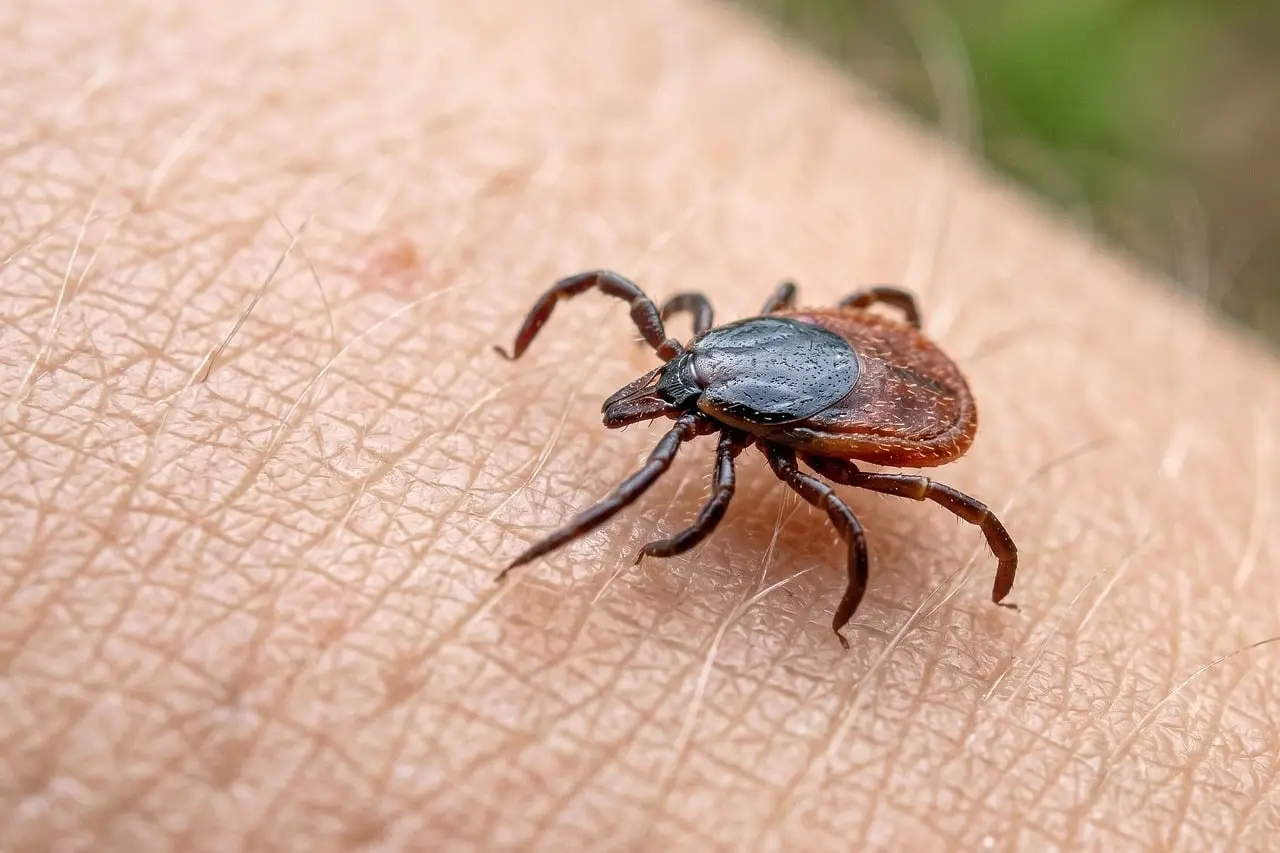
Up to 450,000 people in the United States may have developed alpha-gal syndrome since 2010, the Centers for Disease Control and Prevention estimates, and the count is climbing as ticks spread northward. The condition, a red meat allergy triggered by tick bites, can cause anything from a rash to anaphylactic shock. In 2025, it was blamed for the death of an otherwise healthy 47-year-old man.
Sandra Tiguila, a nurse from Carbondale, Illinois, learned the hard way. After eating a bison sausage breakfast sandwich in August 2025, she broke out in a burning rash that creams, pills and injections failed to tame. Ten days later, a steak left her face swollen and sent her to the emergency room. She had been bitten by ticks twice that June. When the test results arrived while she drank coffee laced with bovine collagen, the diagnosis landed: a red meat allergy activated by tick bites.
"I immediately dumped that coffee down the sink," says Tiguila. Avoiding all mammal products remains the main way to manage the allergy.
Why is this allergy different from every other?
Alpha-gal syndrome breaks the textbook. "Alpha-gal follows none of the rules that I was taught in training about how a food allergy behaves," says Maya Jerath, an allergist and immunologist at Washington University in St. Louis and one of Tiguila's physicians. Most food allergies strike within minutes; alpha-gal reactions often show up hours after eating meat.
The trigger is also strange. Food allergies typically respond to proteins, such as those in eggs or nuts. Alpha-gal is a sugar molecule, found in red meat and produced by most mammals but not by humans or other primates. A carbohydrate driving severe reactions was unheard of, says Jeffrey Wilson, an allergist and immunologist at UVA Health.
The allergy isn't all-or-nothing, either. Some patients react only to meat, while others are bothered by dairy, gelatin in cosmetics, or medications. Most people tolerate alpha-gal without a problem, because gut bacteria produce it too.
"It's emerging as one of the top adult-onset food allergies," says Onyinye Iweala, an allergist and immunologist at the University of North Carolina at Chapel Hill.
How was the tick connection cracked?
The detective story began in the early 2000s, when Australian allergist Sheryl van Nunen described patients with delayed red meat reactions after tick bites. "Nobody believed her," Jerath says.
Meanwhile, immunologist Thomas Platts-Mills ran two parallel projects at the University of Virginia. His team collected blood from people with odd meat sensitivities and, separately, studied reactions to the cancer drug cetuximab, approved for colorectal cancer in 2004. In the Southeastern United States, more than one in five patients reacted to the drug with hives, breathing trouble and even anaphylaxis.
The lab found the answer after roughly a year and a half: these patients carried IgE antibodies, the allergy-driving proteins, that targeted alpha-gal. Cetuximab, manufactured in lab-grown mouse cells, carried alpha-gal sugars attached during production. The team reported the finding in 2008, and in 2009 confirmed that people with meat sensitivity also had elevated alpha-gal IgE, calling it a "novel and severe food allergy."
A colleague's misfortune clinched the tick link. Scott Commins, then part of the Platts-Mills lab and now at the University of North Carolina, recalled a fellow researcher with the allergy who dared to eat a sausage, reacted badly, and showed "freakishly high" alpha-gal IgE — plus itchy spots from fresh tick bites. When Commins asked nearly 200 meat-sensitive subjects about tick bites, most said yes. In 2011, the team connected alpha-gal antibody regions to the range of the lone star tick. Biologist Shahid Karim of the University of Southern Mississippi later found alpha-gal in the tick's salivary glands.
The final proof came in 2023: people with alpha-gal syndrome were more than 11 times more likely to recall finding a tick on their body, Commins and CDC collaborators reported. About a dozen tick species worldwide are now linked to the allergy. Warmer temperatures and booming deer populations help the lone star tick spread.
What remains unexplained?
Plenty. The pathway from tick bite to allergy stays murky. Commins speculates that gut exposure to alpha-gal, through food or bacteria, promotes tolerance, while skin exposure, a tick's delivery route, triggers reactions that can temporarily override that tolerance. That fits the pattern of fresh bites reactivating sensitivity.
Blood type may matter. Some research suggests type B blood proteins resemble alpha-gal, which could promote tolerance and make people with type B or AB blood less likely to develop the allergy. Wilson suspects the delayed symptoms arise because alpha-gal rides on meat fats, which digest slowly, rather than proteins.
There are no specific therapies. Allergists offer antihistamines, EpiPens, and sometimes Xolair (omalizumab), a general allergy drug. Prevention means avoiding tick-heavy areas and using picaridin on skin and permethrin on clothing. Commins is discussing with pharmaceutical companies a treatment that would interrupt IL-4, an immune signaling molecule central to the allergic response.
The CDC has pledged $10 million for alpha-gal surveillance and public awareness.
Can the allergy disappear?
Sometimes, yes. Tiguila's blood tested negative for alpha-gal IgE in August 2026. Her physicians, led by Jerath, prescribed a gradual reintroduction protocol starting with an ounce of low-fat filet mignon. "I've successfully returned many people to eating meat again," Jerath says; in one study, her protocol worked for all 19 participants.
As of late September, Tiguila is back to her usual diet. "I'm very grateful to be cleared and not have to be so cautious," she says.
via livescience.com/feeds/news (Source)
More from Elena Vasquez
Show full bio
Correspondent covering money, funding and market shifts around general science news at SciBeat.
659 articles
Nearby plates
- First single-cell map of UV-triggered lupus skin inflammation
- Pediatricians Renew Push to Ban Raw Milk, Warn of H5N1 Risk
- Acorns Could Predict Lyme Disease Risk Two Years Ahead
- Olive Oil-Based Lotion Could Treat Scabies in One Application
- First-in-Human Trial Reports Promising Results for Lassa Fever Vaccine