Plate Nº 40 · recorded November 11, 2026
Reported finding
Acorns Could Predict Lyme Disease Risk Two Years Ahead
A 35-year New York dataset shows acorn booms predict mouse surges, and mouse surges predict ~40% more nymphal ticks — an early Lyme warning two years out.
By Nathan Brooks4 min read761 words
In brief
- Years with abundant mice were followed by roughly 40% more nymphal ticks, the stage causing most Lyme cases.
- Data come from continuous monitoring since 1991 at the Cary Institute in Dutchess County, New York.
- Infection prevalence in nymphs stayed at roughly 15–30% despite mouse population swings.
- Deer abundance fluctuated more than sixfold with no significant link to nymph numbers two years later.
- The CDC estimates about 476,000 US Lyme diagnoses and treatments annually.
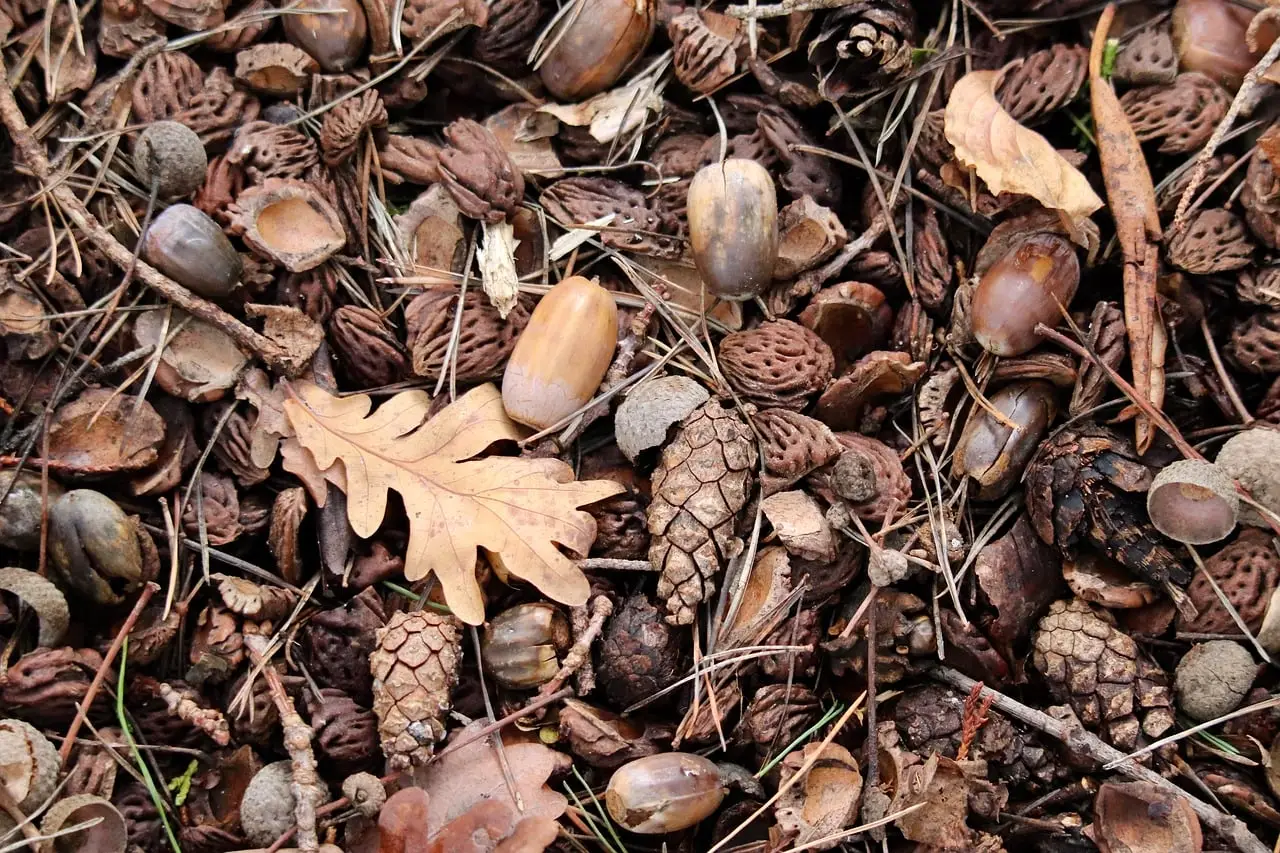
A bumper acorn crop today can signal roughly 40% more disease-carrying ticks nearly two summers from now. That's the headline finding from researchers at the Cary Institute of Ecosystem Studies in Dutchess County, New York, who analyzed wildlife data collected continuously since 1991.
The study, published in Proceedings of the National Academy of Sciences, traces a delayed chain reaction: oak trees, then mice, then ticks. And it points to acorns — not deer — as the earliest warning signal for Lyme disease risk.
How do acorns connect to ticks?
Every few years, oak trees simultaneously drop enormous quantities of acorns in an event called masting. For forest animals, it's an all-you-can-eat buffet. For white-footed mice, it can mean the difference between a rough winter and a population boom.
More food means more mice survive and reproduce. By the following summer, the forest can be teeming with them.
That's where blacklegged ticks — the primary carriers of Lyme disease in the northeastern United States — enter the picture. These ticks hatch as tiny larvae, usually free of the bacterium Borrelia burgdorferi, which causes Lyme disease. To develop, each larva needs a blood meal.
White-footed mice make excellent hosts. They let large numbers of larval ticks feed successfully, and they're remarkably efficient at passing the Lyme bacterium to them. After feeding, the larvae drop off, molt into nymphs, and emerge the following year hungry for another blood meal — sometimes from a human.
Nymphal ticks, the immature eight-legged stage, cause the vast majority of Lyme disease cases. In the researchers' best-supported statistical model, years with abundant mice were followed by about 40% more nymphs. Acorn production, in turn, predicted mouse abundance the previous year.
Isn't this an old idea?
Partly, yes. Scientists demonstrated aspects of the acorn-mouse-tick link in a 1998 paper in Science and a 2001 follow-up. What's new is the weight of evidence: more than three decades of observations from a single set of sites, which strengthened the original finding and showed how it fits into a much more complicated ecological system.
The long-term data also overturned one familiar assumption — the one about deer.
What about deer?
For decades, white-tailed deer have been closely tied to Lyme disease in the public mind. The reason is real: adult blacklegged ticks feed and mate on deer, and a single engorged female can lay thousands of eggs.
But deer abundance at the study sites fluctuated more than sixfold over the study period, and the researchers found no statistically significant relationship between deer numbers and nymphal tick abundance two years later. Deer still matter for the tick life cycle — they just weren't useful predictors of year-to-year changes at these locations. Mice were.
More mice, more infected ticks?
Not quite. Because white-footed mice transmit the bacterium so efficiently, scientists initially expected more mice to mean a higher percentage of infected ticks.
The data said otherwise. Over the long term, roughly 15–30% of nymphal ticks at the sites carried the Lyme bacterium, and that infection rate stayed relatively stable even as mouse numbers swung up and down.
The researchers suspect the rest of the forest explains it. Ticks also feed on squirrels, chipmunks, birds and other animals, many far less efficient at passing on the bacterium. What matters isn't simply how many mice live in a forest, but how tick blood meals get distributed across the whole animal community.
Could acorns really forecast Lyme disease?
The stakes are considerable. The US Centers for Disease Control and Prevention estimates that roughly 476,000 Americans are diagnosed and treated for Lyme disease each year — close to the population of Atlanta — though that figure, based on insurance claims, may include some people without confirmed infections.
The disease can cause fever, fatigue and a characteristic rash. Without timely antibiotic treatment, it can sometimes affect the joints, heart and nervous system. Knowing when tick populations are likely to surge would let public-health officials time warnings and target prevention efforts.
Counting acorns alone won't forecast outbreaks, the researchers caution. Combined with data on mouse populations, tick abundance and the wider ecosystem, though, acorns could offer an unusually early warning — nearly two years ahead — of rising risk.
The broader lesson: predicting disease threats means looking beyond the animals that carry them. A tick bite happens in an instant, but the chain of events that makes it more likely can begin years earlier, with an oak tree dropping seeds onto the forest floor.
via zmescience.com (Source)
More from Nathan Brooks
Show full bio
Market editor covering companies, deals and strategy in general science news at SciBeat.
325 articles
Nearby plates
- Flesh-eating screwworm resurfaces in Texas and New Mexico
- California rodenticide rules cut exposure in young owls by more than half
- Climate Change and Mosquitoes: Why Malaria Falls While Dengue Climbs
- Rainfall Predicts Lassa Fever Outbreaks, 30-Year Rodent Study Finds
- Boreal Forests May Shift Toward Deciduous Species as Climate Warms