Plate Nº 67 · recorded November 11, 2026
Earth & ClimateReported finding
Study suggests Earth’s core carbon came from outer solar system
A 2026 Yale-Columbia study uses Hawaiian lava inclusions to estimate core carbon, finding a heavy carbon-13 signature consistent with outer-solar-system meteorites.
By Priya Raman4 min read767 words
In brief
- A 2026 PNAS study reports the first observational estimate of the isotopic composition of carbon in Earth’s core.
- The samples came from Keanakākoʻi eruptions from 1500 to 1840 and the Kīlauea Iki eruption in 1959.
- Researchers interpret a heavy carbon-13 signature as carbon leaking from the core-mantle boundary.
- Researchers identify one delivery window for carbonaceous chondrites: the final stage of Earth’s main assembly.
- The paper is “Isotopically heavy carbon in the core,” DOI 10.1073/pnas.2610912123.
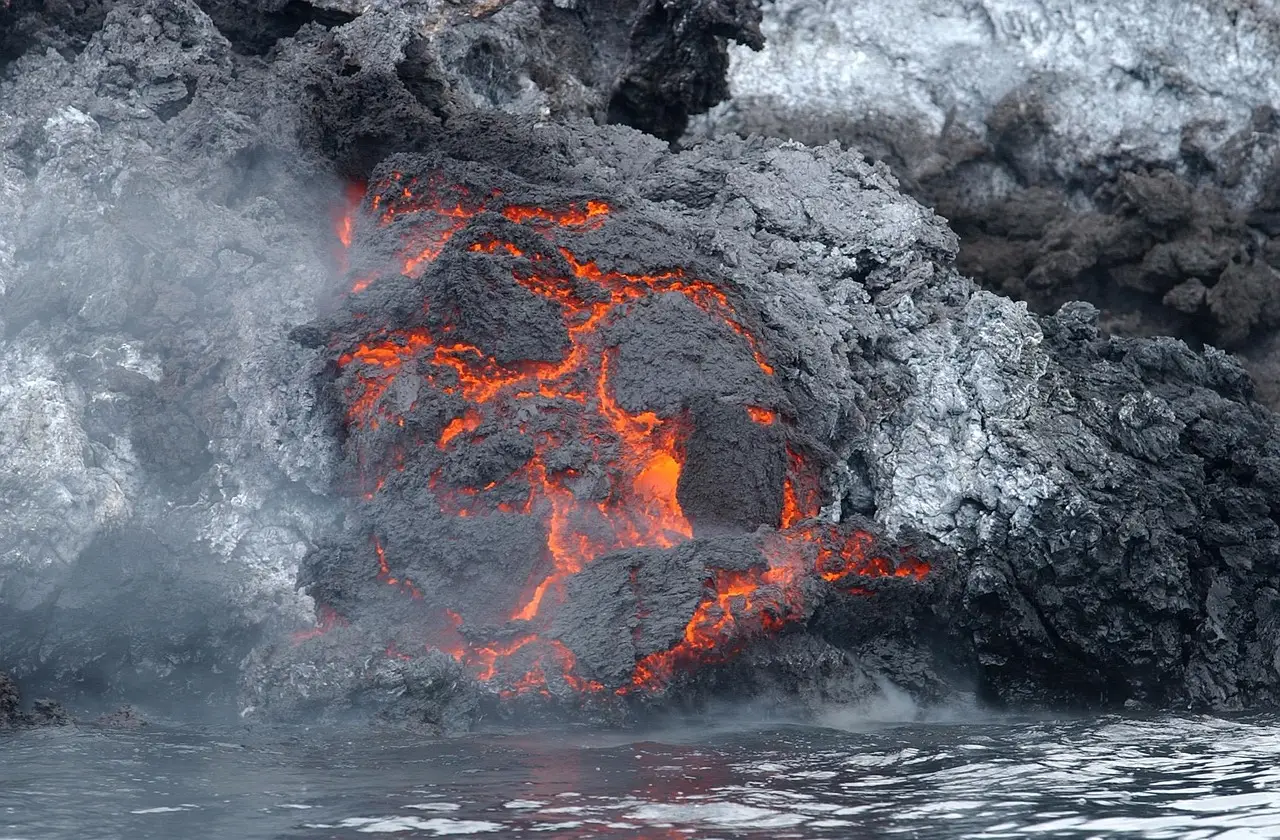
A 2026 study offers the first observational estimate of the isotopic composition of carbon in Earth’s core and suggests that most of Earth’s carbon originated in the outer solar system. Its evidence comes from microscopic droplets of ancient and more recent lava erupted in Hawaii, rather than from material recovered directly from the planet’s interior.
What can Hawaiian lava reveal about Earth’s core?
The samples include melt inclusions from the Keanakākoʻi eruptions, which occurred from 1500 to 1840, and from Kīlauea Iki’s 1959 eruption. Melt inclusions are bits of molten rock trapped inside crystals as magma forms. Each droplet preserves a snapshot of magma from deep within Earth, rather like a message in a bottle.
A team led by Yves Moussallam of Columbia University’s Lamont-Doherty Earth Observatory examined lava droplets that sample different parts of a volcanic plume, the hot column of molten rock and gas expelled during an eruption. The researchers used those differences to access magma that may have come from separate sources.
For some plume components, the researchers believe the magma represents the boundary between Earth’s core and mantle, the rocky layer above the core. This indirect route made an observation possible after the team had thought that observing core carbon and analyzing its isotopic composition were not possible.
What did the heavy carbon show?
Damanveer Grewal, an assistant professor of Earth and planetary sciences in Yale’s Faculty of Arts and Sciences and a co-author of the study, said: “This is the first observational estimate of the isotopic composition of carbon in Earth’s core.” The paper appeared in the Proceedings of the National Academy of Sciences.
The team found a uniquely heavy carbon-13 signature in the magma it linked to the core-mantle boundary. Carbon-13 is a heavier form of carbon measured in the analysis, so an unusually large share indicates a distinctive isotopic composition, meaning a particular mixture of carbon versions with different atomic masses.
“We interpret this as carbon leaking from the core,” Grewal said. The wording matters: researchers did not recover core material. They inferred core carbon from lava whose connection to the boundary region they described as a belief rather than a direct sample.
Where did that carbon originate?
Grewal also led the origin analysis. The core carbon was too heavy to have come from the rocky, carbon-poor material of the inner solar system that built most of Earth. Its composition instead matched carbonaceous chondrites, a class of carbon-rich meteorites from the outer solar system.
Those meteorites contain organic compounds and water, according to the study’s description. The isotope match points specifically to carbonaceous chondrites, and the researchers’ broader conclusion suggests that most of Earth’s carbon originated in the outer solar system. The result offers an answer to a longstanding debate over the origins of carbon on Earth, although the conclusion remains an inference from Hawaiian lavas rather than a direct examination of core material.
When could the meteorites have delivered it?
The researchers identified only one feasible window for carbonaceous chondrites from the outer solar system to become permanent core material: the final stage of Earth’s main assembly.
- Before that stage, subsequent collisions could have sent much of the incoming carbon back into space.
- During the final stage, incoming carbonaceous chondrite material could remain and become part of the core.
- After that stage, Earth’s core would already have been closed to further delivery.
This timing limits the origin story. It does not require carbon to have existed in Earth’s material from the beginning; the proposed source would have arrived late, after most of the planet had assembled.
What does the finding change?
Beyond the origin question, the researchers said the result may have implications for the role of core carbon during episodes of intense volcanic activity. That application remains a possible implication rather than a demonstrated outcome.
The central conclusion still carries qualifications. The researchers describe a heavy carbon-13 signal in magma they believed represented the core-mantle boundary, then interpret that signal as carbon escaping from the core. The comparison with carbonaceous chondrites and the late-delivery window together make the outer solar system a plausible source, not a closed question.
The paper, “Isotopically heavy carbon in the core,” appeared in the Proceedings of the National Academy of Sciences in 2026. Its citation lists Yves Moussallam as lead author and gives the DOI as 10.1073/pnas.2610912123.
The study supplies the first observational estimate of core carbon’s isotopic composition while leaving its distant origin provisional.
via phys.org/rss-feed/ (Source)
More from Priya Raman
Show full bio
Senior reporter covering people, launches and day-to-day practice in general science news at SciBeat.
342 articles
Nearby plates
- Earth's Carbon May Have Arrived Late, From the Outer Solar System
- 3.1-Billion-Year-Old Rocks Show Water Fueled Early Volcanoes
- Mount Etna's Hidden Plumbing: Two Eruptions, Two Speeds
- Deep-Earth Magma Can Store Hidden Oxygen, Study Finds
- Japan's Kikai Supervolcano Is Refilling With Fresh Magma, Study Finds