Plate Nº 48 · recorded November 12, 2026
Space & AstronomyReported finding
Earth's Carbon May Have Arrived Late, From the Outer Solar System
Hawaiian lava from the 1959 Kīlauea Iki eruption carries a heavy carbon fingerprint that researchers link to outer-solar-system meteorites — and possibly to Earth's core.
By James Calloway3 min read633 words
In brief
- The study was published in Proceedings of the National Academy of Sciences, by researchers from Yale and Columbia.
- Samples came from historic Hawaiian eruptions, including Kīlauea Iki in 1959.
- Researchers found an unusually heavy carbon-13 signature in magma linked to the core-mantle boundary.
- The signature resembles carbonaceous chondrites, carbon-rich meteorites that formed far from the Sun.
- The interpretation relies on indirect chemical evidence, and more research is needed to test it.
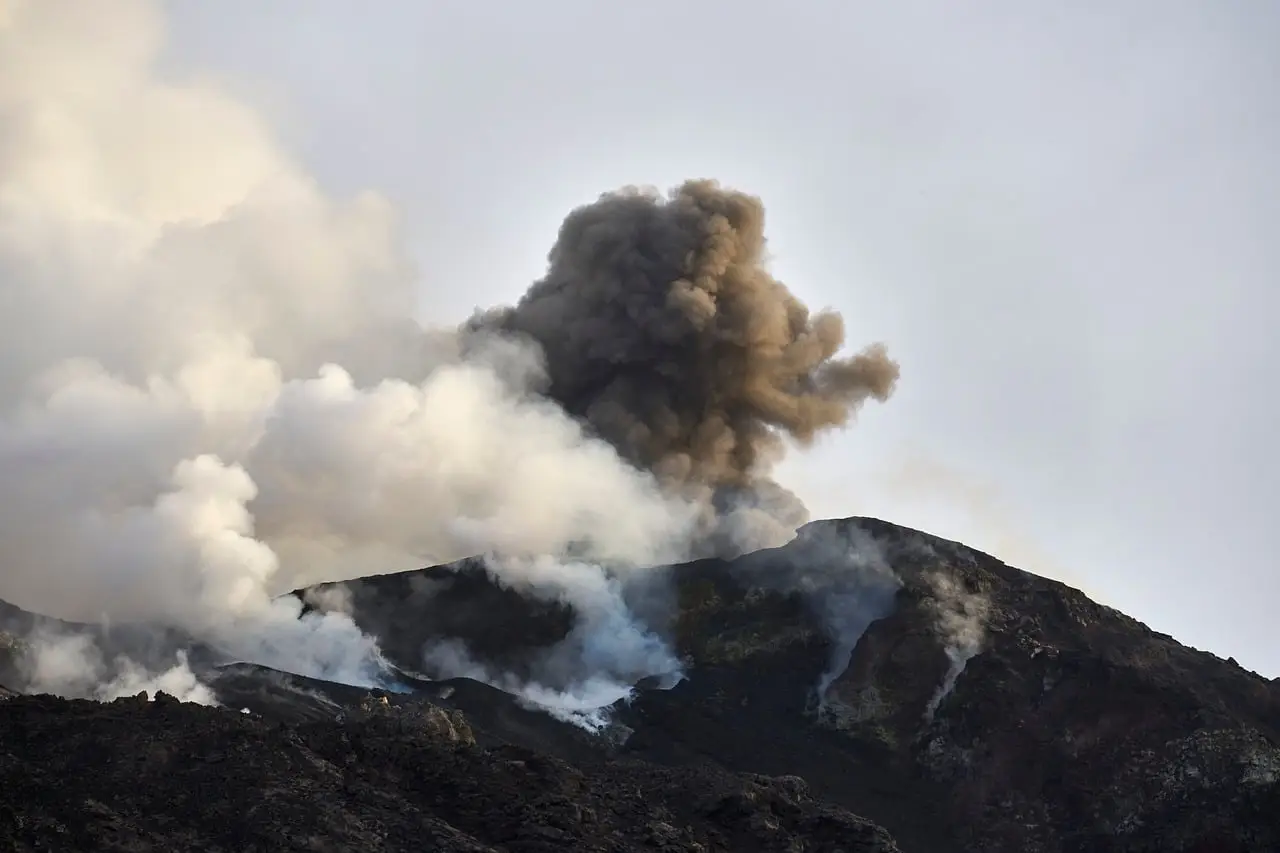
A new study published in Proceedings of the National Academy of Sciences argues that much of Earth's carbon arrived from the outer solar system, late in the planet's formation — and the evidence comes from droplets of ancient magma smaller than the crystals that trapped them.
Researchers from Yale University and Columbia University studied volcanic rocks from historic Hawaiian eruptions, including Kīlauea Iki in 1959. Inside those rocks, they found tiny pockets of once-molten rock sealed within crystals during the eruptions. Scientists call these pockets melt inclusions. They matter because they preserve a chemical snapshot of the magma before it reached the surface and mixed with anything along the way.
The team examined the different forms of carbon atoms in the material, paying particular attention to the heavier form, carbon-13. And in magma thought to carry material influenced by the boundary between Earth's core and mantle — thousands of kilometers below the surface — they found an unusually heavy carbon signature.
That's the finding. Here's the proposed mechanism, and it comes in two steps.
What does the heavy carbon signature mean?
First, the researchers interpret the signature as possible evidence that carbon has moved from Earth's metallic core into the surrounding rock. Nobody can drill down and sample the core directly, so scientists hunt for chemical clues in material that has traveled upward through the planet instead. This is detective work with isotopes.
Isotopes, in plain English, are versions of the same chemical element with different numbers of neutrons. Carbon's isotopes share a chemical identity but differ slightly in weight. Compare their proportions and you get a fingerprint — a trace of where a material came from and what happened to it along the way.
Second, the fingerprint pointed somewhere specific. The chemical pattern differed from the rocky material associated with the inner solar system. It resembled, instead, carbon-rich meteorites thought to have formed farther from the Sun.
These meteorites are known as carbonaceous chondrites. They can contain water and organic compounds. The researchers suggest similar material may have supplied Earth's carbon during the final stages of the planet's assembly.
Why did the timing matter?
The study proposes a narrow window. Carbon arriving too early might have been lost during the later collisions that battered the young planet. Carbon arriving too late couldn't easily have entered the core, which had already formed. So the delivery had to land, roughly, in between.
That's an elegant story. It's also, at this stage, only a story the data can support — not prove.
What are the limits here?
The interpretation relies on indirect chemical evidence, not a physical sample of the core. The researchers say so themselves. More research will be needed to test the idea, and the claim that carbon migrated from the core into the mantle rests on inference from isotopic ratios in Hawaiian lava, not on anything anyone has pulled out of the deep Earth.
Still, the approach offers something new: a way to investigate how Earth acquired the ingredients that shaped its long history. Carbon is essential to life at the surface, and it also sits in the planet's deep interior, including the core. Where all that carbon originally came from is a separate geological puzzle — one this study addresses without claiming to close.
What does this change for the rest of us? Nothing immediate, honestly. No volcanoes need reclassifying and no textbooks need rewriting this week. What it changes is the toolkit: if the isotope fingerprint holds up under further testing, scientists gain a method for tracing the origins of Earth's building blocks — carbon among them — through lava that carries messages from the deep.
Until then, treat the conclusion as promising, preliminary and, by the authors' own framing, provisional.
via knowridge.com (Source)
More from James Calloway
Show full bio
Staff writer covering regulation, policy and their impact on general science news at SciBeat.
346 articles
Nearby plates
- Study suggests Earth’s core carbon came from outer solar system
- A Famous 2-Billion-Year-Old Signal From Early Earth May Be Local, Not Global
- 3.1-Billion-Year-Old Rocks Show Water Fueled Early Volcanoes
- Ultrasensitive Radiocarbon Method Reveals Hidden Quake Layers Off Japan
- Mount Etna's Hidden Plumbing: Two Eruptions, Two Speeds