Recorded November 23, 2026
Biology & EvolutionReported finding
Transcription factors vary widely in how much DNA context they need
A 2026 Nature Communications study from the Schübeler lab finds transcription factors differ widely in how much their DNA surroundings matter: some bind packed chromatin, others need open regions.
By Priya Raman4 min read763 words
In brief
- Schübeler lab study published in Nature Communications in 2026 maps chromatin sensitivity across transcription factors in mouse and human cells.
- Method pairs experimental protein-DNA binding maps with a deep-learning model that predicts binding from DNA sequence alone.
- Some factors bind tightly packed DNA, others require accessible surroundings, and many fall in between.
- Pioneer factors, considered especially good at binding closed DNA, were influenced by their surroundings to differing degrees.
- Paper: Lukas Burger et al., Nature Communications (2026), DOI 10.1038/s41467-026-79404-w.
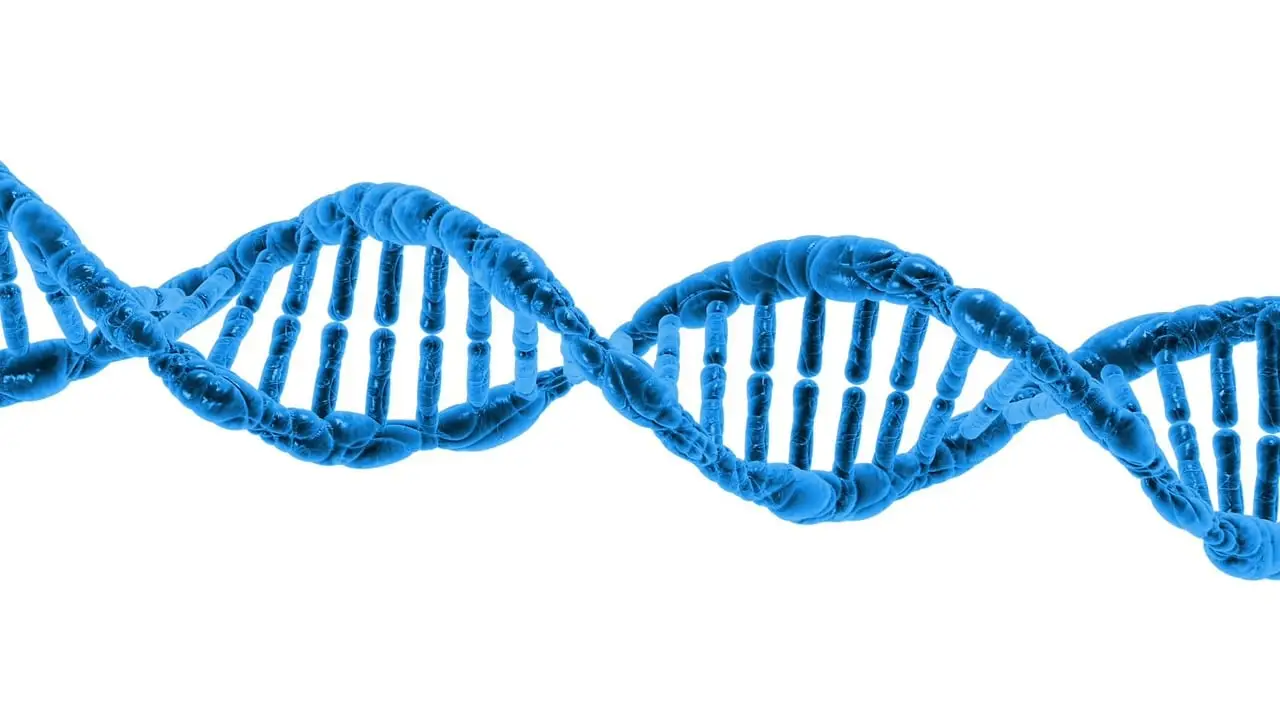
Transcription factors, the proteins that switch genes on and off, differ sharply in how much their DNA surroundings matter: a 2026 analysis in Nature Communications reports that some bind even tightly packed DNA, while others need an accessible neighborhood and many fall in between.
Inside a cell nucleus, DNA is not a bare thread. It is wrapped around proteins and folded into chromatin, the compact form that leaves some stretches of sequence easy to reach and buries others. A transcription factor that recognizes the right DNA sequence can still fail to bind if that stretch sits in a dense, closed region.
How much does the DNA around a binding site matter?
The two influences — sequence preference and local context — have proved difficult to separate. Matching the sequence does not guarantee binding, and a favorable neighborhood does not guarantee the correct sequence. The new work, from the Schübeler laboratory, scores both at once and measures each.
Lukas Burger and colleagues state the result in the paper's title: "A quantitative deep-learning-based framework reveals a continuum of chromatin sensitivities across transcription factors." The study appeared in Nature Communications in 2026, with the DOI 10.1038/s41467-026-79404-w.
What did the researchers actually measure?
The team paired experimental maps of where proteins attach to DNA with a machine-learning tool that predicts binding from DNA sequence alone. Comparing the two lets them judge each site twice: how closely its sequence matches what a factor prefers, and how much the surrounding chromatin appears to help or hinder. The second score measures that factor's sensitivity to context.
Across the transcription factors studied in mouse and human cells, that sensitivity varied widely. Some factors bound relatively easily even where DNA was tightly packed. Others leaned heavily on a favorable local environment. Most sat somewhere between the two extremes.
A factor that finds its preferred sequence in open chromatin acts like a key turning in an unlocked door; the same factor facing packed chromatin has to wait for the packing to shift.
What does "continuum" mean here?
Continuum, in plain terms, means a graded scale rather than a dividing line. Instead of sorting transcription factors into those that need open DNA and those that do not, the quantitative framework places each protein along a line of chromatin dependence, with the deep-learning model supplying the numerical score behind that position.
What changes is the shape of the model. A binary division between context-driven and context-independent proteins gives way to a spectrum, in which every factor carries its own degree of dependence on the chromatin neighborhood around a binding site. For anyone annotating gene regulation, the consequence is practical: a site cannot be judged from sequence alone, because the environment carries information the sequence does not encode.
Why do pioneer factors not behave alike?
Pioneer factors are a special class of transcription factor, widely thought to be especially good at binding DNA when it is tightly packed, and the researchers included several in their set. The results complicate that blanket reputation. The pioneer factors studied were influenced by their surroundings too, but to different degrees, so the label alone does not settle how much context a protein needs.
What does this mean for cells that share a genome?
The findings point to a more flexible view of gene regulation, in which transcription factors fall along a spectrum in how strongly their ability to bind DNA depends on the surrounding chromatin. That could help explain how cells carrying the same genome — the same sequence in every cell of an organism — activate different sets of genes as they develop into specialized cell types. Accessibility is the lever: the same sequence can be reachable in one cell type and closed off in another.
What remains unsettled?
The result is a framework rather than a finished mechanism, and it rests on the transcription factors examined, in mouse and human cells. Whether the ranking holds across other cell types, developmental stages or conditions remains open. Because the deep-learning tool predicts binding from sequence alone, the separation of sequence from context is only as sharp as that prediction.
The work also stops at binding, the first step in gene activation, rather than following through to the downstream output, and the paper reports a scale of sensitivities rather than an explanation of what makes chromatin favor one protein over another. For now, the practical upshot is a map rather than a fix: chromatin context is a graded variable, and each transcription factor carries its own degree of dependence on it.
via phys.org/rss-feed/ (Source)
More from Priya Raman
Show full bio
Senior reporter covering people, launches and day-to-day practice in general science news at SciBeat.
567 articles
Nearby plates
- New 'Computational Microscope' Simulates DNA Packaging at 10x Previous Scale
- Scientists Program Lifelong Stress Sensitivity in Mice With One Epigenetic Tag
- New Immune Cell Atlas Links Genetic Variants to Disease Mechanisms
- Overlooked RNAs Act as Timing Switches for Genes in Embryos
- ATRX Protein Does Two Jobs: Rips Nucleosomes Apart and Recycles Their Histones